


Harewood
Description
This section is from the book "English Furniture", by Frederick S. Robinson. Also available from Amazon: English Furniture.
Harewood
On the more delicately inlaid eighteenth century furniture there may be found a very favourite edging for the angles, which consists of minute alternate rhomboidal or triangular shapes of dark and light wood. This is another small instance of the continuity of decorative motives which is to be found in English furniture, and which precludes our supposing that it was evolved by a succession of new styles, each owing nothing to the last. Upon chairs and chests of the old oak period the same system of inlaying may be found, but rougher and larger than the eighteenth century scale. The shapes, however, are the same, and in occasional miniature work of the seventeenth century sufficiently minute, though not comparable in finish to the eighteenth century technique. Upon a tiny set of drawers in the writer's possession, a part of some larger object, dark and light triangles are separated by a zigzag of silver threading its way between. A spinet made at Norwich in 1703, which I have seen, shows that already, so early in the eighteenth century, the cabinetmakers could do justice to fine wood with delicate inlay.
It has a bordering of dark and light quite comparable to the dainty edgings of later knife-boxes and tea-caddies.
It is curious to note that the variety of stock ornaments which formed the repertoire of the eighteenth century inlayer was not larger than that of his predecessor the carver. Of stock inlays the shell, more or less naturalistically shaded, is the commonest. It is different in shape to the carved scallop-shell characteristic of William III. furniture, and to be found on the legs of early Chippendale style chairs. The inlaid shell is a pointed one, more like a Triton's conch, or the more modest whelk, and is produced in many degrees of merit. Sometimes the edges of its open part are serrated or 'laced' with considerable elaboration. A good one may be inlaid in at least sixteen pieces, a poor one in five. In that case the evidence of the modelling obtained by plunging the wood in hot sand for various lengths of time will be very manifest. Ideal inlay is that in which the tones are obtained each by a differently tinted piece of wood, as was the case in the work of that master of inlaid French furniture, David Roentgen.
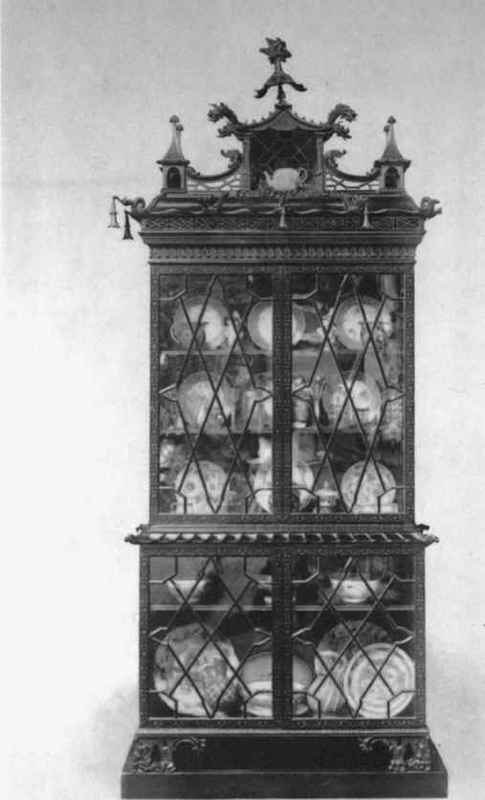
Plate CXII. Mahogany Cabinet In The Chinese Style
CXII. Cabinet, mahogany, in the Chinese style. One of a pair. Sir Samuel Montague, Bart.
As common as the shell is the later oval filled with fan shapes which is to be found upon hundreds of pieces of furniture in the style of Shearer, Heppel-white, and Sheraton. This shape is of universal use in the decoration of the time. It figures over and over again upon the plaster ceilings of rooms in the Adam style. In J. Wyatt's designs for ceilings, etc., 1770-1785, there is a ceiling with its corners filled up with fans exactly copied from the lady's usual shutter hand-fan. The fan with him is a characteristic ornament. It is a more cheerful shape than the urn which stands so often as a finial upon cabinets and bookcases in the style of Heppelwhite, and as to the introduction of which there is an amusing reflection made by a Frenchman who visited London in 1765, and published his impressions in 1790. It is quoted by Mr. George Paston in his interesting book, Side-lights on the Georgian Period. The French writer was engaged in the wine-trade, a fact which colours his views. Since the disuse of foreign wines by the English, 'insipid raillery,' he says, 'pitiful conundrums, dull metaphysics, and plaintive elegies have supplied the place of light conversation, amiable simplicity, sprightly wit, and joyous parodies; in fine, funeral urns, coffins, and cypress boughs are become fashionable even in buildings of the most elegant taste.' There certainly seems to have been a tendency towards an odd displacement of ornaments in the minds of the designers of this period.
Whereas the urns are found on furniture and houses, upon the tombstones in any country churchyard we may find the most frivolous motives of Louis xv. An urn with flowers growing out of it is a third fashion of stock inlay, found upon English-looking furniture, but it may perhaps be a Dutch pattern.
Continue to:


My Books

