


Norman Furniture
Description
This section is from the book "English Furniture", by Frederick S. Robinson. Also available from Amazon: English Furniture.
Norman Furniture
Tables now were placed upon trestles, and cupboards or armoires (armaria) came into use with decorative iron hinges worked into scrolls and leafage. No such thing as a piece of Norman furniture exists in England. It is, therefore, rather idle to waste space upon the matter, except to deprecate the theory that prior to 1250 furniture owed all its decoration to painting and ironwork. With Norman stone carvings remaining, it seems rather unreasonable to conjecture that there were no carvings in wood. The theory is not, at any rate, supported by a unique example which exists in France. This is an armoire at Aubazine, Correze, illustrated by Mr. Fred Roe in his Ancient Coffers and Cupboards. Dating from the twelfth or thirteenth century, it has ends with round arches and Vandyke patterns of typical Norman character, with slender pillars and capitals. Its wooden decoration, therefore, is considerably more effective than that of such a celebrated relic as the thirteenth century chest at Stoke d'Abernon, which is illustrated in this volume (Plate IV.). It would be rather illogical to imagine that examples made, say, a generation or two before the date of this armoire should have been practically uncarved with ornament.
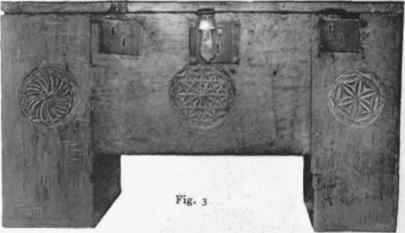
Plate IV. Fig. I. - End View Of Oaken Chest Stoke D'abernon
„ 2. - End View Of Chest Stoke D'abernon Closed
„ 3 - Oak Chest 13th Century Stoke D'abernon Church
IV. (1) Chest, oak, end view. Open and showing flange on lid. Stoke d'Abernon Church, Surrey.
(2) The same closed.
(3) Front of the same.
Dimensions : Height 26, Length 48, Depth from front to back 18½ ihes, approximately. By kind permission of the Rector.
1 Small houses lacked chimneys ' in most uplandish towns' as late as the early sixteenth century. See Harrison's Description of England, 1577, 'On the Manner of Building and Furniture of our Houses.'
This armoire, however, is very late Norman. Earlier manuscript illustrations, such as those of the ninth century, afford us still only the toy houses, plain beds, and bird's-eye views of fortified places similar to the ground plan of the Northumbrian casket. A tenth century manuscript shows us a semi-circular table supported on many-folding trestles and covered with a cloth. In the Bayeux needlework William I. sits on a seat apparently without a back. Its front legs end at the top in dogs' heads, and it has dogs' feet. On his seal he is represented as occupying a still plainer throne without back or dogs' heads, but apparently cushioned. The seal of Richard Coeur de Lion shows us that king seated on a low-backed throne, the side wings of which have Gothic ornaments of trefoil and fleur-de-lys, but the representation is too devoid of perspective for us to be able to draw much information from it. With his successor John we are supposed, at last, to emerge from the arid tract of an unrepresented period. There remains at Rockingham Castle a chest known locally as 'King John's money-box,' which is of oak covered with hammered iron plates and hinges.
It has a domed top, and is practically a strong-box without much ornament.1
There exist, it should be said, a good many rough chests without decoration, and either of wood or bound with iron, for which a Saxon origin is claimed. Receptacles made apparently out of the hollowed trunk of a tree, and with rounded tops, may indeed be of great age, but there is very little intrinsic evidence to prove it, and their want of artistic merits claims for them only the passing attention due to mere curiosities. It is almost as difficult to date the iron-bound ones unless there are special characteristics to be discerned in the locks and hinges.
With the first half of the thirteenth century we happily arrive at a period of historical documents directly relating to our subject, and consequently of much greater importance than the manuscript and other illustrations from which can be drawn but modest inferences. Sir Samuel Meyrick, in his introduction to Shaw's Specimens of Ancient Furniture, has gathered these extracts from the Close Rolls together. He confines himself to domestic furniture and decoration entirely. In the year 1233 the sheriff is ordered by King Henry III. to take care that the wainscotted chamber (cameram lambruscatam; French lambris') in the castle of Winchester be painted with the same histories and pictures as those with which it had been previously painted. We gather from this that walls were, if not panelled, at any rate covered with wood; and secondly, that the custom of painting them with subjects from romance, legends, or the fabliaux of the time, was in use before 1233.
1 It is probably not of the period of King John.
Continue to:


My Books

