


Panelled Rooms
Description
This section is from the book "English Furniture", by Frederick S. Robinson. Also available from Amazon: English Furniture.
Panelled Rooms
In this particular instance, however, the work is purely Renaissance, a style which came not naturally to English fingers in the first instance, if the 'bad Italian' of the Gardiner chantry at Winchester is any guide. It may be observed that very similar flower and scroll work is to be found on the beautiful silver-gilt salver of Flemish make, dating about 1660, in the museum. Lions' heads divide the frieze at intervals, and cupids and satyrs are a frequent decoration. The whole is highly elaborate, as befitted a good house in what has been called the 'Capital of the West,' yet the plain panels prevent the scheme from appearing overdone. This is a not uncommon fault in work of the Elizabethan and Jacobean periods.
The third and most complete specimen of room panelling in the museum is very satisfactory in this respect. The 'Inlaid Room' from Sizergh Castle, Westmorland, is more severe in spite of its wood inlay than that from Exeter.1 This room is complete except for its chimneypiece, which was not purchased. It has, however, been reproduced, so that the effect may be fairly seen. The room is about 23 feet square by 12½ feet high. The panelling is of oak unpolished, and of a beautiful light tone. It is inlaid with darker 'bog' oak and holly. There is a considerable amount of straight strap-work in the inlay. The upper portion of the panelling has arcading of round arches. The pilasters have Ionic capitals. The lower part, or dado, is divided into panels by mouldings. At the top and the bottom and along the middle run horizontal bands of geometrical inlay. The room has a corner door, each of its three sides having, above, an arched compartment containing a lion's mask, and being flanked by fluted Ionic columns. The cove at the top of the door is surmounted by a naked boy.
The exact date at which the 'Inlaid Room' at Sizergh was made is not known, but the nature of the inlay would place it at about 1570 or perhaps a few years later.
1 Plate XVI.
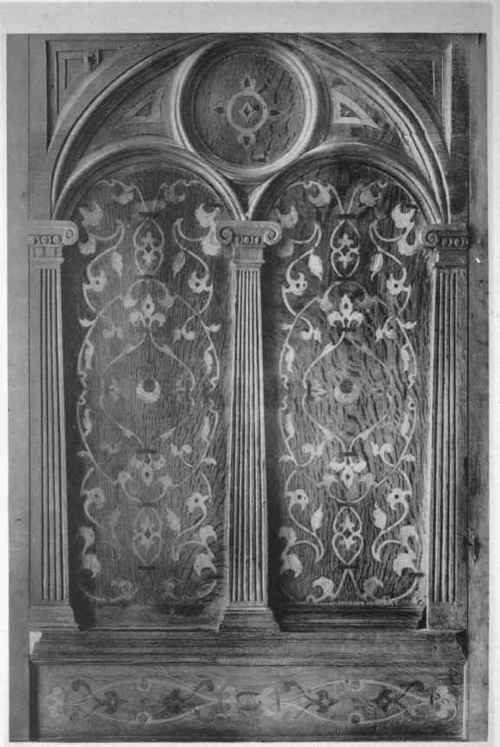
Plate XVI. Panels From Sizergh Castle 16th Century
XVI. Panels from Sizergh Castle. Sixteenth century. Part of the 'Inlaid Room.' V. & A. M.
Not to be missed is the fourth series of panelling of a room with fireplace, from Bromley Place, Bromley-by-Bow, demolished in 1894. The date of this is 1606, and though the panels are plain, there are good strap-work and carved patterns on the framing.
The four-post bedstead seems next to deserve attention, if size is to be the criterion. Specimens of the Tudor period in a complete condition are few. In Shaw's Specimens there is an engraving of one of the period of Henry viii., which, at the time of publishing, belonged to the Rev. W. Allen of Lovely Hall, near Blackburn. It had lost its cornice, but the pillars and panelling were of perfect Tudor design. The pillars show to perfection that exact relationship of exterior architectural design to the patterns of furniture upon which stress has been laid in the chapter on the Renaissance house. They are decorated with a small hexagonal strap-work. Any one acquainted with Tonbridge School, Kent, date 1560 circa, will remember there an old chimney, figured by Parker in his Glossary of Architecture (vol. ii. plate 33), exhibiting this hexagonal pattern, and similar mouldings, at the top and base. The resemblance between the bed-post and the chimney is practically complete, the former appearing like two of the latter joined together.
The panelling of the bed-head contained fine diapered and scroll decoration of the period.
An illustration is given of a fragment from the Victoria and Albert Museum (No. 834).1 It is the end of a bed consisting of four panels decorated with the linen-fold pattern. At either side is a post carved with baluster ornament enriched with leaves, one post being surmounted with an eagle, the symbol of St. John the Evangelist. The other three, no doubt, originally existed to give force to the familiar rhyming invocation to 'Matthew, Mark, Luke, and John.' We learn from the records of Hampton Court that Wolsey had 280 beds, mostly hung with silk. The hangings would slide on rings on an iron rod. Sometimes the rod, with a frame to sustain it, was on one or three sides of the bed, and there was no tester above. Not till the fifteenth and sixteenth centuries was much expense incurred on the framework: the hangings, as later in Queen Anne's time, were all in all. Mr. J. H. Pollen reproduces (Furniture and Woodwork, p. 118) an old drawing of a bed in which a draped tester is slung by cords from the ceiling. The curtain would not be fastened round a post during the day, but hoisted out of reach. With the introduction of elaborately framed and posted beds this custom must have disappeared.
The mattresses of these beds were placed upon interlaced cording running through holes in the framing, and consisted of rush matting, if we may judge from an old example preserved in the 'Strangers' Hall' at Norwich.1
1 Plate xvii.
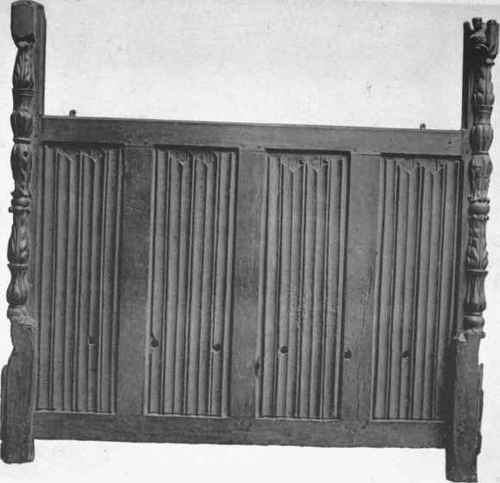
Plate XVII. End Of A Bedstead Of Oak, Decorated With "Linen" Pattern First Half Of 16th Century
XVII. End of a Bedstead of oak, decorated with 'linen' pattern. First half of sixteenth century. V. & A. M.
Continue to:


My Books

