


Variety Of Woods
Description
This section is from the book "English Furniture", by Frederick S. Robinson. Also available from Amazon: English Furniture.
Variety Of Woods
Three fine specimens of smooth-surfaced furniture, all dating from the very end of the seventeenth century, remain to be noticed. Earliest, perhaps, if its spiral-turned stand is to be a guide, is the cabinet belonging to Mrs. Edmund McClure (Plate lxxvii.i). The outside doors of this are veneered with a border of pollard oak, very much marked in grain, the centre with hexagonal pieces of thorn acacia. The inside of the doors is also veneered with squares of pollard oak enclosed by a border of alternate dark and light squares of rosewood and sycamore, outside of which is an edging of walnut. Eleven drawers within have faces of burr walnut with an edging of sycamore. The moulding dividing the drawers (which we shall see later on in this chapter is indicative of the period at which this cabinet was made) is of English walnut. The cornice at the top is of pear-wood at the sides and walnut in front. The drawers at the top, below the cornice, are of burr walnut. The stand is of oak. It is said that this kind of cabinet was made when the heirs to some country seat came of age, and a sample of every kind of wood then growing on the estate was used in the making.
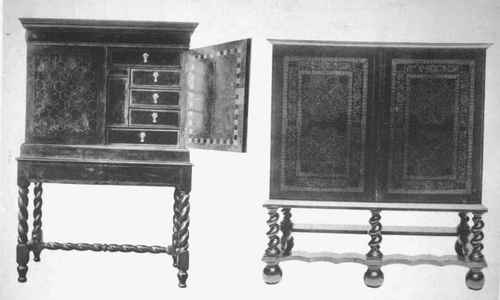
Plate LXXVII Cabinets, Inlaid Late 17th Century
LXXVII. (1) Cabinet, inlaid. Late seventeenth century. Mrs. Edmund McClure.
(2) Cabinet, inlaid. Late seventeenth century. Messrs. Partridge.
For this tradition, and the particulars of the woods employed, I am indebted to the catalogue of the Bethnal Green Exhibition, where the cabinet was exhibited in 1896.
At the Victoria and Albert Museum (No. 157) is a finely inlaid cabinet or chest of drawers and cupboard (Plate lxxviii.). The cupboard encloses shelves only. A striking feature of the general shape is the hollow plinth on which it rests, and which itself contains a drawer. Upon the three lower drawers the 'reserve' style of inlaying is well exemplified. The carcase of this cabinet is of oak veneered chiefly with walnut. The cupboard panels are inlaid with a remarkable design, the upper part of which represents figures ending in terminal shapes and supporting contorted draperies which form a canopy, and disclose a full-length female figure in an oval medallion. Below there is a great deal of scroll- and strap-work, with shells and vases of flowers. A good amount of pear-wood and ebony is used in this design, which is of unquestionably French inspiration. There is to be seen, in fact, amongst the designs of J. Bdrain, whose patterns were used by Boulle in his tortoiseshell and brass inlaid furniture, the very same motive of terminal figures lifting the draperies of a canopy which reveals a standing female figure. It is for a chimneypiece. If the general lines of this cupboard and chest of drawers were a little less severe and heavy-looking, its appearance would have been improved.
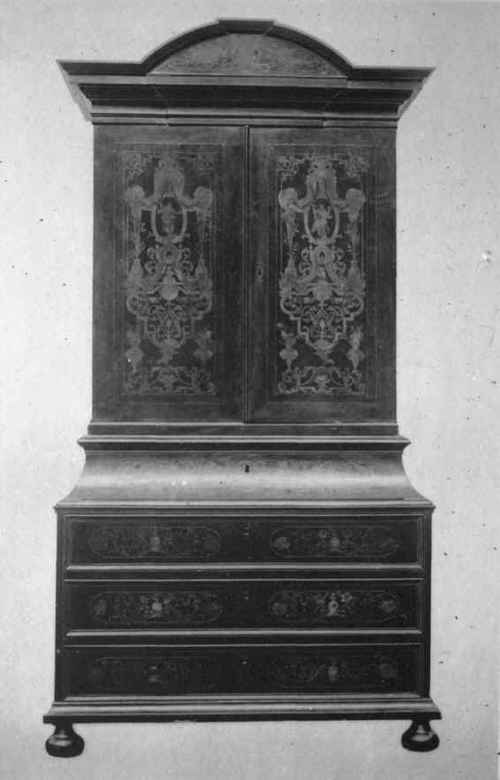
Plate LXXVIII. Cabinet, Veneered Late 17th Century
LXXVIII. Cabinet, veneered. Late seventeenth century. The cupboard is fitted with shelves. The carcase is of oak, veneered with walnut. The figure and floral ornament is of pear-wood, inlaid with ebony. V. & A. M.
Dimensions: Height 81, Breadth 54, Depth from front to back 21½ inches.
It is not quite easy to say wherein the defect lies, but perhaps it may be found in a certain incongruity of feeling caused by the application of such fantastic designs as those of Bdrain to a piece of furniture made up of so many uncompromising vertical and horizontal straight lines. The severest and straightest of Boulle's cabinets are less rectilinear than this example, and the very salient and striking curves of ormolu and brass work help more to mitigate them, than is effected by the comparatively inconspicuous inlaid work of the piece before us.
Continue to:


My Books

