


Seats. Part 14
Description
This section is from the book "Furniture", by Esther Singleton. Also available from Amazon: Furniture.
Seats. Part 14
The S or Siamoise was long popular. It was also an upholstered sofa with two or three seats joined together like the Siamese twins. It stood in the centre or corners of the drawing-room. From the fact that people sit in it and talk cosily, it received the name tete-a-tete.
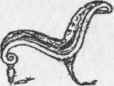
Chaise Conforta-Ble, "Spanischer", 1835
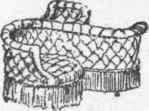
Confidant A Trois Places, Or Siamoise
The most peculiar seat of all was perhaps the Pouf, or Puff, a sort of cushion without arms or back. It was generally round, but occasionally it was oval or even square.
It stood as high as the seat of a chair and was decorated with fringe. The first Poufs were made about 1845 and were very expensive. They were covered with rich material - damask, tapestry, brocade, or fine needlework. The Pouf was placed in the centre of a circle of chairs around the hearth; but it was a very uncomfortable seat.
Seats grew lower and lower during the Second Empire until some critics thought it would be more comfortable to go a little further and have cushions on the floor. Deville was quite horrified at the lounging attitudes of the ladies and gentlemen on these sofas and low easy-chairs, and asked if they were really the descendants of the old French society that formerly shone so brilliantly with its belle tenue and savoir vivre; and took refuge in the happy thought that those fauteuils would soon be but a memory of the Second Empire.
In 1817, Christian, cabinet-maker, 35 Wall Street, has Grecian sofas for sale; at the Fancy Mahogany Chair and Sofa Manufactory, 153 Fulton Street, Wheaton & Davis have rosewood and Fancy painted chairs and sofas richly ornamented in gold and bronze, with hair, cane and rush seats (1819); and in 1823 sofas with plain and round tops and scroll ends, and rosewood sofas, with rich damask satin covering, come to auction. The Grecian sofa is very fashionable for many years.
In 1817 an Ottoman for a gallery is recommended.
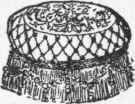
Pouf
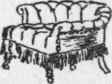
Fauteuil A Coif-Fer, 1850
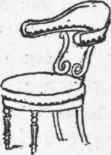
French, 1850
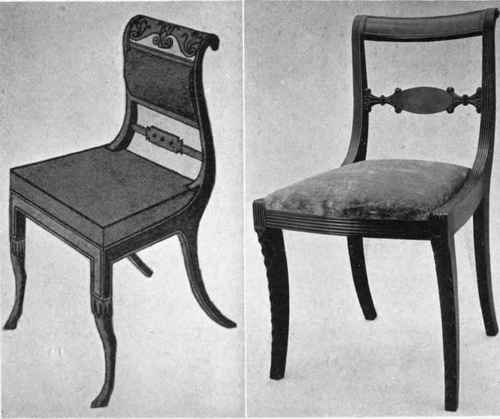
Plate CIII - "Trafalgar Chair" and Chair by Duncan Phyffe (owned by Mr. R. T. Haines Halsey, New York)
"The framework is composed of the valuable woods enriched with carved work finished in burnished gold. The draperies are buff-colored velvet, the pattern being embroidered on its surface and bounded by bullion lace."
A sofa designed by J. Taylor in 1821 is described as follows:
"For decorations of the highest class the framework would be entirely gilt in burnished and matt gold, the pillows and covering of satin damask or velvet, relieved by wove gold lace and tassels. For furniture of less splendor the frame would be of rosewood, with the carved work partly gilt and the covering of more simple materials."
Chairs made in New York in the first quarter of the Nineteenth Century, by Duncan Phyffe, appear on Plates XLIV. and CIII.
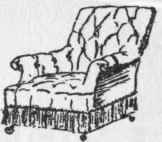
Chaise Confortable, By Dervilliers, 1838
Continue to:


My Books

