


The Bed. Part 4
Description
This section is from the book "Furniture", by Esther Singleton. Also available from Amazon: Furniture.
The Bed. Part 4
Margaret of Austria, Regent of the Netherlands and wife of Philibert of Savoy, owned in 1523 a camp, or folding-bed, with hangings of cloth of gold embroidered with gold thread and silk; also a canopy for a camp-bed covered with cloth of gold and trimmed with a fringe of black silk and gold threads; and a canopy counterpane and three curtains of green taffeta lined with black and a "pavilion as a protection against flies, which was made of threads of grey and yellow silk."
Handsome beds in France, as well as in England, had special names. Among the possessions of the Crown was one called the "England Bed" (lit d'Angleterre) because the arms of England were embroidered upon it. The hangings were violet velvet and cloth of gold. Another bed was called "lit des satyrs" because Diana and her nymphs and satyrs were embroidered upon it, and another was called "lit de Melusine," because Melusine was represented on the headboard as bathing in a fountain.
The massive Elizabethan bedstead lasted long. It is a good example of the style. Oliver Cromwell's bed and the Great Bed of Ware was so large that it could hold twelve persons. The Tudor bed was superb: it was richly carved on headboard, canopy, tester, columns and panels, and the columns or posts were also a mass of carving. Often they swelled out into the acorn-shaped bulb and sometimes at the sides of the headboard stood terminal figures of men or women, or angels that were intended for supports for looping back the curtains. Many of these carved oak bedsteads were imported from Flanders. The sheets were of the finest linen, the blankets were soft and fine, the counterpane was of marvellous needlework, and there were quilts of silk and rugs of fur to make the sleeper luxuriously comfortable. The richest curtains were of silk, satin, velvet, samite or tapestry, and the less expensive ones of serge, linsey-woolsey, or kidderminster. Scarlet cloth was also used, and kidderminster flowered green and white was another favorite hanging. The favorite colors were red, green, yellow, and blue. White was little used.

Plate LXXVI - Louis XVI. Bedstead. Gilt Frame with Tapestry Panels and Curtains of White Silk
In Scone Palace, Perthshire, there is a bed that Mary Stuart slept in, which is draped with hangings that she is said to have worked while at Lochleven.
Under the big bed, which sometimes stood upon a low platform, the trundle, or truckle, bed was rolled in the daytime. It was pulled out at night.
Early in the Seventeenth Century, the bed in which upholstery had superseded carving had been growing in favor, and the lit en housse, as it was called, became the typical bed of this period. It is the one that appears in Abraham Bosse's engravings whenever a bed is introduced in the homes of the tradesmen and school-teachers, in hospitals, as well as in the homes of the rich. The framework of this style of bed is of comparatively little importance. The canopy or del is supported on four posts which are carved or painted or covered with the same material as the curtains. Beneath the valance and under the curtains a rod ran for the support of the curtains which were drawn up or down by means of cords and pulleys. The handsomest beds were draped with tapestry, silk damask, brocade, or velvet, often edged with a narrow silk fringe, or a fringe of gold or silver, and often were trimmed with gold or silver lace or braid, and sometimes cord and tassels. For less expensive beds, the curtains were made of serge, cloth or linen, or cotton materials, or East India goods, and lined with silk, or less rich material. The four corners of the canopy were adorned with a carved or turned wooden ornament, or knob called a "pomme" which was often gilded or painted, a bunch of feathers, or a "bouquet" made of ravelled silk threads.
A characteristic bed of this kind is shown on Plate LXXIIL, dating from the early Seventeenth Century. It is from the Corsini Palace, Florence, and is of the style of beds shown in Abraham Bosse's prints and familiar throughout Europe. (See also Plate LXXIV.)
Another typical bed of this period was the lit de baldaquin. This had no columns or posts, and the baldachin was slightly smaller than the bed over which it was hung. If a dome surmounted the baldachin, the bed was called the lit a Iimperiale. The "pavilion" bed was probably very similar.
When New England, New York and Virginia were settled, during the first quarter of the Seventeenth Century, the prevailing style of household furniture was early Jacobean.
The most typical room in the home of average means was the hall, which, in general, was used as a sitting-room, drawing-room, and bedroom. Even in the wealthiest homes of the early settlers of this country, the bed was scarcely ever absent in any room.
A bed of the earliest Louis XIV. Style was owned by Moliere (1622-1673), for among the objects offered for sale after his death, we find: "A couch with feet representing eaglet's claws, painted a bronze green with a painted and gilded headboard; a canopy with an azure blue background, carved and gilded, with four eagles in relief, on gilded wood, four knobs shaped like vases, also of gilded wood; the canopy draped inside with gold and green taffeta; the valances of the bed, same material, all finished off with gold and green fringes. A smaller canopy within the larger one, of gilded wood, carved to represent a bell, draped outside with grey taffeta embroidered with gold twist, finished off with gold silk fringe, and lined with Avignon taffeta. Inside hangings of the same taffeta with fringe." The celebrated actor and playwright also had "a little couch of joiner's wood with a border of gilded wood and feet representing eaglet's claws." This was supplied with two mattresses, one of which was covered with green satin with a floral design; and a bolster, similarly covered. This was valued at 100 livres. A similar couch with two bolsters, two mattresses and two pillows, all covered with satin, was valued at 140 livres.
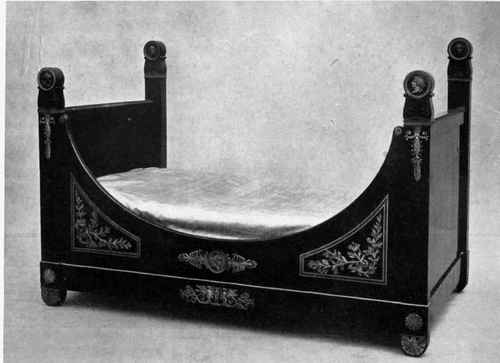
Plate LXXVII Empire Bedstead - Metropolitan Museum
Continue to:


My Books

