


Colonial And Later Periods. Part 10
Description
This section is from the book "The Old Furniture Book", by Hannah Hudson Moore. Also available from Amazon: The Old Furniture Book.
Colonial And Later Periods. Part 10
Twenty-five years later the British officers quartered in New York made life there very gay. Fox-huntingwas practiced till 1781, and was advertised in the "Royal Gazette "as taking place on Ascot Heath, in Brooklyn. Horse-racing took place on Hempstead Plains, Long Island, for life in general was a full copy of what was going on in England. The " New York Gazette "of June 4, 1770, tells us that "a Great Horse-Race was run off on Hempstead Plains for a considerable wager, which engaged the attention of so many in the city that upward of seventy chairs and chaises were carried over the ferry from hence, and a far greater number of horses, so that it was thought that the number of Horses on the Plains at the Races far exceeded a thousand."
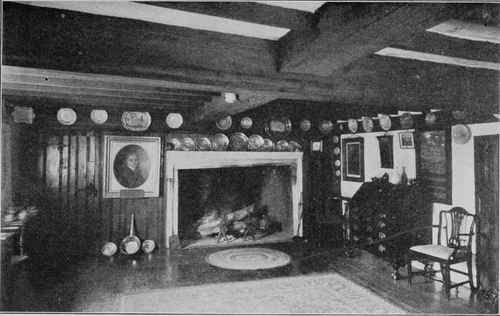
Figure 57. ROOM IN WHIPPLE HOUSE, IPSWICH, MASS.
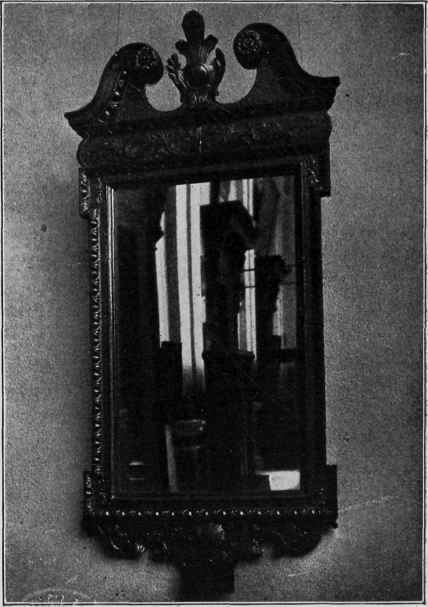
MAHOGANY MIRROR FRAME WITH BRASS ORNAMENTS.
The comparatively peaceful sport of horse-racing was not the only one indulged in. Bull-baiting was not at all unusual. The posters for this amusement were headed "Pro Bono Publico," and in the "New York Mercury' for August, 1774, John Cornell announces that there will be "a Bull Baited on Town Hill at 3 o'clock every Thursday during the season." Town Hill was Columbia Street, near Cranberry Street, Brooklyn Heights.
On March 24, 1777, in the "New York Mercury " was the following advertisement:
"On Thursday At the Theatre in John St. On next Thursday evening will be performed a Tragedy called Venice Preserved. With an Occasional Prologue. To which will be added a Farce called 'The Lying Valet.' The Characters by the Gentlemen of the Army and Navy."
As for clothes, of course the people followed the English styles, and copies of such magazines as " The Maccaroni Magazine or Monthly Intelligence of the Fashions & Diversions," found their way to America. Here is an extract from the issue October, 1772:
"Hats are rising behind and falling before. The blazing gold loop and full-moon button is now totally exploded, and succeeded by a single narrow looping, broad hatband, and pin's-head button. In full dress the three buttons zigzag with the foretop a la Grecque. Roses are entirely confined to Cheapside, and bags are increasing daily. The late stunting of coats having promoted the growth of skirts, the pockets are capable of holding conveniently a tolerable-sized muslin handkerchief and smelling bottle. Shoes are decreased in heels two inches, and cut like a butter-boat to show the clocks of the stockings."
"The Magazine a la Mode, or Fashionable Miscellany," particularly adapted to the People of both Sexes, and calculated to convey early and useful information to those who are in any way concerned in furnishing articles of Dress, either in Town or Country," appeared in 1777. From one of these useful repositories we learn under date of 1786 that grass-green was the fashionable colour for gentlemen's suits, that the hair was dressed a la Taureau, and that watch-keys were remarkable for size and weight.
In 1760, pattern-books published in London were to be found in America for the benefit of native cabinetmakers, as the following advertisement duly sets forth:
"John Rivington of Hanover Square has for sale many books for cabinet makers, joiners, etc., and calls particular attention to a new work called Household Furniture for the year 1760, by a society of Upholsterers, Cabinet-makers, etc., containing upwards of 180 Designs consisting of Tea-Tables, Dressing, Card, Writing, Library and Slab tables, Chairs, Stools, Couches, Trays, Chests, Tea-Kettles, Bureaus, Beds, Ornamental Bed Posts, Cornishes, Brackets, Fire-Screens, Desk and Book Cases, Sconces, Chimney-Pieces, Girandoles, Lanthorns, etc., with scales."
Not a paper but had advertisements of furniture offered for sale. Thus in 1774 we find:
"To be sold at private sale a large black walnut cupboard with a set of Delft, a large pier looking-glass, one pair of sconces, 3 large gilt frame pictures, and sundry other articles."
In the same number of the " Weekly Mercury," and in many succeeding issues appears the following notice:
"A scheme for the disposal of a large quantity of silver-plated furniture by lottery. The owner is a Philadelphian."
In Figure 58 are shown two looking-glasses of styles that were fashionable about the middle of the eighteenth century. One of them is dated 1749, of mahogany handsomely carved, and further embellished with ornaments of chiselled brass, a beading of it being next to the glass. It rests upon two mirror-knobs, which were screwed into the walls to support looking-glasses, and the collection of which is such a pleasing hobby to-day. The central ornament on the top is missing. The other glass is of carved wood gilded, and is now in Memorial Hall, Philadelphia. It hung for many years in the fine old house "Belmont," and is of the very finest style. The broken-arch cornice is finished with rosettes, and the central ornament is not the usual urn, but something more ornate.
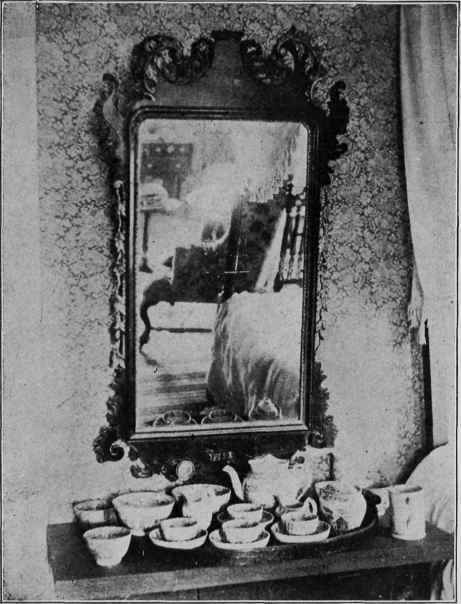
Figure 58. CARVED AND GILDED MIRROR FRAME.
There are constant notices of mahogany for sale, such as:
"A cargo of fine mahogany for sale by Anthony Van Dam, Jan'y 17, 1774."
In May of the same year John Morton advertises "the largest and most elegant assortment of mahogany or gilt oval looking-glass frames ever imported in this city."
Continue to:


My Books

