


Handles, Feet, Stuffs, Etc. Part 2
Description
This section is from the book "The Old Furniture Book", by Hannah Hudson Moore. Also available from Amazon: The Old Furniture Book.
Handles, Feet, Stuffs, Etc. Part 2
There was a great demand for these opal glass rosettes. Very large ones held back the window curtains, smaller ones were used to support the mirrors, besides those on the furniture. About this same time (1820) those fine handles which are so eagerly sought for to-day made their appearance. They were china or enamel set in brass, and the patterns on the china were often portraits of famous men like Washington, Franklin, Clinton, and Jefferson. When mounted on a piece of furniture like a small work-table, which had only two drawers, the four patriots named would make a set. There were also fancy heads, and sometimes tiny figures, but these were not so popular.
Brass was put to many other uses, ornamental as well as useful, and wine-coolers of heavy mahogany were set off with bands of it, and smaller articles, like pipkins, were either made or bound with it. Narrow thread-like bands of brass were used for purposes of inlay and in the lyre-back chairs the strings were brass, as well as the accompanying ornaments. Brass has always been a valuable commodity in English manufactures, and in the reign of Henry VIII. Parliament passed an act prohibiting, under severe penalties, the export of brass, which prohibition was not withdrawn till as recently as 1799. In 1721 over thirty thousand persons were employed in brass-founding in Birmingham, England, and the business has grown until it has become the industrial feature of that city.
The handles of both French and Dutch furniture were extremely ornate, consisting of scrolls and leaves, many of them of great beauty and delicacy, particu-arly when made of water-gilt or of etched brass.
For the benefit of local cabinet-makers brass handles, escutcheons, and false keyholes were imported and on sale in America. By 1770 many cabinet-makers were manufacturing very handsome furniture of mahogany, cedar, or cherry, requiring handsome brasses to go with them. A cabinet-maker of Newburyport, R. I., had in his shop at the time of his death in 1773 much furniture completed and some still unfinished. He also had several thousand feet of costly timber, sixty brass handles valued at more than one pound, desk brasses, fifty-four escutcheons, and old brasses, locks, and screws as well. For bookcase and cabinet doors he had panes of glass, most of it in sheets measuring 5x7 inches, which was the size commonly used in windows at that time. Although glass had been made in this country for a long time we find "Bristol crown window-glass "advertised for sale in 1771 in sizes as large as 9x12 inches.
Besides these brasses of English manufacture, we find another merchant advertising "three dozen Dutch rings and escutcheons at three shillings a dozen." Handles came at various prices, fifteen, twelve, and eight shillings a dozen, according to pattern and finish. The escutcheons were at proportionate prices, eleven and eight shillings a dozen, but locks came high, a fine-ward desk-lock bringing a guinea.
On much furniture, particularly that enriched with inlay, ivory escutcheons were used, and sometimes those of holly or other wood used in the inlay were set in. These were in use during the last years of the eighteenth century, and can be found in connection with various styles of handles.
At the "Smith's Fly" were many metal-workers who sold ironware and goods for cabinet-makers. At the sign of the "Cross Daggers," Thomas Brown, as early as 1745, had many metal furnishings on hand. There were latches and bolts for doors and locks for chests, drawers, and cabinets. He had polished brass handles, locks, escutcheons, and handsome brass locks for parlours. Ring-drops, tea-chest furniture, knobs and knockers for street doors, curtain-rings and chafing-dishes were advertised in 1750, and casters and handles and escutcheons of the newest fashion were to be found in 1751, with brass chair nails.
A few years later double and single spring chest-locks could be bought, and these were sold by the same merchant who imported "choice India and Japan gilded Tea Tables, square Dressing ditto, of which sort none were ever seen in America before."
The rate to be charged for putting on these brasses was set down in "The Journeymen's Cabinet and Chair-makers Philadelphia Book of Prices," 1795, mentioned before. Common castors cost 2 1/2d each, and 1d extra for letting in the plate; a set of sockets "when the legs are tapered, to fit in, per set," 1s 2d. Iron or brass rollers were 8 1/2d per pair. Fitting on a box lock was is 4d, while a patent lock came extra and cost 2s. Lifting handles could be put on for 1s 4d per pair. Letting in an escutcheon was 2 1/2d for each one, and letting in plates for rods in the tops of sideboards were 8d for each plate. Ivory escutcheons cost 10d each, and those of holly just half that.
If a person chose to have his furniture made on the premises it was an easy matter, for many cabinetmakers worked in this way, and the furniture could be built to suit exactly the prospective owner's taste and the place it was to occupy. None of the furniture made in America and little that was imported here, had the superb handles and escutcheons which were put on French and Dutch pieces. These mounts were executed and designed by artists, and made a decidedly beautiful addition to the furniture.
Another distinctive feature of old furniture is the foot, which in many cases points to period and country as well as if the piece was dated. After the turned chairs with their heavy lines and clumsy construction, the furniture which was gradually finding its way from Spain and Holland seemed very beautiful. The Flemish foot, so called, turns outward, and is found on very early chairs enriched with carving and having cane, rush, or turkey-work seats. This style belongs to the last quarter of the seventeenth century. (For illustrations see Figure 100.)
Chairs of this same period also came from Spain and Portugal, being covered with the splendid leather of Cordova, which has now a world-wide reputation. The wood-work of the frames was handsome enough to correspond with the leather. These frames were carved, and the foot turned out like the Flemish, but it was of quite a different shape and fluted (see Figure 100).
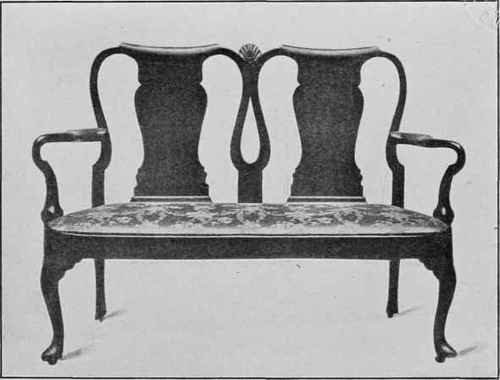
Figure 11. DUTCH FURNITURE, CALLED "QUEEN ANNE" .
Continue to:


My Books

