


Hold Stanchions
Description
This section is from the "The Elements Of Wood Ship Construction" book, by W. H. Curtis. Also see Amazon: The Elements Of Wood Ship Construction.
Hold Stanchions
Stanchions, or pillars, must be fitted under the beams for supporting the deck above and the cargo load that may be placed on that deck. The greater the number of decks above a stanchion or pillar the heavier it must be, and the more securely should it be fastened. There are many ways of fitting and fastening hold stanchions some of which are shown in Figs. 118 to 121 inclusive.
Hold stanchions as a rule are arranged on the center-line of the ship, one under each beam. Where the deck load is not very heavy stanchions may be set under alternate beams, there being a stringer to support the beams under which there are no stanchions, as shown in Fig. 119.
When stanchions are set off the centerline and wide spaced they are called pillars. When set at the corners of hatches they become quarter pillars. If set out in the hold and away from the hatch they are more often referred to as hold pillars. As before stated there are many different combinations and arrangements used, as each different type of ship presents a problem in itself, and the stanchions therein must be arranged to carry the particular loads existing in the vessel.
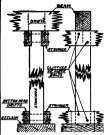
Figure 118. Figure 119. Figure 120. Figure 121. Hold Stanchions.
By far the most important detail of stanchion and pillar fitting is the end fastening. In any type used care must be taken to so arrange the irons and bolts at the ends of the stanchion in such manner as to secure the greatest strength. Figures 118 and 119 show two arrangements where there is but one deck. Figures 120 and 121 show two arrangements where the stanchioning must pass through an intermediate deck. These arrangements would also hold good where the stanchions pass through a line of hold beams, the only difference being that the decking would be left out. This has been done in Fig. 121.
In some localities on smaller vessels the stanchion straps are fastened with boat spikes, but this cannot be considered good practice for large vessels.
Continue to:


My Books

