


Joiner Work. Part 2
Description
This section is from the "The Elements Of Wood Ship Construction" book, by W. H. Curtis. Also see Amazon: The Elements Of Wood Ship Construction.
Joiner Work. Part 2
As a rule, the light beams used in houses are called car-lines. The heavier members over the studding at the ends are called end beams. Reference may also be made at this time to the different terms used for siding and ceiling. While the term ceiling is almost universally used to designate the inside sheathing, the outer sheathing, is often called simply sheathing instead of siding. Since there may be in special cases diagonal sheathing under the siding, it is deemed best to use the term siding here in referring to the horizontal matched finish on the outside of the houses.
Siding and ceiling as used on merchant vessels consists generally of plain V groove matched lumber.
Inboard bulkheads, or partitions, in joiner house may be either built on studding, as shown in Fig. 181, or they may be built up of two thicknesses of ceiling, one thickness set vertical, and the other set diagonal, at an angle of about 45 degrees, the two thicknesses being well fastened together. The latter construction is called a diagonal bulkhead. Where diagonal bulkheads are longer than about 8 feet they should be fitted with wide spaced studs sufficient to stiffen the bulkhead as required. The edges of these bulkheads are landed in special moldings or nailing strips, which are first well fastened in place. If the bulkhead lands on a carline, the two courses are either run up the side of the carline, or rabbetted into it, and the nailing strip is not used.
Before the siding and ceiling are placed on the outside walls, or bulkheads of the houses, the holding down rods must be fitted. These should be spaced as shown on the joiner plans, or if not shown on the plans, at sufficiently close intervals to securely hold the plates and end beams down against the studding. They should pass through the plate, or end beam, coaming, deck, and beam, or carline, underneath. They are generally made up from galvanized or composition rods, with nuts and washers at both top and bottom, and should be set up perfectly tight before any of the siding or trim is placed.
Two types of door trim are shown in Figs. 182, 183, and 187. Type I, Figs. 182 and 183, is quite generally used for both outside and inside doors, but the construction shown in Type II, Fig. 187, is considered to be the better arrangement for outside, or weather doors. With the type of trim shown in Figs. 182 and 183, the joint between head and side jambs is frequently made in the manner shown in Fig. 184. If not made in this manner, it would in any case show a miter at the edges, the middle part being coped. The side jamb is coped over the threshold in such manner that the threshold may be set in place first, and the balance of the frame slipped into place over it. In Fig. 187 the outside part of the jambs would be mitered at the top, while the main pieces would show a miter inside to the rabbet, the balance being coped. The main piece sets on top of the threshold, and the entire frame is frequently built in the joiner shop and set in place as a unit.

Figure 175. Showing Coaming As on Joiner Deck.
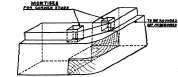
Figure 176. Showing Corner Constructions of Joiner Deck Coaming.
Joiner Details.
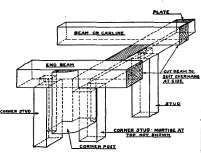
Figure 177. Showing Corner Post Studding Plates End Beam And Carline.
Figure 178. Showing Section of Typical Corner Studding And post.
Joiner Details.

Figure 179. Lower End of Corner Post.
Figure 180. Upper End of Corner Post.
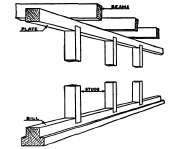
Figure 181. Typical Inboard Sill And Plate Arrangement To Be Ceiled On Each Side.
Joiner Details.
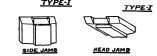
Figure 182. Plain Door Frame And Trim.
Figure 183. Door Frame And Trim Wwere Hoard Screen Door Is Fitted.
Figure 184. Showing Methood of Mitering Side and Head Jambs.
Joiner Details.
Jambs and thresholds must be well fastened with either large galvanized nails, or screws, with their heads set in counterbores, which are later plugged.
The depth of rabbet for outside doors should be about ⅝ inch. That for inside doors may be « inch. The face of the rabbets should be given a slope to allow for the swing out of the inner corner of the door when it is opened.
Thresholds are commonly covered with either sheet brass, or lead, to protect them from chafing.
Former practice has been to fit drop sash in the upper houses of steamers, of the type shown in Figs. 185 and 186. However since this type of sash cannot be made storm tight, and has to be fitted to drop into lead pockets, which are not only troublesome to build, but often give trouble through leaking after the ship is in commission, the type of sash shown in Fig. 188 has been devised, and has recently come into general use. In this type the frame can be built complete in the shop and set in the ship as a unit.
All sash that drop, should be fitted with catches to hold them in any position. In addition they should be fitted with good locks holding them shut, and which cannot be worked from the outside. On sash of Type II, Fig. 188, an ordinary sash lock may be fitted to the parting rail.
All sash and doors, and frames for them, where made in the shop, must be carefully built to the proper bevel to fit the opening on the ship. Very few of these openings, if any, will be perfectly square.
Continue to:


My Books

