


Joiner Work. Part 3
Description
This section is from the "The Elements Of Wood Ship Construction" book, by W. H. Curtis. Also see Amazon: The Elements Of Wood Ship Construction.
Joiner Work. Part 3
In setting the glass in the sash it is customary to tack a small molding, or bead, against the glass to hold it in place, instead of puttying it in as is done with the sash in buildings. The glass is first set in a rather stiff white lead putty to make it watertight. The bead may either be located on the inside of the sash as shown in Fig. 185, or on the outside as shown in Fig. 188. If set on the inside extreme care must be taken in leading, or puttying the glass in to make it watertight. It is generally considered the beat practice to place the bead on the outside.
Sash may be used only in houses that are high enough above the water line to be comparatively free from the danger of impact from solid water during storms. In the lower house, such as the poop house, and bridge-deck house, port lights are generally used. They are built of very heavy glass, usually about ¾ inch thick, set in a composition or galvanized iron frame, and are so arranged that they can be made perfectly watertight. In addition, where these ports are fitted to the hull they have storm shutters of metal which would maintain the watertightness of the port even if the glass were broken.
Storm shutters are also fitted to sash openings where they are in any way likely to be exposed to the direct force of a storm. They consist of solid built up heavy wood panels, with a small fixed glass, usually round, set in much the same manner as glass in sash are set.
Various details of trim that may be used in merchant vessels are shown in Figs. 189 to 193 inclusive. The exact form of the details to be used depends largely upon the arrangement of the houses. Also the form of the moldings selected by the designer may be quite different from those shown in the figures, but as a whole, the arrangement of these moldings, and parts, shown here, is quite generally used and gives a house of pleasing appearance though simple in construction as would generally be required on merchant vessels.
Carlines unless quite heavy, are generally sprung to the camber. In wheel and pilot houses, where there are no intermediate supports for the carlines they must be sawn to the full camber. Very often the amount of camber given the house carlines, particularly those in houses not having much thwartship breadth, is greater than the corresponding amount of camber in the deck below. This is done to avoid the appearance of flatness in narrow decks above wider decks, when they are given the same camber.
All carlines should be thoroughly fastened at the plates over outside walls, and at the stanchion stringers, where there is wide overhang, with carriage bolts of suitable size. The fastening of finish joiner work in general consists of common nails, finish or casing nails, screws, etc., all of which should be galvanized, or composition. In the pilot house, within a radius of usually not less than four feet from the compass, nothing but copper, or composition fastening is used. It is also customary to make all of the holding down rode for this house of composition.
All joiner hardware, must without exception be solid composition. All door hardware, sash hardware, coat and hat hooks, drawer and wardrobe locks, etc., are therefore of special design for marine purposes.
Interior built in fittings, such as berths, wardrobes, buffets, tables, settees, chart tables, wall desks, etc., are now generally built in the shop, or mill, and when the house structure is completed it is only necessary to scribe them to place. Very often, of course, when such items as lockers, wardrobes, and settees are built up of ceiling, instead of paneling, it may be found best to build them directly in place.
In former times it was not unusual for ship's houses to be built with no plans except those giving a general layout of the rooms, etc. Detail joiner plans were entirely lacking, this matter being left to the head joiner, who arranged the work as in his judgment seemed best. Naturally this required experienced joiners with years of experience, who were at that time available, owing to the small amount of ship work then under way. Today, with a great amount of ship construction under way, experienced joiners are not available in sufficient numbers to permit such a procedure, hence it is now customary to furnish full and complete detail plans of all joiner work, showing its exact form and arrangement in every part. A close study of the figures shown in this chapter, even though much of necessity is omitted, will assist the reader materially in the proper interpretation of these plans.

Figure 189. Showing Trim For Short Over Hangs.
Figure 190. Showing Simple.Form of Interior Trim Without Beam Capping.
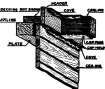
Figure 191. Showing Simple.Form of Interior Trim With Beam Capping.
Joiner Details.

Figure 192. Joiner Details.
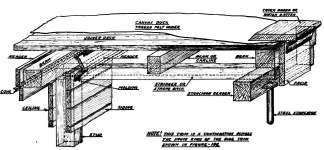
Figure 193. Showing Trim Where House Deck is Extended Forward Or Aft Sufficient to Require Stanchion Support.
Joiner Details.
Continue to:


My Books

