


Chapter II. Of Style IX Driving
Description
This section is from the book "The Art Of Golf", by Bart W. G. Simpson. Also available from Amazon: The Art of Golf.
Chapter II. Of Style IX Driving
For the purpose of analysis the swing" of the golfer may be divided into three parts: 1st. Position; 2d, Address; 3d, Swing proper.
Position. - Some treatises on the game tell us in feet and inches the distance the player ought to stand from the ball; in degrees, the angle at which it ought to be placed between his feet. Such information, whether true or not, is unpractical. Arithmetic is required to count the shots, but cannot assist us in making them; and as for mensuration - well! a six-inch scale marked on the putter shaft often prevents disputes. Roughly speaking, however, it may be laid down that one ought to stand what professionals call square to the ball - that is to say, facing at right angles to the direction it is meant to drive in. Any decided deviation from this position is a mistake, although scarcely any one adheres to it absolutely. Many place the left foot nearer the ball than the right, commonly called standing- 'in front' (though differ ent from the fault of doing so illustrated in Fig. I. p. 46), and lean more weight on the former than on the latter. This is because the left leg of most men is the stronger. Some of the finest players stand to their ball in this way; but on the whole it is to be avoided, because it tends to produce wildness and uncertainty of driving. Obviously the position offers facilities for a long swing back, and those who are lured on by the charms of an occasional raker will adopt it. Why occasional? The reason seems to be that when the heel of the left foot leaves the ground most of the weight of the body is supported on its toes, which unsteadies the player's balance, and consequently his driving. The remedy is scarcely to let the heel leave the ground at all - a correction made by all steady drivers who have acquired this style. The segment of swing thus chopped off is, however, lost entirely. It cannot be added to the other end, as, of course, the stance which takes the right shoulder out of the road brings the other more forward. The result is shorter driving if steady off the tee, but not from bad lies; for this stance, by enabling the player to get 'his shoulders well
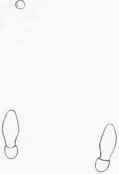
Fig. 3. Standing 'in front' into it,'is very commanding. On the whole, however, it is better to stand square or open as in Fig. 4 or 5. This gives freer scope for a full second half to the swing, which, I shall insist further on, is of more importance than the first half. Exaggeration, even conscious posing, in either direction, will produce, in the first case, pulling, wildness, topping; in the second, heeling, skying, or at best feebleness.
If we observe a player who stands ' square' about to strike, it will be apparent that his ball is at a more obtuse angle to his left than to his right foot. If the player stands 'in front' (Fig. 3), as it is called, the ball is more nearly still in a line with the left, the opposite being true when the stance is ' open.' But in practice he ought not to attempt to measure this angle, for the all-sufficient reason that his measurement will be wrong. To prove this, we have but to ask an experienced player who stands 'square,' at what angle he poses to his ball. He will say at an equal angle from each foot. We have but to watch him play to be convinced that he is mistaken. That


Fig. 4. Standing ' square.'

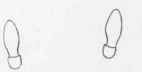
Fig. 5. Standing ' open' he cannot measure it will be made evident by a little experiment regarding another point. Some players turn their toes in, some out. (Which is right? Either, provided the position be not strained.) Now, if you place yourself opposite a ball, at what some books call the proper angle, it will be found that by pivoting on the heels, although your place, or its, is in no way changed, a drive would be impossible without lifting- one foot and putting it down somewhere else.
As the angle at which the player ought to stand can only be determined by instinct, as a comprehensive glance at feet and ball will give no information even to engineers accustomed to mensuration, so there is no measurable proper distance at which we ought to be from the ball. Much depends on the lie of the club, its length, that of the man, and his style. Yet the varying of it is a common cause of bad driving. Quite suddenly, from unconsciously changing it, a player goes off his game: without knowing it, he begins to hold his hands too far reached out, or to stoop forward with his body. It is useless for him to note his proper distance some time when he is driving well, for he may maintain that and yet be all wrong. For instance, he may be cancelling his overreach by standing very upright, or stooping and tucking in his arms. Always to take a natural pose towards the ball must be the result of habit. Even the best players go wrong occasionally from getting into the way of standing at the wrong distance. The worst of it is, stooping or overreaching soon feels natural, and the bad driving is ascribed to some other cause. In its proper place, I will point out a few of the results as regards the ball, which ought to awaken suspicion that our position has got wrong.
How far apart the feet ought to be is the next point. About this, as about so many other things, there is no hard and fast rule. It is sufficient to point out that the closer they are, the freer will be your swing; but when they get too near together your driving will become feeble and uncertain in direction. On the other hand, a wide stride stiffens the player, thus shortening his driving, although it gives him power. In a bunker, or in a bad lie, it is politic to straddle more than usual, if you remember at the same time to swing short.
Continue to:


My Books

