


The Upper Danube. Part 12
Description
This section is from the book "The Upper Danube - John L. Stoddard's Lectures", by John L. Stoddard. Also available from Amazon: John L. Stoddard's Lectures 13 Volume Set.
The Upper Danube. Part 12

Awaiting The Hero.
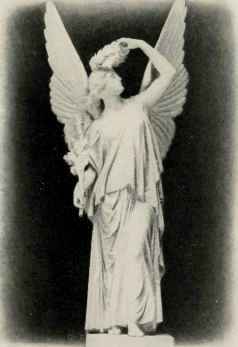
Bestowing The Wreath.

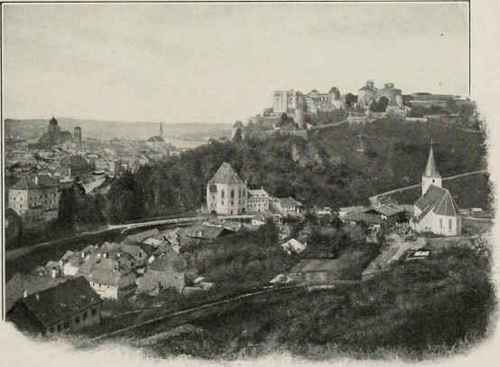
The Fortress Of Pass AU.

The Danube At Passau.
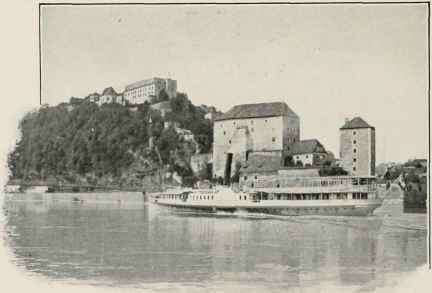
Steaming Up To Passau.

The Augmented River.
The view of Passau's picturesque peninsula, as we sailed away, was so enchanting, that I would gladly have delayed the steamer to enjoy it. Too quickly did the curving shores shut out the fascinating scene, and relegate it to the halls of memory. I missed the independence, slower progress, and delightful silence of my rowboat near the Roman ruins. In fact, the one objection to a steamboat journey down the Danube is the swiftness of the passage, which causes its attractive sites to shift and change, like bits of colored glass in a kaleidoscope. Large towns and pretty villages; low, smiling plains and wooded hills; rich, cultivated farms and stately forests - all these appear in quick succession to the right and left, change their positions nimbly in relation to the swinging boat, and vanish, to give place to others. Perhaps the ideal way of traveling here would be to make a portion of the voyage upstream; since only when one stems the current slowly can one properly observe the scenery. Moreover, in the ascending trip the tourist would have the steamer practically to himself. For some miles after leaving Passau the shore upon the right is Austrian, while that upon the left remains Bavarian. But near the charmingly situated town of Engelhartzell - called after Passau's bishop of that name nine hundred years ago - this territorial distinction suddenly ceases. We pass an unseen frontier, -■ would that all barriers between nations were as peaceful! - and learn that thenceforth both the Danube's banks belong to Austria. This means, however, little to the tourist; for, while he thus remains afloat, he feels that, like the flood which bears him on, he can ignore such trifles as a change of government. From time to time small tributaries join the sovereign stream. Two or three castles usually are in sight, most of them difficult of access from the river, and seemingly defiant in their isolation. Some have been renovated, and now serve as hunting seats or country residences for their wealthy owners. Others stand weather-worn and roofless from neglect; but all no doubt possess extremely interesting, probably tragic, chapters in their histories. So much of evil in the world must be ascribed to the invention of explosives, that it is worth remembering that gunpowder was really necessary to drive out from their mountain nests the castled pirates of antiquity. Till that could be employed, the barons were impregnably intrenched. Their watchmen stood on every height to signal all approaching boats, whose owners had to pay the required tax, or else be unceremoniously given to the waves. Sailors of shipwrecked boats, too, from the moment they set foot upon the territory of a robber-baron, were to all intents and purposes his slaves. All goods, thrown over to relieve a storm-tossed barge, became the property of the man upon whose land they came ashore; and if a boat's prow even touched the strand, however lightly, that fact alone transferred the ownership of the cargo to the proprietor of the sandbank which it grazed! Occasionally these old habitations are suggestive of the age of fable. Thus, one romantic castle - still in use, though smitten by the storms of seven centuries - bears the strange name of Ranariedl. It is derived from the Scandinavian river-goddess, Ran, whose husband, AEgir, represented water's favorable features, - beauty, majesty, and calm, while she personified its dangerous and dreadful elements. How this Norwegian legend gained a foothold here, is still conjectural; but it prevailed sufficiently to make men think that, like the Loreley, Ran spread her net here cunningly for shipwrecked crews, and dragged them downward to destruction. Even the noisy brook, which hurries down these cliffs, commemorates this evil genius in its title, Ranabach; and, since the rugged walls approach each other closely at this point, and many a wave-worn boulder frets the narrowed current into glistening foam, the terror-stricken voyagers of old times would see at night weird visions through the moonlit trees, hear Ran's hoarse cries of exultation, and watch her fascinating form upon the rocks, lifting her snowy-arms, and luring them to death.
Continue to:


My Books

