


Lake Como. Part 25
Description
This section is from the book "Lake Como - John L. Stoddard's Lectures", by John L. Stoddard. Also available from Amazon: John L. Stoddard's Lectures 13 Volume Set.
Lake Como. Part 25
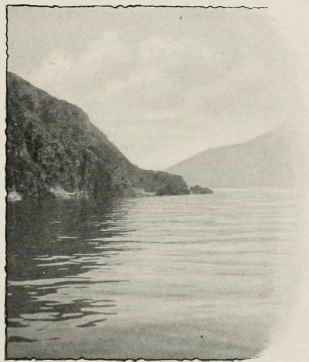
Distant View Of The Promontory Of Musso.
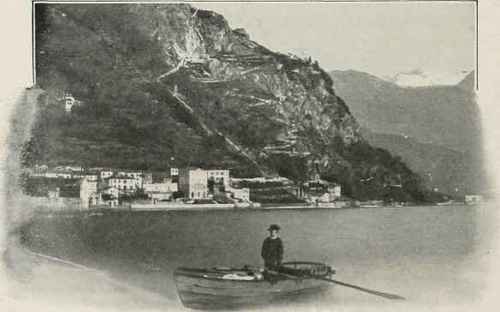
Site Of The Castle Of Musso.
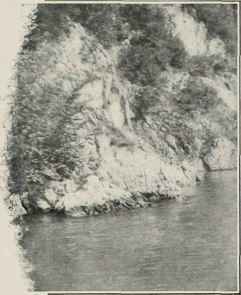
At The Base Of Musso's Cliffs.

An Ancient Lombard Tower. Azzano.

A Boat Of Transport.
He was, moreover, buried in the grand Duomo of Milan, beneath a handsome monument, whose five bronze figures are the work of another famous resident of Lake Como, the sculptor of Menaggio, Leone Leoni. Such posthumous honors are in part explained by the astonishing fact that this acknowledged brigand was the brother of a pope, and uncle of a saint! For his own brother, Giovanni, became Pius IV., and his sister, Carina, was the mother of Saint Carlo Borromeo, whose dust is so revered to-day in the Milan cathedral. To one thus highly connected much is forgiven-in this world at least! Yet it is likely also that the personal magnetism of the man, and the inevitable glamour which attends successful deeds of violence, had won the people's hearts, and warped their moral judgments. Probably, too, there was in this strange character something really lovable and good. If so, a fitting epitaph for his monument might well have been the lines of Byron :

A Style Of Boat Used On The Lake For Centuries.
"He left a Corsair's name to other times, Linked with one virtue and a thousand crimes".
Some two miles distant from the ruins of II Mede-ghino's stronghold lies the interesting town of Grave-dona, beautifully situated in a sheltered bay. Though bright and youthful in appearance, there is an unmistakable air of proud reserve and dignity about the place, which hints of an eventful past, and quite prepares us to believe that during the Middle Ages this ranked next to Como among Larian towns. Two venerable churches, - Santa Maria and San Vincenzo, - standing near the water's edge, also attest the fact that here Christianity was powerful at an early date. Indeed, the church of Santa Maria is said to have been founded in 590 a.d. by that convenient patroness of all good ancient things upon the lake, - QueenTheodelinda. Moreover, beneath the shrine of San Vincenzo is a crypt, supposed to be a century older still. It certainly contains two Christian inscriptions dating from the year 508 a.d., and in its sacristy are specimens of fifteenth-century work in exquisitely finished objects of wrought silver, set with precious stones. A third imposing edifice gives to Gravedona even more distinction. This is the huge square castle, erected here, some thirty years after the death of II Medeghino, for Cardinal Gallic He, it will be remembered, also owned the sumptuous palace at the other end of the lake, now called the Villa d'Este, and was as celebrated for his liberality as for his wealth. In fact, it was said of him - so many were his residences -that he could make a ten clays' journey between Rome and Gravedona, sleeping each night in a different place, yet never under any roof except his own. Typical of the age in which it was constructed, this castle at Gravedona could have been easily utilized as a fortress, in case of necessity, so strong are its foundations and so thick its walls. To-day its spacious rooms are almost desolate. Marauders in the seventeenth century plundered it of all its riches. Hence, of the stately furniture, gorgeous tapestries, and noble works of art, which made this building famous for its splendor, not a trace remains. Practically nothing but the vast shell still exists, although it has been partially converted into a monastery. No one can linger long, however, in its lonely portico, surveying the magnificent view which it commands, without a sigh that it has fallen into such neglect, and a desire that some one should restore it to its former grandeur, and give to it the beauty and the luxury which seem its right. But who will ever breathe into its halls the breath of that old life? As little can one hope that from the depths of the fair lake will ever be restored the castle's ravished treasures, submerged and buried by the angry waves, when the ill-fated, overladen boat which bore them hence encountered a terrific storm. This was, however, nothing strange. The section of the lake between Gravedona and Bellano is often much disturbed. Even in summer, I have sometimes left the Tremezzina and the region round the promontory of Bellag-gio tranquil, yet found this stretch of water rough enough to cause the spray to fly profusely over a motor-boat, and to make rowing undesirable, though of course not dangerous. This was not due to any tempest. On the contrary, it is the ordinary condition which prevails there in fine weather. For then the two south breezes, called the Breva di Lecco and the Breva di Como, are usually blowing with considerable force, and in converging at this point produce a troubled sea. When actual storms occur here, therefore, they are violent. From Gravedona it is but a little way to the pretty town of Domaso, built, like Menag-gio, on a point of land, advancing wedge-like far into the waves. Beyond this, on the opposite shore, one sees Lake Como's principal tributary, the Adda, rushing impetuously from its Alpine home to lose for a brief time its own identity in the mighty mass, from which it will emerge again at Lecco, thirty miles away. Standing upon this picturesque peninsula, almost within the shadow of the Alps, I follow with my eye the glistening highway, as it skirts the upper portion of the lake, and finally turns northward toward Chiavenna - that old, romantic town whose name, "The Key," reminds us that it once unlocked the two important valleys of the Splugen and Bregaglia, by which one mounts to the great Alpine world. Thence, as my gaze coasts round Lake Como's gracious shores, I ask myself what other features of its beautiful expanse I should lay special stress on, as my space grows short. The answer comes at once, its private gardens, those inner sanctuaries of the Larian temple, opened only to a favored few.
Continue to:


My Books

