


Things To Avoid
Description
This section is from the book "A Living From Bees", by Frank C. Pellett. Also available from Amazon: A Living From Bees.
Things To Avoid
While the fundamentals of beekeeping are not difficult to understand, the common experience is for the beginner to make expensive blunders. With sufficient care, these are not necessary, for some people of my acquaintance have taken up beekeeping without previous knowledge or experience and have attained outstanding success.
My first caution is not to buy too many bees at the start. In their anxiety to secure immediate returns, beginners too often plunge recklessly into the purchase of more bees than they can manage. It is true that it is occasionally possible to buy an outfit at a mere fraction of the cost of the equipment. In such a case, under the advice of an experienced guide, one might do well to take advantage of a special opportunity, even though he was not yet capable of its proper management.
No general rule can be laid down as to the proper number of colonies to begin the new venture. So much depends upon the capacity of the individual to learn new things, the situation in which he lives and the availability of friendly advisers of experience. The common advice has long been to buy only one or two hives, but this is hardly enough as a rule. If one can afford the outlay, I would prefer about five. This will allow for the accidents which are likely to happen with the probability that some colonies will do well the first season and give the new owner a real return on his investment.
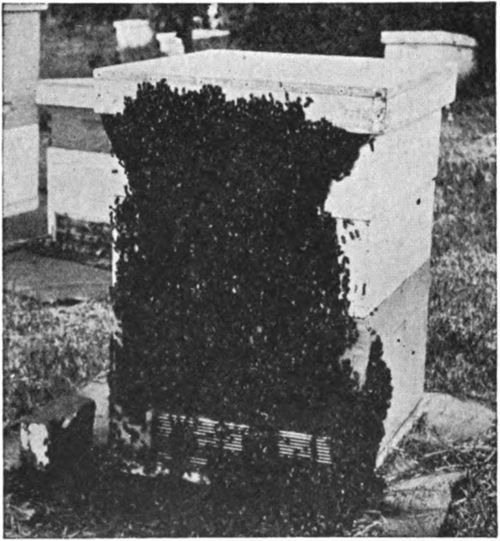
Effect of heat. Bees cluster outside for lack of ventilation.
If they do well, five colonies of bees will produce enough honey to supply the table of a large family for an entire year with some left over to sell. If they do poorly, there are few who would care to make the necessary investment for a larger number.
Next, don't pay much for old or obsolete equipment or for bees in nail kegs, hollow logs or boxes. It is hard enough for the experienced beekeeper to do anything with bees in such condition and often disastrous to the beginner. If one can buy them for a trifle, he can get some interesting experience in transferring them into good hives, but the queen is often killed in the process and the colony lost as a result.
If possible, visit an apiary or dealer in supplies before you buy anything. If the beekeeper will explain the different parts of the hive and the use of each and show you his honey house and other equipment you can then make further progress by reading.
Perhaps the most important caution of all is not to buy bees with disease in the hive. American foulbrood is a disease of the young bees in the larval stage. It offers such a serious problem to the experienced beekeeper that it is generally advised to burn the affected colony and be done with it. The novice who gets this disease in his outfit at the start is doomed to failure from the beginning unless he is a person of unusual determination and persistence. There is no way that the novice can tell for himself whether or not the bees are free from disease. He must deal with persons of known integrity and experience. There are plenty of folks who have kept bees for years and are unfamiliar with it. They may sell bees which have recently contracted the malady and yet be entirely innocent of any wrong intention. The safest way is to buy where the apiary has recently been examined by an inspector from the state. This leads to repeat the suggestion that one wishing to buy bees should write to the Department of Agriculture or the College of Agriculture of his own state and ask for information where bees may be had near to his own home.
When you get your bees be careful to place them where they will not annoy members of the family or the neighbors. Where homes are near together serious trouble sometimes develops because the bees are constantly annoying those who fear them. Bees are often kept in town with hundreds of persons passing constantly and yet unaware of their presence. Face the hives away from roads or foot paths and, if possible, place them behind bushes or buildings which will cause them to rise high into the air when going afield.
Finally after the bees have been brought home and the apiary site selected, don't disturb them too often. The beginner with bees often has an insatiable curiosity about what is going on in the hives and must open them and remove the frames with disastrous frequency. Gentle bees will not usually resent the attention, but until one acquires some skill in handling the frames, there is always the dan-ger of killing the queen or disabling some of the field bees. Every disturbance of this kind breaks up the orderly business within the hive and requires some readjustment of the housekeeping enterprise. An occasional visit does no harm but, if carried to extremes, annoys the bees and reduces the harvest.
Continue to:


My Books

