


The Apiary
Description
This section is from "The Horticulturist, And Journal Of Rural Art And Rural Taste", by P. Barry, A. J. Downing, J. Jay Smith, Peter B. Mead, F. W. Woodward, Henry T. Williams. Also available from Amazon: Horticulturist and Journal of Rural Art and Rural Taste.
The Apiary
Since I have been a reader of the Horticulturist, I find that your contributors have entirely neglected this important branch of rural economy. The locality of the apiary allies it to horticulture even more than agriculture. Its appropriate place is the garden, yard, or lawn; yet there is scarcely an agricultural journal that does not devote a portion of its columns to this subject.
Among the many adornments with which we are wont to beautify our grounds, there is none which forms so attractive a feature, and which can be so reasonably expected to defray its own expenses, as the apiary. With the increasing interest that has recently been given it, has come the movable comb hive - the only improvement - giving us facilities for studying minutely every part of the interior, thus enabling us to become familiar with the natural history of the bee, which is satisfactory in itself, and enhances our success in management. The Italian bee, lately imported, besides the numerous other good qualities which are ascribed to it, is less disposed to sting, which will remove, in a great measure, the objection to apiculture heretofore existing in many places.
Probably very many readers of the Horticulturist are desirous of introducing the apiary as a profitable ornament to their yard, and are only waiting some suggestions for a satisfactory arrangement to make a beginning. For their encouragement, and the promotion of Bee culture generally, in the absence of something better, I will offer a few remarks on the subject.
As success depends upon our understanding the nature of the bee, rather than on any chance or luck, I would suggest, as a lesson elementary, that its habits be well understood. The hive, and its arrangement in the apiary, should also receive proper attention.
Every prosperous swarm or family of bees must contain one queen, several thousand workers, and, part of the year, a few hundred drones.
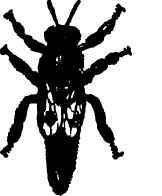
QUEEN.
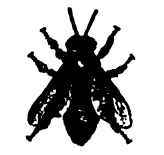
WORKER.
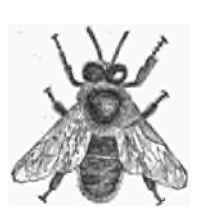
DRONE.
The queen is the mother of the entire family, often depositing more than two thousand eggs in twenty-four hours. In shape she resembles the worker more than the drone, but is longer than either, and, like the worker, has a sting, but will not use it for any thing below royalty. Her color on the upper side is darker than the others; the two posterior legs and under side are bright copper-color. In some of them a yellow stripe nearly encircles the abdomen at the joints. All the colors are bright and glossy, having but little of the down or hair that covers the drone and worker. Different queens vary much in color; some are much darker than others. A still greater variation is presented in the Italian queens, most of which are of a rich golden color, while a few are even darker than the native usually are. For the first few days after leaving the cell her size is much less than after she has assumed her maternal duties. She seldom, perhaps never leaves the hive, except when leading out a swarm, and when but a few days old, to meet the drones for the purpose of fecundation.
It has been admitted generally, and now, by the introduction of the Italian bee, still further demonstrated, that the drones are males, that sexual connection takes place in the air - performing their amors on the wing - and that one impregnation is operative for life. It is also supposed, by many, who have examined the subject, that the eggs formed in the ovaries of the queen are without sex; that the simple act of her depositing them in worker or drone cells will decide it, as explained by the following theory. The fertilizing fluid is contained in a small sac, as shown in the engraving, the opening of which the eggs must pass as they are deposited.

(a) Sac, containg seminal fluid, and opening into the viaduct (b), (c, d) the ovaries.
The abdomen of the queen, on being inserted in the worker cell to deposit the egg, is com-, pressed sufficiently to cause a flow of seminal fluid that fertilizes it. The drone cells are larger, and the abdomen receives no pressure in the act of laying; the egg passes without becoming impregnated, and a drone is the result. The eggs of an unimpregnated queen possess sufficient vitality to hatch drones; whether they are deposited in drone cells, or worker cells, the bee is the same. An Italian queen, impregnated by a common drone, will produce a mixed progeny of workers, yet the whole brood of drones are pure Italians. This fact is of much importance for apiarians who wish to change their native stocks into the Italians. Eggs that the queen has deposited in drone cells can never be converted into queens. Although the experiment has been frequently made, no one as yet has reported success. But eggs that have been deposited in worker cells, and consequently impregnated, can be changed to queens with scarcely a failure.
The whole process consists in shutting up without a queen a few hundred bees with a piece of comb containing eggs or young larvae; in a few days they will convert one or more of these into queens: another important principle in propagating Italian bees.
The cells in which queens are raised, differ essentially from those for either the worker or drone. The two latter are made alike, and differ only in size; while the one for the queen is several times larger than either, altogether different in shape, and material enough is used in constructing one to build fifty of the others. These cells are located, usually, on the edges of the combs, in stocks that are preparing to send out natural swarms, and they make the cell vertical from the beginning. It is somewhat oval in shape, half an inch in diameter, and an inch in length; the situation affords the requisite room without interfering with any thing below it. When compelled to rear queens from worker eggs, they vary their work in accordance with the circumstances, destroying a few common cells directly below the one that is to be changed, and then work it outward and downward, making it crooked and seemingly out of place, yet it answers all purposes of changing a worker to a queen.
The food with which the embyo queen is nursed has probably as much influence in the marvellous transformation as the shape and size of cell. It is not only different from what is fed to the common brood in quality, but much greater in quantity. . She lies half buried in food, which is a mass of light-colored,- jelly-like substance, prepared and deposited without stint This treatment develops the mature queen in seventeen days, while the worker is twenty-one, from the egg to the mature bee. Her age is limited to about four years.

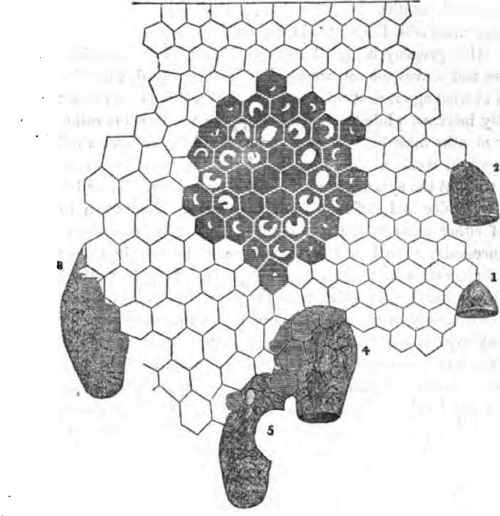
PLATE OF THE THREE KINDs OF CELLS.
The cut represents the eggs and larvae in the common cells. " At 1, queen cell just commenced; 2, one sufficiently advanced to receive the egg; 4, queen matured and left; 3 contains a queen; 5, queen been destroyed and removed by the workers; 6, cell just commenced to change a worker grub to a queen; 7, such cell finished.
All labor devolves on the workers. They are provided with a sac or bag for honey; basket-like cavities are on their legs, where they pack the pollen of the flowers into little pellets convenient to bring home. They range the fields for honey and pollen, secrete wax, construct combs, prepare food to nurse the young, bring water, obtain propolis to seal up crevices and flaws about the hive, stand guard to keep out intruders, etc, etc. For the defence of their treasures and themselves, they are provided with a sting and a virulent poison, but will not use it when abroad if unmolested, volunteering an attack only when near the hive. They are all females with organs of generation undeveloped, yet they have enough of the mother about them to make good nurses for the brood of the real mother. For near two weeks after the young worker emerges from its cell, it is almost exclusively engaged within the hive; it then assists in collecting stores.
Its age is from one to eight 'months, according to the season in which it is hatched. In the busiest season it lasts but a few weeks; at the beginning of cool weather, for several months.
These things are verified by introducing an Italian queen into a full stock of native bees. Her progeny being all marked, it is readily ascertained when the first is mature and leaves the cell where it is first employed, when it first leaves the hive, and at what age it first collects stores. When it is seen that the marked bees gradually increase, while the others disappear in the same ratio, and at the end of a few months none but the new variety are left, we have a reliable index as to the age of the worker. The drone is the male; their bodies are large and clumsy, and without the symmetry of the queen or worker. Their buzzing, when on the wing, is louder and different from the others. They seem to be of the least value of either class in the community; they assist, on some occasions, to keep up the necessary animal heat in the hive, and one only in a few thousand is called upon for services in fecundating the queen. They leave the hive a little after noon in fa,ir weather, at which time the young queen issues to meet them. To prevent the necessity of repeating her excursions too many times before being successful, may explain why there are more drones reared than at first appears necessary.
The number reared depends upon the strength of the colony, and the stores on hand or being collected. A colony very weak, or near the starving condition, can not afford to have them. Whenever a scarcity of honey occurs, whether it be the first of June, last of July, or last of September, the whole brood is destroyed after removing the larvae and chrysalis from the cell. Their life is very precarious, being cut off at the end of a few hours, or extended to a few days, weeks, or months, but averaging much less than the worker.
* (To be continued).
[Believing Bee-culture to be a profitable as well as ornamental accessory to Horticulture, we welcome Mr. Quinby's contributions with decided pleasure. His articles will be fully illustrated, and in their course several designs for ornamental Bee-houses will be given. The introduction of the Italian Bee has given a new impetus to apiculture, and enabled us to decide several important and interesting facts, as well as developed some new ones. The whole subject is charmingly interesting. - Ed].
Continue to:


My Books

