


Peaches And Nectarines. Part 3
Description
This section is from "The Horticulturist, And Journal Of Rural Art And Rural Taste", by P. Barry, A. J. Downing, J. Jay Smith, Peter B. Mead, F. W. Woodward, Henry T. Williams. Also available from Amazon: Horticulturist and Journal of Rural Art and Rural Taste.
Peaches And Nectarines. Part 3
A very simple and agreeable method of retarding such mid-season peaches as the Noblesse, Royal George, and Grosse Mignonne, and all mid-season nectarines, may be practised as follows: - Remove the trees from the orchard house to the open air in the end of July (if the season is early, and the house is in a warm situation, a week earlier); place them in some warm sheltered place, or in front of a south or south-west wall, about two feet from it. In a few days both peaches and nectarines change to a deep crimson, and if the weather is sunny, their flavor will be very; vinous and piquant. Under this treatment, such sorts as I have named above will ripen by the end of September, or later, according to the state of the weather. By this method, the season of our fine melting peaches and nectarines may be much prolonged, and, in cases where the absence of a family may require it, the whole crop of an orchard house can be retarded. Half-standard peaches and nectarines with nice round heads, may be used us ornamental trees in the same way as recommended for apricots.
Within these few years a method of growing peach trees against walls has been brought into notice in France. This is called training "en cordon oblique," and is carried out by planting against walls, maiden trees twenty inches or two feet apart at an "angle of forty-five degrees." The lateral shoots are shortened in closely, and rigid summer pinching is practised, so that a wall is soon completely covered with short fruit-bearing shoots. In warm climates and in dry soils this, method has been found to answer very well, but has been objected to in climates and soils of a contrary description, as the vigor of the trees is not restrained enough by the most severe summer pinching. The French gardeners do not know, or will not practise, root-pruning or annual removal, which would doubtless make these very pretty trees abundantly fruitful. The annexed is a figure of one of these oblique trees, from the work on pruning: by M. Hardy.
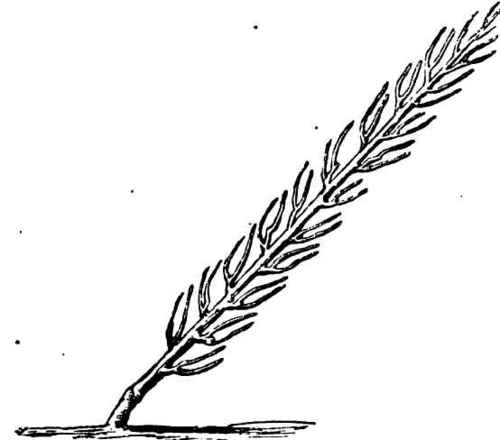
Fig.10. A Peach-Tree trained "en cordon oblique".
I now propose a modification of this mode of culture for the orchard house, by forming peach and nectarine trees into close compact pyramids like an upright cypress, and annex a figure of a maiden tree potted and pruned. For this purpose maiden trees with straight stems and well furnished with lateral shoots should be selected, and planted in 11-inch pots. They should not be more than from three and a half to four feet high; if more, their tops may be cut off to that height. Each lateral shoot should be cut into two buds; these and the buds in the stem will give numerous shoots: during the whole of the summer every shoot must have its point pinched off as soon as it has made six leaves; those that are weak and form their terminal bud at the fifth leaf need not be shortened. This incessant summer pinching of the shoots of a potted tree, in the climate of the orchard house, will, in one season, form a compact, cypress-like tree, crowded with short fruit-spurs. The second season these should be thinned out in February, so as to leave them as nearly as possible at regular distances, and in summer the fruit should be thinned and the shoots pinched as in the first season.
A close fruitful pyramid will thus be formed, on which the fruit will be fully exposed to the sun and air. A great number of trees may in this way be grown in a small space, and they will form beautiful objects of high cul-ture. I have recently planted some trees of this description in one of the borders of an orchard house, and intend to manage them after the method I have given as regards summer pinching; and lifting and replanting them every year early in November. A plantation of these pyramids, in a small span-roofed house, will, I am certain, prove most interesting and profitable. The peach and nectarine season may be much prolonged by a judicious selection of varieties. The earliest peach is the Red Nutmeg, which will ripen in July (it is small, but very nice); next the Early Anne and the Early York, which ripen immediately after it; then the Acton Scot; the Early Grosse Mignonne; the Grosse Mignonne; the Noblesse; the Royal George; the Galande; the Reine des Vergers, a beautiful and hardy new peach; the Barrington; the Chancellor; the Walburton Admirable, a most admirable new variety; and the Late Admirable, of which the Teton de Venus and Bourdine are excellent varieties: these ripen nearly in succession, are all melting peaches, and give their fruit from July till the middle of October. I am also inclined to think, that with the large "Pavies" or clingstone peaches of France, such as the Pavie de Pompone, and the Catherine, the peach season may be prolonged till the middle or end of November. These very late peaches, on walls in moist cli-nates, are quite worthless; but in the dry climate of the orchard bouse, although not high flavored, they serve to prolong the peach season.
They should be cut in slices and served with wine and sugar, as in France.
A selection of nectarines may include the following: - Fairchild's Early, small, but the earliest; Hunt's Tawny; Elruge; Hardwicke Seedling; Pitmaston Orange, very beautiful and very good; Violette Ha-tive; New White; Roman; Early Newington; and Late Melting.
There is a race of nectarines from Syria well worthy of especial culture; the best of these is the Stanwick and seedlings raised from it. Many gardeners have failed in its culture, finding it crack, and drop off in stoning. It is easily cultivated in pots, but requires an orchard house gently heated: the best of houses for the culture of this fine fruit is the small span-roofed with boards, and heated by one 4-inch hot-water pipe round the house. As soon as the trees are in blossom in April, the fire may be lighted every morning at six and kept up till five in the afternoon all through May, giving abundance of air in the day, and a portion by night, although the crevices of the boards will admit some. In June and July the fire may be lighted at six in the morning, and suffered to go out at mid-day; the trees must be syringed regularly. By this treatment the fruit will ripen in the South of England in August, be clear, free from cracks, and the- most perfect and delicious of all nectarines; its flavor is most peculiarly gratifying, and I have no hesitation in saying that no fruit can be imagined more exquisite in flavor.
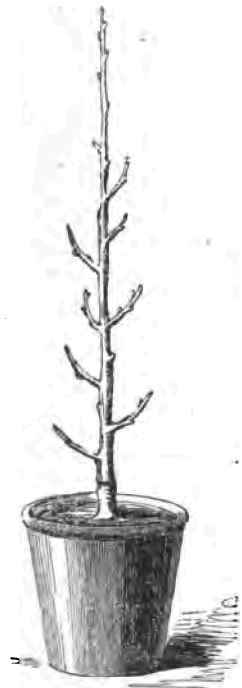
Fig. 11. A.Maiden Peach-Tree primed to form a close Pyramid.
(To be Continued).
Continue to:


My Books

