


Progressive Gardeners' Society (2)
Description
This section is from "The Horticulturist, And Journal Of Rural Art And Rural Taste", by P. Barry, A. J. Downing, J. Jay Smith, Peter B. Mead, F. W. Woodward, Henry T. Williams. Also available from Amazon: Horticulturist and Journal of Rural Art and Rural Taste.
Progressive Gardeners' Society (2)
The following is a continuation of the proceedings of this Society from oar last number. It begins with the last part of Prof. .Stephens's essay on Manures.
In considering the application of manure to the soil, it is an important fact, not to be lost sight of, that neither stable manure nor animal matter in their fresh state are fitted to give up their fertilizing elements as food for plants. Strictly speaking, the food of plants consists entirely of inorganic matter. Stable manure in its fresh state consists chiefly of undecomposed litter and straw, and of partly decomposed vegetable matter contained in the solid excrements. After a thorough fermentation, which is a kind of slow combustion, a dark, rotten, powdery mass remains, the organized substances have been decomposed, a large part of the water has been expelled, and if the manure heap has been properly managed we have the fertilizing elements in a more concentrated and soluble form than before, and ready at once to enter into the office of vegetable nutrition.
Some valuable experiments by Voelken on the composition of fresh stable manure 14 days old, on which no rain had fallen, and on the same manure well rotted for six months, gave the following results. He found that during the fermentation of dung the quantity of both soluble organic and soluble mineral matters rapidly increases, and that the proportion of ammonia and of phosphate of lime in these soluble matters also rapidly augments. Thus 100 parts of dry soluble organic matter from rotten dung contained 6.04 of nitrogen, while 100 from rotten dung contained 8.02, and the phosphate of lime was nearly doubled. The proportion of organic matter decreased as the fermentation went on, but the loss was in carbonic acid and other nonessential gases.
There is apparently no serious loss of ammonia by evaporation, as is commonly supposed. Direct experiments have shown that in the cold no ammonia is given off from the surface of farm-yard manure, and that a considerable amount of heat is necessary for this purpose. Now as this occurs only in the interior of the heap where the fermentation is active, the liberated ammonia, in passing through the outer layers of decaying organic matter at a lower temperature, is arrested. This fact was proved by Voelken by the analysis of fresh manure made into a heap, and left for six months. The amount of organic matter was found to have diminished from 960 lbs., but the total amount of nitrogen at the commencement was 18.23 lbs., and at the end of six months 18.141bs, or nearly the same. To guard against the danger of loss in fermenting manure it is only necessary that the heap be protected from rain, and if the fermentation becomes so active as to produce much heat, let the heap be covered with turf or sod, kept moist by occasional watering, or sprinkle the heap occasionally with sulphuric acid and water, which does quite as well as the covering of turf.
I do not mean to say that it is not better sometimes to apply the long manure directly to the soil. If this is done, the fermentation and decay must take place in the soil before the plants can avail themselves of the nourishment The advantage gained is that the manure has more tendency to lighten and render the soil porous, and also to contribute some warmth to the soil during fermentation. While short dung is certainly preferable for spring crops, long dung may be better for winter grain. At all events, it is better to bury the fresh manure at once in the ground than to leave it subject to the drenchings of either winter or summer rains, as is the practice of some improvident farmers. The above facts showing the advantage of fermented over fresh manure apply equally to animal matter.
In estimating the value of artificial manures in which animal matter forms the chief ingredient, it is of the utmost importance to know whether the animal matter has been simply dried up, or whether it has been decomposed by fermentation in the process of manufacture; for on this will depend the activity and also the concentratedness of the manure. In the thorough and judicious fermentation of animal matter, not only in the water already existing in the mass expelled, but the weight of the manure is further greatly reduced by the combination of the elements of water and of carbonic acid and their subsequent expulsion, while all the mineral elements and the ammonia are retained. The manure is therefore much more concentrated than it could be made by merely drying the crude material. It ii alto rendered more active, for the nitrogen has been brought into the form of ammonia, in which state alone it is suited to be food for plants. The phosphate of lime, also, usually considered an insoluble compound, has, in the process of decay, become soluble.
Woehler, the great German chemist, has observed that bone dust moistened with water, yields, after a time, a considerable quantity of soluble phosphate of lime, and that this solubility rapidly increases with the putrefaction of the gelatine of the bones. Hence, whenever earthy phosphates exist with organic matter, water will invariably dissolve a portion progressively with the decomposition of the organic matter by fermentation. This fact is of the utmost importance to agriculture.
Gunno is the best example that can be adduced of a manure that has undergone the beneficial influence of complete decay, and it is to this fact that its activity as a stimulant to vegetation is to be chiefly attributed. It contains, however, in too large proportion the elements for producing seeds and nutritious roots, compared with the mineral elements for strengthening the sterna and leaves of plants, to be taken as a complete fertilizer. To a soil sufficiently supplied with potash and soluble silicates, guano may be advantageously applied. On soils deficient in these substances, or scantily supplied with lime, its continued application will produce exhaustion.
The use of special manures is always more or less a hazardous expenditure, unless the agriculturist is accurately acquainted with the composition and wants of his soil. The use of phosphate of lime on a soil which happened to be not deficient in that particular substance, would prove an expenditure yielding at least no immediate return; it would not increase the crop. And even if the soil did lack phosphates, if at the same time it was also deficient in potash, or any other essential mineral ingredient, then the addition of phosphates alone would fail to produce fertility. If a soil merely lacks some particular ingredient, of course the addition of that ingredient will produce fertility. It is easy to see, then, the cause of the contradictory experience of agriculturists as to the value of salt, and of gypsum and lime as special applications. It would be folly to apply lime to a calcareous soil, or salt to lands moistened by the spray of the ocean. I will not speak of the advantages of these applications at present, though if time permits I would like to remark upon them at a later stage of this discussion.
I will merely add now a few words concerning one supposed disadvantage attending the use of artificial fertilizers. It is thought very generally by farmers, that concentrated manures can never take the place of bulky stable manure, on account of the deficiency of the former in humus-forming elements. Now, while I am decidedly of opinion that, as far as the agriculturist can obtain an abundance of stable manure at not too great a distance, he can not do better than to make that his main reliance, depending on artificial manures only as occasional aids to bring on an early crop, or to help on a slow one; still, in the lack of stable manure I have no doubt that artificial manures may be made to take its place fully and successfully. I attach but little importance to the organic matter of straw or litter aside from the mineral ingredients which it contains, and its mechanical effect in loosening a soil. The organic matter itself decomposes simply into water and carbonic acid, elements which nature supplies freely in other ways. It is chiefly the inorganic matter, the potash, soda, lime, and magnesia contained in the decaying vegetable matter, which give it its manurial value.
These minerals can be easily applied in artificial manures; and then, as regards the mechanical advantage of bulky manures in lightening a soil, this same advantage can be more effectually obtained by a judicious rotation, by which a sufficient amount of sod and roots will be from time to time buried in the soil.
(To be continued).
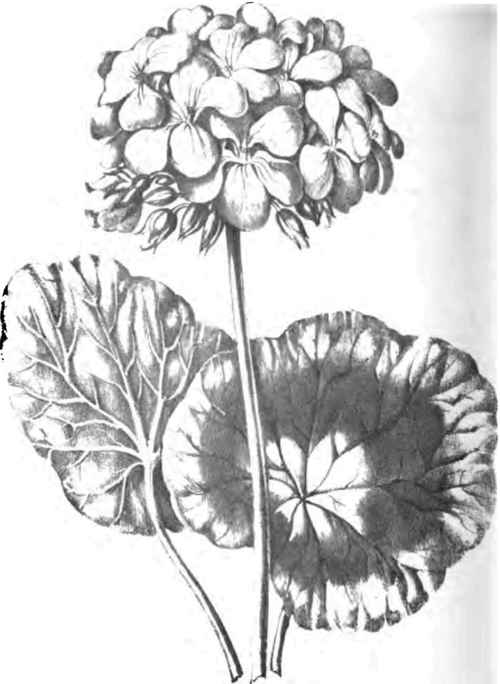
ROSE CHAMPION.
For THE HORTICULTURIST, Published by C.M.SAXTON,BARKER Co., New-York.
Continue to:


My Books

