


5. Antagonism To Beta-Glucuronidase
Description
This section is from the book "Chemistry Of Enzymes In Cancer", by Franz Bergel. Also available from Amazon: Chemistry Of Enzymes In Cancer.
5. Antagonism To Beta-Glucuronidase
The last example refers to a kind of enzyme inhibition connected with a case of identifiable carcinogenesis in man. It will be remembered that β-glucuronidase which catalyses the removal of glucuronic acid from phenolic derivatives was found to be elevated in a number of malignant tissues as compared with the adjacent non-cancerous tissue.93 Such increases in enzyme levels were also recorded in body fluids, such as vaginal fluid from women with cervical cancer96 and urine from patients with cancer of the bladder, the latter studied by Boy-land et Cancer of the bladder can be induced by aromatic amines, manufactured as dye-stuff intermediates or more accurately by their hydroxylated metabolites,41 and is therefore an occupational disease of workers in factories where, for example, 2-naphthyl-amine was produced on a large scale. But these bladder tumors may also arise in a population which is not exposed to the synthetic amines. In these instances it is not unlikely that the origin of these neoplasms may have something to do with the action of endogenously produced o-aminophenols from tryptophane metabolism, such as 3-hydroxyanthranilic acid7; like the hydroxy derivative of the dye-stuff intermediate 2-amino-naphthalene,41 it was found to be carcinogenic when implanted into bladders of mice. The synthetic and metabolic aminophenols are usually excreted as non-carcinogenic conjugates (formed in the liver either with sulfuric or glucuronic acid), which as such are substrates of the hydrolysing enzymes sulfatase and β-glucuronidase (see Fig. 27, with reference to the glucuronide of 2-naphthylamine). As these enzymes and particularly β-glucuronidase, as stated before, appeared to be present at a higher concentration in the urine of sufferers of bladder cancer (Table IV) ,42 it was thought that larger amounts of the carcinogenic moiety were set free in the urinary apparatus of these patients. This led to the application of a competitive β-glucuroni-dase inhibitor, discovered by Levvy,172 namely, glucosaccharo-L, 4-lactone (see Fig. 28, II), which in its isomeric form (Fig. 28, IV) is ineffective. One gramme of the lactone (II), taken 3 times daily by mouth, neutralized 80-90% of the urinary glucuronidase activity in man.45 A long-term clinical trial with patients who had malignant tumors of the bladder surgically removed is being undertaken with the aim of finding out whether development of new neoplasms could be prevented. If this clinical experiment should show encouraging results, then this antagonist or similar ones, inhibiting an enzyme which by its action is responsible for the presence of relatively large amounts of the noxious agents, could be used for prophylatic treatment of persons who are either exposed by their working conditions to carcinogenic aminophenols or precursors, or (if the hypothesis of the carcinogenesis of bladder tumors in men not exposed to industrial hazards proves to be correct) who show an excessive excretion of trytophane metabolites. Perhaps this whole concept of a preventive treatment, using enzyme inhibitors, could be extended to organs other than the bladder.
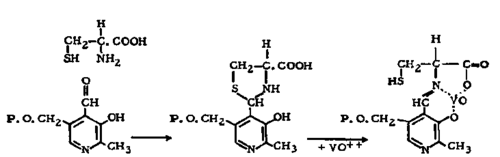
Fig. 26. Interaction of cysteine with pyrvanal.
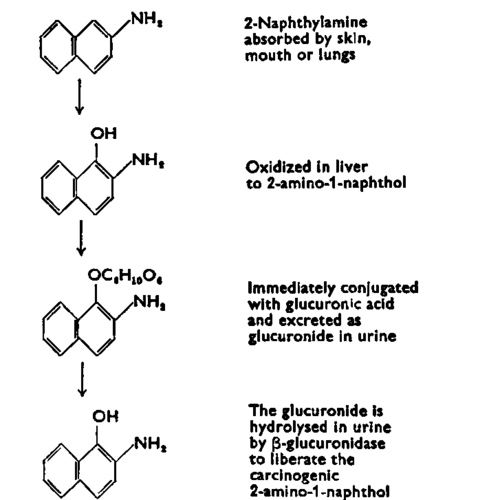
Fig. 27. Schematic representation of the metabolism of 2-Naphthylamine leading to the liberation of the carcinogenic 2-Amino-l-naphthol in urine. (From Boyland: Brit. Med. Bull.Courtesy of the British Council, London.).
Table 4
β-Glucuronidase activity in urines of different types of patients. (After Boy land: Brit. Med. Bull Courtesy of The British Council, London.)
Nature of Disease | Number of Cases | Units J ml. (range) | Number of Cases with Values above Normal Range |
None | 25 | 0.1 -12 | - |
Cancer of bladder: single tumours | 25 | 1.1 - 7.6 | 24 |
Cancer of bladder: multiple tumours | 39 | 0.8 - 7.9 | 35 |
Cancer of bladder: with new tumours or recurrence following | |||
treatment | 19 | 1.1 -7.4 | 18 |
Cancer of bladder, but free of tumours following treatment | 16 | 0.9 - 72 | 14 |
Cancer of kidney | 9 | 0.3 - 3.5 | 2 |
Cancer of colon or rectum | 10 | 0.3 - 1.7 | 3 |
Cancer of breast | 15 | 0.3 - 2.6 | 8 |
Urinary infection | 22 | 0.2-1.5 | 1 |
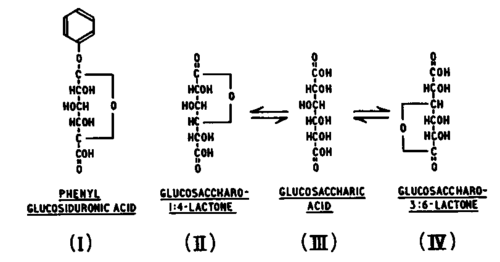
Fig. 28. Formulae of a glucuronide and beta-Glucuronidase inhibitor. (After Boyland: Brit. Med. Bull." Courtesy of The British Council, London.).
Continue to:


My Books

