


How Cancer Spreads
Description
This section is from the book "Cancer Manual For Public Health Nurses", by National Cancer Institute. Also available from Amazon: Cancer Nursing: A Manual For Public Health Nurses.
How Cancer Spreads
Malignant tumors have the capacity to spread beyond their primary site and invade other tissues. The spread of neoplastic cells through the body may take diverse forms and is intricate and capricious. Chance plays a large part in dissemination since cancer cells spread to other parts of the body through the lymphatics, blood vessels, tissue spaces, and the lumena of various body organs. Cells also slough off into body cavities and into the cerebrospinal fluid. The relative rates of spread by these routes are dependent not only on the type of cancer cells involved but also in each individual case on the relationship between the tumor and the host.1 It is this variance in the rate of spread which makes it difficult to accurately predict what each cancer will do or how long the individual patient may live. (Figures 1, 2, and 3.)
1 The Spread of Tumor Cells, George E. Moore, M.D., Fourth National Cancer Conference Proceedings, J. B. Lippincott Company, 1960, p. 91.
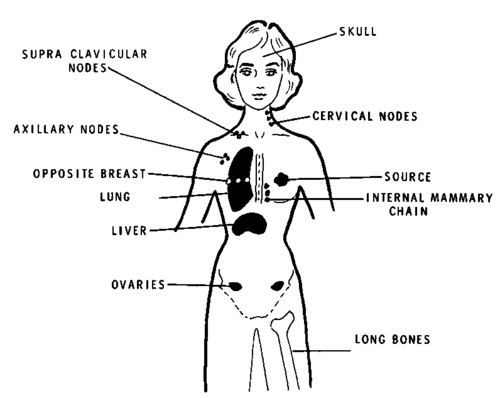
Figure 1. BREAST CANCER METASTASES
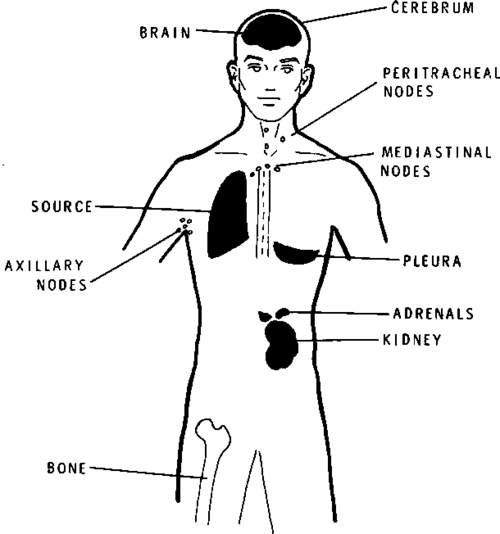
Figure 2. LUNG CANCER METASTASES
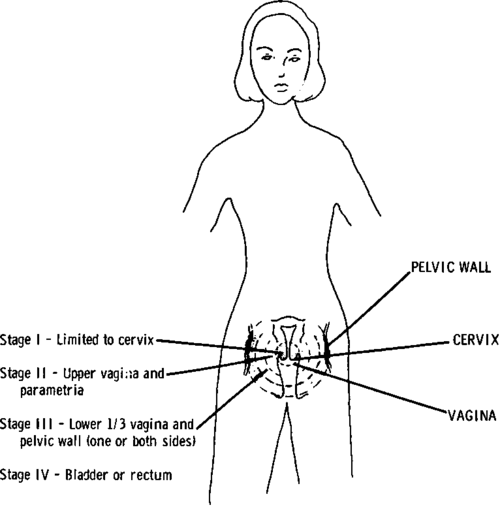
Figure 3. SPREAD OF CERVICAL CANCER
The complications which result from spread of the disease- pressure on adjacent structures, erosion, hemorrhage, etc. can be serious or fatal. The inexorable advance of disease is seldom halted. Without treatment the patient usually dies. With treatment he may not always be cured, but progression of the disease can usually be arrested, at least temporarily. From time to time reports of spontaneous cures appear in the literature but treatment should never be delayed with the hope of this occurring.
Continue to:


My Books

