


Cheese From Sour Milk
Description
This section is from the book "Food And Health: An Elementary Textbook Of Home Making", by Helen Kinne, Anna M. Cooley. Also available from Amazon: Food And Health: An Elementary Textbook Of Home Making.
Cheese From Sour Milk
What. A pan, or dish, of soured milk that is firm. Salt is enough to add, but a little butter or cream improves it.
How much. This cheese can be made without measurements, and salted to taste.
Utensils. The pan that holds the milk, a bowl, and a piece of clean cheesecloth.
How to make. Heat the milk until the whey separates, but not until the curd toughens. Put the cheesecloth into the bowl. Pour in the milk. Lift the cloth, let the whey run out, squeeze it a little; and then, if the curd in the cloth is not dry enough, tie the cloth together and hang by the string where the rest of the whey will drip. Later salt the curd, and add a little soft butter or cream.
How to serve. Serve the whey to the chickens. They will appreciate it. Make the curd into balls and cool. It is delicious with gingerbread for supper. You can take it to school in a cup or jar. Try putting it into a sandwich with a little currant jelly spread on, too. That does sound odd, but see if you do not like it.
Why is good milk, and clean milk so important? We are quite right in Europe and in America in thinking that milk is a useful part of our diet; and even in Japan and China, where milk has not been used in the past, the people are beginning to take it as food. .
What is the value of milk? In the first chapter we have seen how the growth; strength, and warmth of young animals show milk to contain substances that build the body and give energy. Indeed, it is a perfect food for the young and an excellent food for grown people. The grown-ups and you must remember that milk is true food to be taken instead of some other food, and not in place of water plus the other food. This is a very important fact, for some people add milk to a meal when they have eaten enough of other things; and then they say that milk does not agree with them. It should always be partaken of slowly.
Hot milk is a good thing sometimes, especially when one feels a little "faint" for food. Some forenoon when Mother looks tired, give her a cup of milk heated almost to the boiling point; add a tiny pinch of salt; and, if she does not like the taste, stir in a teaspoonful of fruit juice. It will make her feel rested, and will give her nourishment.
What does milk contain? This picture (Fig. 19) shows what is found in milk, when the chemist separates the parts. You have seen the dairy separator remove the cream. The curd and the whey separate when milk sours or when rennet is used. The chemist can do more. He can take out the sugar, which gives the sweet taste, and the mineral matter, which gives iron, lime, and other things needed for body building and health.
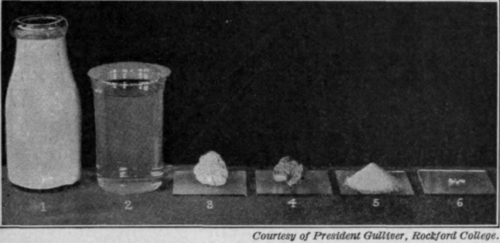
Fig. 19. - Composition of milk, 1, whole milk; 2, water; 3, fat; 4, protein; 5, carbohydrate; 6, mineral matter or ash.
The word "Protein." The curd of the milk has something in it that is found in somewhat the same form in meat, fish, and eggs; and also in nuts, old beans, and peas; and in grain seeds. It is a substance without which we starve, and which you might be satisfied to call "meat food." But why not learn its name, protein? You cannot understand just what protein is until you study chemistry; and then you will learn among other things that it contains nitrogen, a gas that is all around us in the air. We breathe it in with every breath, and out again. Nitrogen stays in our bodies only when we take it in our food in this substance called protein. Marjorie Allen found the word in one of the Farmers' Bulletins about feeding animals. Ask you father about it, too. If you are studying a little agriculture in school, you are learning something about nitrogen in fertilizers; for plants must have it, as well as animals. Neither can live without it. The protein is both a body builder and a fuel food.
Why is milk a substitute for more costly food? When milk is compared with the other animal foods that contain protein, we begin to realize how very valuable it is. Does it astonish you to be told that a quart of milk equals in food value a pound of steak or eight eggs?
Why must we have clean milk? Milk must be very clean, for in any dirt there may be the germs of sickness. Even clean milk will sour in time. Souring means the presence of one kind of "germ" or bacteria, - invisible tiny living things that form the acid. These do not injure us, but other bacteria may be harmful. Typhoid fever, tuberculosis, and other serious illnesses are carried in milk, cream, and butter. "Clean milk" is the best advertisement for those who produce it to sell. Also, when one has milk for home use one must be careful for the health of the family.
Begin with the cow. The cow must be in good health, well fed, kept in a clean barn or stable; the milker must have clean hands and clean clothes; and the pails, cans, and bottles should be as clean as boiling water, soapsuds, and sunshine can make them. The milk must be cooled as quickly as possible. In the most up-to-date dairy farms, the cow is washed and curried ! This means much trouble and labor. People who buy milk must learn to pay enough for it, so that the farmer can keep the milk clean. "Since a quart of milk equals a pound of steak or eight eggs in food value, milk even at 15 to 20 cents a quart is more economical than meat and eggs at ordinary prices. At the usual price (city) of 8 to 10 cents a quart, milk is very economical." 1 Some day we may all learn the lesson of cleanliness.
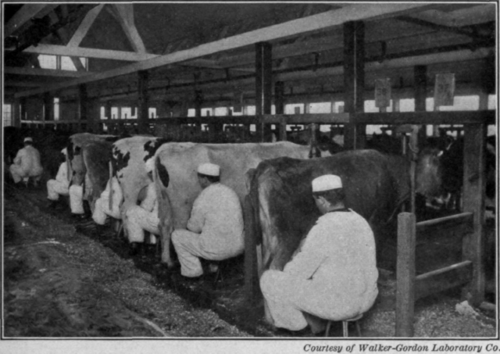
Fig. 20. - Notice how clean everything looks in this picture of milking time.
1 See Foods and Household Management. Kinne-Cooley, Macmillan Co., page 150.
Then we shall not have the tragedy of many deaths in some city, even of little children, because of an impure milk supply.
Milk in the home. Milk must be kept cool and very clean in the house. This is where ice is a comfort and saves milk and work. You cannot have the pans for milk too clean. The vessel for holding milk, whatever it is, - pan, pail, pitcher, or bottle, - should be rinsed in cold water, washed in strong, clean soapsuds, rinsed in clean boiling water, and dried in a sunny place; or, in rainy weather, near the stove. The place where the milk stands must be clean and washed off daily.
If you have no ice on hot, muggy summer days, scald the milk when it is fresh, to keep it from souring. It is better to let the pans or other containers drain dry from the boiling water than to wipe them, even with the cleanest towel. Cool the milk as quickly as you can, and keep it as cool as possible. Mr. and Mrs. Allen believe milk to be so necessary to the health of the family that they have one cow whose milk is for family use. Every one in the country who can have even a small barn and pasture, should try to have a cow.
What is the value of skimmed milk? As only the fat has been removed, skimmed milk is useful for many purposes. We know that it is fed to farm animals.
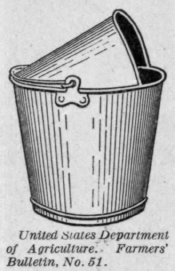
Fig. 21. - A covered milk pail helps to keep dirt out of the milk.
Although we may not care to drink it, skim milk can be used in cooking, when some cheaper fat, like suet or "butterine," takes the place of the fat taken off in the cream.
Is there any use for sour milk? Clean milk, soured, forms a smooth curd, which some people like with sugar, for a dessert. It is very delicious in this way on a hot day, especially if a little fruit juice is taken with it. And what an easy dessert to prepare for dinner or supper! Another way to use sour milk, is to beat it thoroughly and drink it. Cheese is made from the sour milk. We shall learn later about using sour milk in cooking.
Why, then, is it important to use clean milk freely in our diet? Suppose you write down the answer, that you may be sure to have all the points.
Exercises And Problems
1. Why does milk take the place of meat or eggs at a meal, rather than of potatoes? What are the three fuel foods in milk?
2. Since 1 quart of milk equals eight eggs in food value, is milk or eggs the more economical food at the time you are studying this? How can you find out?
3. Why does cream cost more than milk?
4. If there is a dairy on your farm, find out how many quarts of milk make a pound of butter.
5. What are the substances left in the skimmed milk?
6. See if you can decide what is left in buttermilk. Has it any food value?
7. In what ways can we be sure that milk is kept clean?
Continue to:


My Books

