


American Colonial And American Empire Furnishing. Continued
Description
This section is from the book "The Practical Book Of Furnishing The Small House And Apartment", by Edward Stratton Holloway. Also available from Amazon: The Practical Book Of Furnishing The Small House & Apartment.
American Colonial And American Empire Furnishing. Continued
American developments make a decided contribution to the array of furniture employed: especially to be noted are the acanthus-carved high and low posts of bedsteads, the manner in which the spiral form was used in chests of drawers (in America generally called bureaus) and bedsteads (Plate 149) and the beautiful pedestal-tables with a anthus, pineapple, and other bases. The block-front (see upper desk in Plate 147) little used in England, was a favourite here, and the shell was largely employed as an ornament. There is an old-time charm in many pieces, such as the chest of drawers and bedstead with spiral turning, the block-front desk, and the highboys, hardly to be found in any other furniture. Plate 28 (except the rocking-chair) shows late pieces of desirable form and decoration. But here, as elsewhere, the end was at hand; the sense of beauty was exhausted, finesse disappeared, ornament grew degenerate, clumsiness became a horror. The positive brutality of some later manifestations was equal to anything perpetrated by the Empire style in France.
But through this debasement a clear light shone - that of Duncan Phyfe:* until he ceased his labours beauty still remained. And why? Because he took as his inspiration the furniture of the Directory and not that of the Napoleonic period. One of his simple, graceful tables is shown in Plate 147.

PLATE 149. COLONIAL AND AMERICAN EMPIRE BEDROOM FURNITURE IN SOLID MAHOGANY.
Manufactured by Charak Furniture Co., Boston, Mass.
And now, with all the charm we have been considering, does it not seem hard to say that if any furnishing needs relief it is that of America? This is simply because it has been overdone, because the manner in which it is employed has become maddeningly monotonous. It is perfectly possible to use this furnishing correctly without one's home resembling that of all his neighbors (see Plates 150 and 151).
* Duncan Phyfe is of such importance in the annals of American furniture-making that the reader will welcome the following details kindly supplied by Charles O. Cornelius, Esq. of the Metropolitan Museum of Arts, New York City.
The Phyfe family came from Loch Fannich, thirty miles from Inverness, Scotland, and settled in Albany in 1783 or 1784. Duncan, the second son, was then about sixteen years old, and learned the cabinet-maker's trade in Albany where he probably did comparatively little work, later moving to New York and settling in Broad Street. In 1795, he finally settled down at 35 Partition Street, then a part of Fulton Street. In 1837, he was advertising under the name of Duncan Phyfe and Sons, and in 1840, Duncan Phyfe and Son. In 1847 he retired from business but still continued to live in Fulton Street until his death, which occurred August 16, 1854, in the eighty-sixth year of his age.
Phyfe evidently started with just one house on Partition Street, No. 35, but soon acquired the two next door - 33 and 34 - where he worked and sold up to 1817-1818. At that time the name of the street was changed to Fulton, and the numbering reorganized. His house was No. 169 Fulton, and across the street the first three buildings, 168-170-172 were his shop, warehouse and workrooms.
Colour
Much of this monotony lies in the timid use of colour. A large amount of plain surface, to be sure, is intrinsic in the style, and rightly so, thus giving us the greater opportunity for the employment of beautiful hues in the furnishing. All the home-made and home-dyed fabrics, the hand-wrought ornaments used in the simplest interiors, show that our forefathers and foremothers had an abundant sense of colour, while the wealthier classes revelled in the newest fabrics from across the seas, not only in raiment but in household appurtenances. The principle upon which they worked being understood, we may even go further than they without a violation of the spirit of Early American furnishing: they availed themselves of all that their circumstances and somewhat isolated position allowed - beautiful fabrics, both inexpensive and luxurious, were not then beckoning from every decorator's window. From the wealth of materials now provided we may select that which is appropriate, and it is our own fault if our homes are not those of beauty and individuality.
A few colour-schemes especially suited to Colonial interiors will be found among those shortly to follow, but a number of those mentioned elsewhere throughout the volume will be equally appropriate.
Walls
Wall-surfaces afford another field for variety. White was preferred in America, it is almost universal in Colonial interiors to-day, and there is nothing better: but colour was largely used also, it is equally attractive and more distinctive.
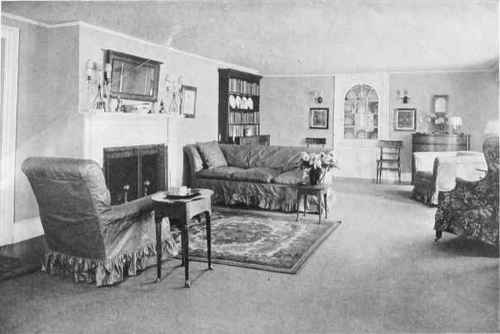
PLATE 150. LIVING-ROOM AT "THE HOMESTEAD" (BUILT 1764), SOUTHAMPTON, L. I., THE HOME OF MRS CHARLES H. SABIN.
G. W. Harting, Photographer. By Courtesy House and Garden, New York.
Pale green walls, White woodwork, Black floor, large Rose Rug and Hook Rug Chintz Curtains, Furniture covered in plain Rose Glazed Chintz.
Original Old Fireplace Old Pink Lustre China in China-closet. Furniture, maple and pine.
Note use of chest of drawers in living-room.
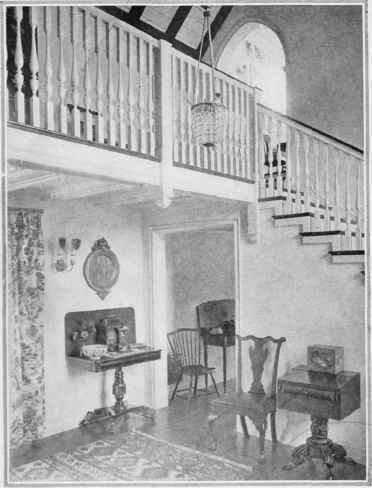
PLATE 151. A HALL OF INDIVIDUALITY AND CHARM.
Home of Misses Jessie Willcox South and Violet Oakley, St. Martin's. Philadelphia.
Special interest given by lantern, oriental curtain, rug, and pleasing accessories.
Architectural styles are always more slowly adopted than those of movable furnishings and the wall-treatments were those of England twenty or thirty years earlier. These have already been described in the British section and we have seen that tones such as grey, grey-green, buff, brown, pale yellow, blue-green and green-blue were used. Gilding was often applied to carvings and mouldings. Natural wood was also to some degree employed.
When the plain-wall surface, unbroken from baseboard to cornice, came into use in America, tints of grey, pearl, putty, buff, and the pale Adam green were in great favour. It is evident enough by now that the white wall was by no means ubiquitous, and that we may consistently apply any of these tones. Treatments approaching the elaborate would require the services of a decorator but plain tints are entirely within the scope of the householder. It is to be remembered, however, that everything depends upon the tone being agreeable to the interior, and that the average painter is a being devoid of anything resembling taste: the occupant of the home should therefore exercise an entire superintendence, choose the tint desired, and see that it is applied. It is an excellent plan to paint a wide board and have it held against the wall, so that the effect may first be judged before the work is begun.
With strong tones as the background of the entire premises the householder often finds it difficult to manage the colour-schemes of the various rooms, so that a hint previously given may be repeated here. It is possible to use a strong tone upon the walls of one or two principal rooms and a lighter tint of the same hue upon the remaining ones, thus still preserving unity throughout. With tones upon the walls the woodwork may remain white or white slightly tinted with the wall-tone.
Wall-papers were extensively used both upon plain walls and over wainscots, and a number of the Colonial designs are now reproduced. Landscapes with figures and Classical buildings, mythological and Chinese subjects, and patriotic scenes were among them. Many are very obtrusive, and the writer suggests the use of only those quiet in tone and contrast if decorative features and colourings are elsewhere to be employed. Fabric-covered walls are a resource for handsome drawing-rooms or reception-rooms. These will require the aid of a decorator.
A Liberal Interpretation
Our American captains sailed the wide seas, bringing home with them many objects of interest; Washington, Jefferson, and numerous others were not slow in availing themselves of European fashions. With our wider knowledge of the furnishings then current upon the continent and our increased facilities in obtaining them there is no reason why we should be so exceedingly timid in relieving American furniture by the use of the pieces of other nations under the same decorative impulses. Our own Duncan Phyfe selected the Directoire style as his inspiration: why not add a few pieces in the French mode such as those illustrated in Plates 141 and 142? Italy, during the whole eighteenth century, adopted the styles of other countries, enduing them with interesting characteristics of her own (Plates 140, 145 and 146); why neglect them now? Lacquered furniture was not very frequent here, but during the whole period was a craze in England. What variety it affords! - let us use it. There is but one obstacle in our employing any of these - that of expense: none of them are "cheap". But if we have the means, they may be secured through any first-class metropolitan decorator. The alert with less well-filled pocket-books may occasionally come across a bargain.
Continue to:


My Books

