


Cane
Description
This section is from the book "English Furniture", by Frederick S. Robinson. Also available from Amazon: English Furniture.
Cane
I cannot find any evidence as to the date at which cane was imported into England. Of the calamus, or genus of palms used to make the cane of commerce, there are about two hundred species. They come chiefly from the hotter parts of the East Indies, but which particular one of the many different kinds are used for the thin split lengths of cane seats and chair-backs, it is difficult to say. To the successful trading of the Dutch in their highest prosperity, 1650 circat is probably due the introduction of this useful material from the sometimes thousand-feet-long creepers of tropical forests.
In the new style of chair, which continued in full use until the reign of Queen Anne, when a plainer shape supervened, the straight upper edge common in the old oak period disappears. Its place is taken by a shaped top more akin to the scrolled or S-topped examples of that earlier time. This top is supported by two turned uprights, and between them is a back, either carved and pierced with open curves, or else filled in with cane-work or stuffed and covered. If the back is a carved one, its entire width, including the two turned uprights, consists in many typical chairs of five perpendicular pieces divided by spaces. In the centre is a broad band of open carving, about nine inches wide. On either side of this comes a narrower perpendicular, also carved, and outside of each of these is the turned upright first mentioned. The bottom of the back is supported by carved ornamentation, generally very similar to that on the top of the back.
A special feature of the typical chair is the ornamental stretcher between the front legs. It cannot be described as a foot-rail, as it arches up in a manner which is inconvenient for the foot to rest upon. Neither is it of any great use for strengthening the chair, as the work is so much pierced and open. Consequently it will be found that behind this front stretcher, which merely serves the purpose of repeating the design of the upper and lower ends of the back, there is sometimes another serviceable stretcher set parallel to the front one, and joined to the centres of those which connect the back and front legs. These three stretchers for use, unlike the broad and high front one for show, are turned, like the outer uprights of the back. In nothing so much as in this ornamental front stretcher is the resemblance of the Charles II. chair so apparent to its Portuguese exemplar and original.
The typical chair which I am describing is neither the most grandiose and elaborate, nor the simpler and commoner form, but holds a middle place between the two. There are very many still extant with the characteristics mentioned. A special and inveterate feature of the outer uprights of the back and of the legs is a leaf ornament, which may be described as an elongated rosette. It is found upon the square portions which diversify these turned legs and uprights, as, for instance, just below the finials at the curved top of the back, and also on a level with the similar curved ornaments at the bottom of the back. It is also often placed upon the square member of the top of the leg just below the seat, or on the similar member at the bottom of the leg. In the case of chairs with arms, these are curved and rounded off at the ends. The uncompromising edges and angles of the arms of the older oak chair have quite disappeared, and very frequently on good specimens there is acanthus leaf carving along the arms.
The larger features of ornamentation have been mentioned before. A typical detail is the crown, sometimes supported by cherubs, an emblem which perhaps became popular when that extraordinary and complete reaction against the Republican sentiments of the Commonwealth took effect, and resulted in the recall of Charles il, and an attitude towards the principle of monarchy such as for the time caused people to forget all the illegalities of Charles I. It was natural just then that the crown should be a popular emblem on the furniture in houses of devoted Royalists, and probably also of Roundheads whose one desire was to escape the vengeance of the rival party. The centre of the top and bottom of the back, and the centre of the ornamental foot-rail are the places where the crown generally appears. On a seal used by Charles II. for his private correspondence may be seen the cherubs supporting a crown - symbolical perhaps of 'Church and State' - exactly as they are to be found on furniture. This seal appears on letters to his daughter, the Countess of Lichfield, as late as 1684. James 11., as Duke of York, uses a crown and palm branches - also to be traced on chairs (see Plate lxviii., 2). When loyal sentiments found cause to be less exuberant, the cherub's head, that stock article in the decorative repertoire of Europe, perhaps took the place of the crown, but the cherubs and crown appear on the silver table of William III. at Windsor. Later on, possibly as late as William II., appears that decoration consisting mainly of convex and concave C-curves opposed to each other, which not only forms the chief feature of the three centre portions of the back, but also takes the place of the turned front legs.


Plate LXVIII.
I - Chair, Oak 1660 Circa 3 - Arm-Chair, Oak 1690 Circa
4 - " " &Raquo;&Raquo;
lxviii. (1) Armchair, oak, 1660 circa.
Dimensions: Height 46¼, Breadth 23⅜, Depth from front to back 24½ inches.
(2) Chair, oak, 1660 circa.
Dimensions: Height 43¾, Breadth 19¾, Depth from front to back 21⅝ inches.
(3) Armchair, oak, 1690 circa.
Dimensions: Height 51⅛, Breadth 26, Depth from front to back 26½ inches.
(4) Armchair, oak, 1690 circa. E. Hockliffe, Esq.
These curves, convex and concave, might be said to form an S but for the fact that where their ends meet there is a sharp corner. Any one who is familiar with the beautiful type of Venetian carved and gilt picture or mirror frames of the end of the sixteenth century will recognise the origin of this shape. An almost invariable feature of these mirrors, however much disguised by 'swags' of flowers or other details, is an arrangement of curves, convex and concave, on each side. These main forms of ornament, crowns, cherubs, cherubs' heads, and curves, diversified by the leaf 'rosette' on legs and uprights, though perhaps the commonest and most characteristic shapes, do not exhaust the possibilities of the chair of the end of the seventeenth century. In Shaw's Specimens of Ancient Furniture, Plate XVI.,are reproduced three fine examples, which he attributes to the reign of William III. In these appear the leaf rosette, the leaf-carved arms, and the convex and concave curves, but not the cherub's head or the crown. Special features are the strapwork pattern in the centre of the back of one of them, the shell or fan shape in another, and the arrangement of X-shaped and curved leg-rails, with large central finial, in a third.
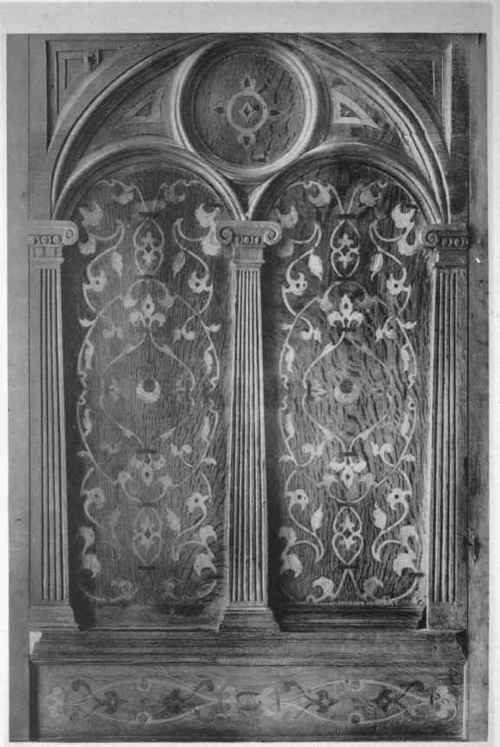
Plate XVI. Panels From Sizergh Castle 16th Century
XVI. Panels from Sizergh Castle. Sixteenth century. Part of the 'Inlaid Room.' V. & A. M.
This latter detail is perhaps decidedly of William's time; but when we remember that Charles II died in 1685, and William began to reign in 1688, it will be natural to conclude that no very great differences are likely to be found between periods so close together. As a general principle, perhaps, it might be safe to say that a chair with turned outer uprights at the back, and all four turned legs, is more likely to be of the date of Charles 11., whilst the curving and shaping of the front legs denotes a later chair. Crowns and convex and concave C-curves are not unfrequently found together.
Continue to:


My Books

