


Early Oak Chests. Part 2
Description
This section is from the book "English Furniture", by Frederick S. Robinson. Also available from Amazon: English Furniture.
Early Oak Chests. Part 2
Instead of this there is an arrangement which is thus concisely described in Parker's Glossary of Architecture'. 'Across each end of the lid, on the underside of it, a strong piece of wood is fixed, which appears on the outside' (of the chest end) 'when the chest is closed.
1 In Pershore Abbey a late fourteenth century chest has front and sides of 'pigeon-hole' work. Two light arches on each stile recall the Dersingham chest (p. 25). The only other decoration consists of mouldings, curiously incomplete, across the base. The top is a late make-shift. There are iron strap-hinged doors in the front and traces of former painting.
The end of this piece and the upright piece at the back angle of the chest are halved together, and an iron pin is put through them so as to form a hinge; . . . there is often a small pear-shaped piece of iron nailed over the end of the pin to keep it in its place.' Most typical in every way is the thirteenth century chest at Stoke d'Abernon Church, Surrey (Plate IV.). It has very broad uprights at each end of the front, which on their inner edges, where they begin to serve as feet, are moulded somewhat into the semblance of a little short pillar. The ends are divided by two cross-bars into four divisions. The lid is hinged as above described, and the carved ornament beyond the 'pillars' on the leg edges is confined to three incised circles, one on each of the slabs of the front. These ornaments are of a decidedly geometrical shape, and such as might be made with a V-shaped gouge. They resemble Norwegian chip carving more than anything else, and certainly suggest a Scandinavian influence. This chest is figured both by Shaw in his Specimens of Ancient Furniture, and by Parker in his Glossary of Architecture. The top is formed of one solid slab of wood perfectly plain, and the front of three slabs only.
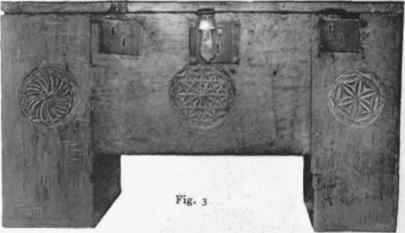
Plate IV. Fig. I. - End View Of Oaken Chest Stoke D'abernon
„ 2. - End View Of Chest Stoke D'abernon Closed
„ 3 - Oak Chest 13th Century Stoke D'abernon Church
IV. (1) Chest, oak, end view. Open and showing flange on lid. Stoke d'Abernon Church, Surrey.
(2) The same closed.
(3) Front of the same.
Dimensions : Height 26, Length 48, Depth from front to back 18½ ihes, approximately. By kind permission of the Rector.
The ends are protected by two bars of wood at right angles to each other, and about 2 inches wide by 1½ inches thick. Backing them is the board which closes in the end, and which one would naturally expect to be as massive as possible. The ends are, however, by no means as thick as the front, or lid, or back, being only ¾ of an inch at the top, and present an instance of somewhat illogical construction. The varying thicknesses of the slabs seem to suggest the result of splitting oak instead of sawing it, if, on that scale, it were possible. The centre slab is 1 inch thick at most towards the top, and 1¼ inches at the bottom. The thickness of the front upright pieces tapers from 2 inches on the outside at the end of the front to 1¼ inches where the uprights touch, the centre slab. The back is of three slabs like the front. Plain old iron hinges, more than half rusted away, have been put on at a later date, but the true hinging is by means of the wooden flange, as described above, which at one end has become detached from the lid, and now remains on the top of the cross-bars when the lid is lifted. This enables us to see that the flange was pegged on to the lid by four wooden pegs about ⅜ ths of an inch in thickness, and set at equal intervals apart.
When the lid is closed the flange on it overlaps the end boards of the chest and shuts down on to the top of the uprights of front and back, and on to the perpendicular cross-bars of the end. A slot or mortise is cut in the inside half of the centre of the flange, and this corresponds to a tenon on the perpendicular cross-bar. The front end of the flange has a tenon which fits into a mortise on the front upright slab. The mortising, or rather halving, arrangement for the play of the 'hinge' necessitates of course that both the lid flange and the back upright should be rounded, the segmental top of the upright fitting into the segment of a circle cut halfway through the flange. What is described by Parker as a pear-shaped piece of iron nailed on to protect the pin hinge appears to me very like an ordinary piece of hasping which has been applied to the purpose rather than an original forging for the place, but the effects of time render it difficult to be certain as to this. The colour of the chest is the natural tone of the wood rendered grey with age, and there do not seem to be any traces of painting upon it as upon others of the Gotnic period. The central wheel' of ornament is 7¾ inches in diameter approximately, the other two being slightly smaller.
The total length of the front is rather over four feet, the back being rather less. Split slabs of oak do not lend themselves to perfect rectangular construction, and the front uprights, where they are grooved and tongued to the centre slab, being decidedly thinner than on their outside edges, there is an appearance of hollowsidedness, noticeable when one looks down from above upon the top rail. Only when thus observed can the method of joining the horizontal to the upright slabs be noticed. The centre front plank is flush with the side pieces on the outside. Inside, the side uprights overlap the centre. At the back, however, inside and out, the side uprights project beyond and embrace the 'tongue' of the centre slab, which is shot into their greater thickness. Dovetailing, conspicuous on the front, is a later development of joinery, not found till the fifteenth century. The cypress chest, illustrated in Plate xxxiii., shows it very well.
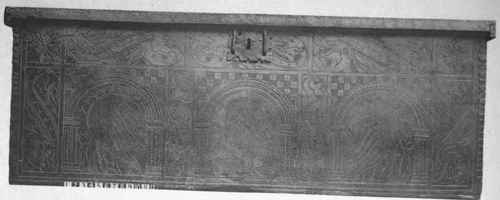
Plate XXXIII. Coffer, Cypress Wood Late 16th Or Early 17th Century
xxxiii. Chest, cypress wood. Late sixteenth or early seventeenth century. This chest has dragon-headed S-curves similar to those found on Welsh furniture. It is very probably an imported Italian chest, with design to suit the English market, and more likely to be of the sixteenth century. V. & A. M.
Dimensions: Length 50 ⅝, Height 22½ inches approximately.
In another chest of the thirteenth century, which Shaw figures, the influence of Gothic architecture is most apparent. It is one from Climping Church, Sussex, and is exactly similar to the last in main construction. But a decorative step in advance is made by the shallow arcading of ten pointed arches which stretch across the centre slab. Deeper and much more elaborate arches are to be found on a chest at Haconby, Lincoln, also reproduced by Shaw. The centre slab here might easily be enlarged into a highly ornate screen for a church. Henceforward, until the end of the Gothic period, we can see the same forms in the church and the house, on the chair or the thurible. The same pinnacles and crockets, the same window traceries may be discerned upon stone and wood and the precious metals. From the cathedral to the miniature box or ivory triptych there is scarcely any change except in scale. A noticeable feature of the Haconby chest, which is of the fourteenth century, is the winged dragons on the uprights.
Continue to:


My Books

