


The Cabinet. Part 2
Description
This section is from the book "Furniture", by Esther Singleton. Also available from Amazon: Furniture.
The Cabinet. Part 2
Du Cerceau also designed cabinets of very elegant form.
The cabinet was the most fashionable piece of furniture in the Sixteenth and Seventeenth Centuries. Not only was it made of wood or damaskeened metal and variously carved or inlaid, but we also find leather cabinets. Two beautiful examples of the latter are in Cluny Museum; one is of azure leather stamped with gold, and exhibiting all the skill of the book-binder's work. The picture on the central drawer, a sort of fountain of love at which are standing a knight and a lady, is supposed to represent Philip IV. and Margaret of Austria, who were married in 1599. It is thought to be of Flemish origin.
The faces of the twelve drawers each represent Renaissance pictures, and each is different.
The second cabinet is French, and dates from the reign of Louis XIII. It is of red morocco, tooled with gold. The supports are also of leather. These two pieces are as beautiful as they are curious.
Ebony cabinets with geometrical motives, Renaissance patterns, pictures, etc., in ivory; cabinets inlaid with mother-of-pearl and ivory and embellished with arabesques of gold; and cabinets of iron damaskeened with gold and silver and decorated with bas-reliefs were made in Milan, Naples and Venice; and all were upon practically the same architectural model - first the stand, or table, on four, six, or eight legs connected by stretchers on which rests a pyramid of drawers flanked by columns, or pilasters, enclosed by doors or a falling-flap and surmounted by an ornamental figure, or several figures. The interior was often elaborately decorated with marbles, agates, lapis-lazuli, amber. mother-of-pearl, tortoise-shell, and sometimes marquetry of colored woods or ivory. Nothing could be more sumptuous than the Italian cabinets thus inlaid with exotic woods, or incrusted with precious metals and semi-precious stones. Some of them had pilasters of lapis-lazuli, plates of embossed silver, paintings, miniatures and silver or gold figurines. To make such a work, a great number of craftsmen were required.
Ebony seems to have been the favorite wood in use in Italy; and many of the ebony cabinets contained in the Pitti Palace and the Louvre might pass for mourning furniture until they are opened, when the utmost magnificence is revealed in the decoration of the drawers.
Cardinal Richelieu had some splendid Italian cabinets, some of which passed into the possession of Cardinal Maz-arin. One of these was five feet long and five feet, ten inches high. It rested on four ebony columns united in front and four pear-wood pilasters behind. The octagonal panel on the doors represented Amphion on the dolphin; the frieze was decorated with marine monsters; and the interior compartments adorned with flowers.
One of Mazarin's treasures was described as:
"An ebony cabinet having a little moulding on the sides, quite plain outside, the front being divided into three arcades, in the middle of which are six niches, in four of which in the lower row, are four virgins of ebony bearing bouquets of silver, the said doors being ornamented with eight columns of veined lapis-lazuli, the bases and capitals of composite order in silver, the fronts of the doors and the rest of the cabinet being ornamented with various pieces, viz., cornalines, agate and jasper, set with silver; and above the arcades are three masques in jasper and twelve roses of the same mixed with six oval cornalines; the remainder is ornamented with silver let into the ebony in cartouche and leaf-work."
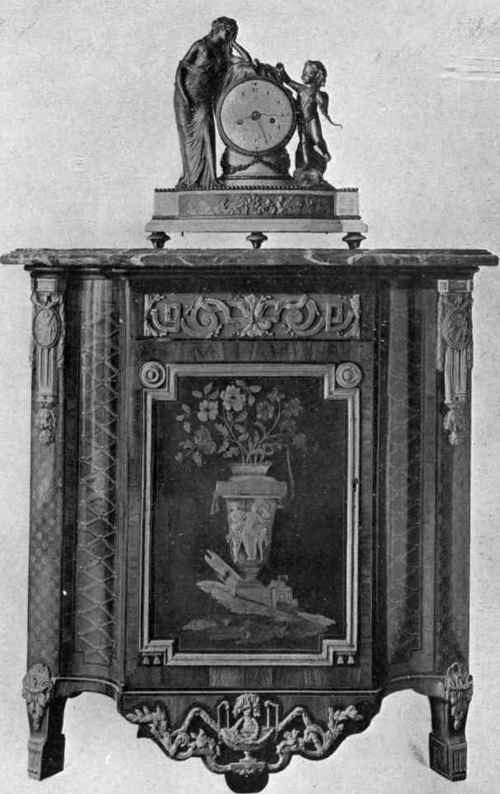
Plate LXII Late Louis XV. Encoignure, or Corner Cabinet
A famous cabinet of ebony decorated with small columns of pietra dura and bronze ornaments was made by Buon-talenti for the Grand Duke of Tuscany, and was further ornamented with miniatures of the most beautiful ladies of Florence; and another great cabinet said to have been made for Marie of Gonzaga, Queen of Poland, now in the Cluny, shows the kind of furniture made in Florence at the end of the Sixteenth and beginning of the Seventeenth Century. This is in three stages and is encased in tortoise-shell within and without. It is embellished with pietra dura and other stones, representing birds and landscapes; and, moreover, it is adorned with pilasters of lapis-lazuli, cornelians, plaques of silver, paintings and miniatures. The whole piece is ornamented with beaten and open-worked copper. The cabinet is supported on a stand with four legs ornamented with copper capitals. The stand is also incrusted with mother-of-pearl and tortoise-shell.
The interior is beautifully decorated, and is just as ornate as the exterior. Many of the mosaics, however, have been replaced by miniatures of the reign of Louis XV.
It was as fashionable to own German as it was to own Flemish cabinets. Catherine de' Medici was one of those who had several "cabinets d' Allemagne."
Many of the German cabinets are so wonderfully decorated that they have been aptly called "palaces in miniature." Not satisfied with rare carvings in ivory and marvellous silver ornamentations - the metal-workers of Augsburg were specially skilful - the Germans carried decoration still further than the Italians and introduced amber plaques into the facades, a fashion that persisted until the Eighteenth Century.
Hans Schwanhard (died 1621) introduced into the decoration of cabinets the rayed and wavy borders, a characteristic by which many pieces of furniture of the Seventeenth Century may be recognized. The Germans also borrowed from Italy the fashion of introducing into the facades of the cabinets painting and gold-work executed on glass. This practice dates from the end of the Fifteenth and the beginning of the Sixteenth Century.
Continue to:


My Books

