


The Mirror. Part 3
Description
This section is from the book "Furniture", by Esther Singleton. Also available from Amazon: Furniture.
The Mirror. Part 3
Among the items advertised by various merchants we see gilt and plain looking-glasses of sundry sizes, in 1745; japanned dressing-glasses, in 1748; new fashion sconces and looking-glasses, in 1749; looking-glass sconces, in 1750; sconces and pier-glasses of all sizes, in 1752; an assortment of sconces, gilt and carved in the newest fashions, in 1753; newest fashioned looking-glasses from London, in 1757; a variety of sconces with branches in walnut frames with gilt edges, in 1757; looking-glasses framed in the newest taste, £8 to £30 apiece, in 1761; looking-glasses from 2 to 6 feet, in 1764; convex and concave mirrors, in 1764; two carved white-framed sconce glasses, in 1764; handsome pier-glass and two sconces with gilt frame, in 1768; large pier-glass in an elegant carved frame, in 1769; painted frame looking-glasses, in 1773; and also in that year oval glasses, pier-glasses and sconces in burnished gold, glass bordered and mahogany and black walnut frames, with gilt ornaments of all sizes.
In 1769 Minshall, a carver and gilder from London, settled in Dock Street and had carved frames for glasses; and by the end of the century he had built up a big business in this special line. In 1775 Minshall's Looking-glass Store in Hanover Square, opposite Mr. Goelet's Sign of the Golden Key, advertised "an elegant assortment of looking-glasses, in oval and square ornamental frames; ditto mahogany. Also an elegant assortment of frames without glass. Any Lady or Gentleman that has glass in old fashioned frames may have them cut to ovals, or put in any pattern that pleases them best. The above frames may be finished white, or green and white, purple, or any other color that suits the furniture of the room, or gilt in oil, or burnished gold equal to the best imported."
The mirrors designed by the Adam brothers are light, graceful and charming, and Heppelwhite's are no less so. The oval mirror now becomes of great importance, and also the mirror with sconce-arms which Heppelwhite calls "girandole."
Heppelwhite was fond of the oval mirror with the light falling bell-flower used as a festoon, often looped from a little bracket on which stood a small urn. Pier-glass frames were usually square, of good carved work, gilt and burnished. Heppelwhite says that "they should be made nearly to fill the pier. They must be fixed very low, and the panels of the sides are frequently made of various colored glass."
"Girandoles," Heppelwhite says, "admit of great variety in pattern and elegance; they are usually executed of the best carved work - gilt and burnished in parts. They may be carved and colored suitable to the room."
The concave and convex mirror with gilt frames and branches for candles became very popular in Sheraton's day and they lasted for many decades. Such mirrors were frequently framed in black, ornamented with gilt balls, and surmounted by a gilt eagle. Many of these are preserved in old American homes.
Another style in great favor was the long mirror. Sheraton says:
"Glasses for chimney-pieces run various, according to the size of the fireplace and the height of the wall above. To save expense, they are sometimes fitted up in three plates and the joints of the glass covered with small gilt mouldings or plasters. At other times with the naked joint only. When they are of one plate, the frame in general is made bolder and more elegant."
Sheraton also says:
"In elegant rooms the chimney-glass is usually carried to the under side of the cornice of the ceiling; but to reduce the expense of the plate, sometimes a broadish panel is introduced at the top of the glass with a frieze and cornice above all, included in the frame of the glass."
"The most generally approved pilasters for chimney and pier-glasses are those of 3, 5, or 7 reeds worked bold; but which, in my opinion, still look better by being parted with a ground one-third of the width of the reed, which may be matted to relieve the burnished reeds. It is not unusual to have a twisting branch of flowers, or a ribband round the reeds rising upwards and terminating in some sort of Composite, Corinthian or Ionic capital. The panel above the glass is sometimes made quite plain and covered with silk as a ground for drapery, tacked under the corner of the glass to match that of the windows."
Looking-glasses in gilt, mahogany and walnut frames (1801); elegant gilt frames with pillars, balls, enamelled frieze and eagle tops all sizes, mahogany frames of all kinds, gilt and plain, made in the most fashionable manner, walnut and satin-wood frames, nutwood, enamelled and elegant gilt, the plates 70 by 50 inches (1803); German looking-glasses (1810); looking-glass, square pediment and double columns, and one, ditto, with eagle on top (1811); convex mirrors handsomely ornamented from London (1811); dressing-glasses and convex mirrors from 12 to 24 inches in diameter, ornamented in a most superb manner with six lights (1812); rich gilt frame pier and match mirrors (1823); rich mantel glass, cost $1,600 (1823), and convex mirrors (1823).
The mirror as a part of the dressing-table is comparatively modern. In the Sixteenth Century, and before, the dressing-table was merely a simple table covered with a cloth, and over it spread a white linen or lace "toilette." Upon it, or above it, hung a mirror the frame of which was carved and gilt, or olive-wood or ebony or wood stained black to represent ebony; or, in wealthy homes, of solid silver.
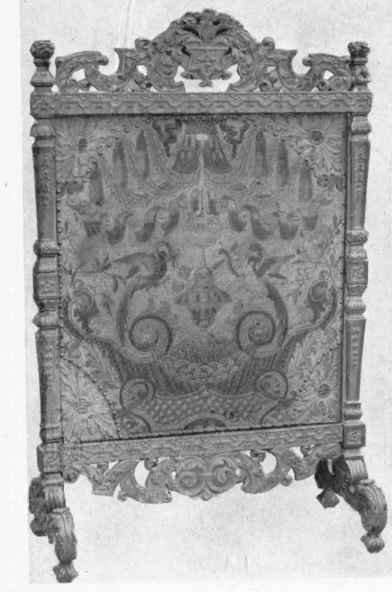
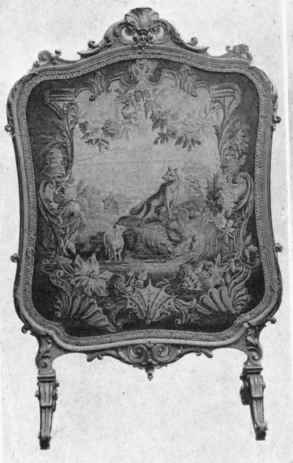
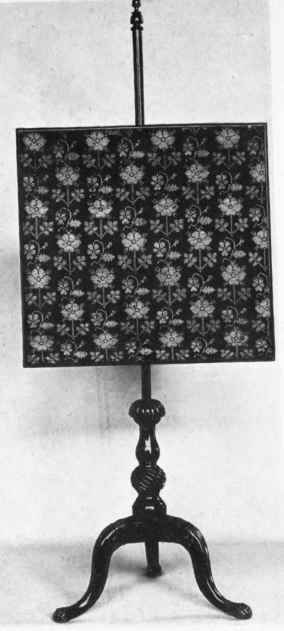
Plate CXVII - Louis XIV. Screen, Gilt Frame and Tapestry - Cluny Museum
Louis XV. Screen, Gilt Frame and Tapestry; Pole-Screen,
Mahogany and Needlework Metropolitan Museum
In the middle of the Eighteenth Century the little oval, shield-shaped, or square glass that stood upon one or two drawers, was a separate piece of furniture and was placed on a chest of drawers or shaving-stand. Sheraton and Heppelwhite frequently added looking-glasses to their dressing-tables and shaving-stands, but usually connected them in drawers with mechanism that allowed them to be elevated or hidden at pleasure. In the Empire period the mirror often formed a part of the dressing-table and the cheval, or glass on a horse frame, also became popular.
Continue to:


My Books

