


Coromandel Lacquer Ware
Description
This section is from the book "A History Of Furniture", by Albert Jacquemart. Also available from Amazon: A History Of Furniture.
This section is from the "" book, by .
Coromandel Lacquer Ware
This is also a term applied universally yet erroneously to a well-known product. The Coromandel coast has long been the chief emporium of Oriental goods. But there are no local manufactures, except of objects for local consumption. Hence the current name might be conveniently replaced by that of champleve lacquer, which would leave undetermined the still vexed question of its real origin.
In general this variety, roughly finished, is applied to ordinary work. The inside of the objects, hastily covered with a coating of red paint, shows the grain of the wood and the inequalities of the planing. The surface however displays a clear design formed by projecting cells, into which are inserted a colour thin enough to allow the marks to show through of the gouge with which the hollows have been scooped out. The space between the designs, or the ground, is mostly black and also very sparingly japanned.
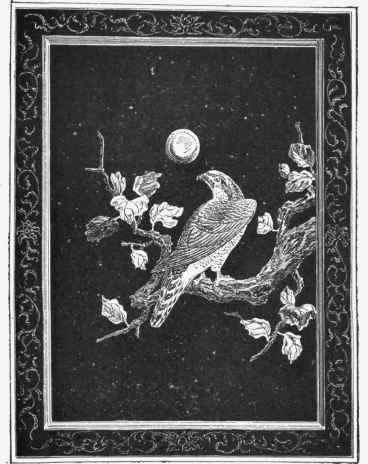
Panel of a Cabinet of black lacquer, with incrustations of trems.tortoisesliell. and ivory; ancient Japanese work.
(Collection of M. Jules Jacquemart).
The subjects, sometimes Chinese, sometimes Japanese, also point at a workshop occupying an intermediate position between the two empires, and working for both in turn. On a magnificent armoire, in the cabinet of medals are depicted hieratic scenes executed in the style and with the colours of the old Chinese porcelains of the famille verte. On folding screens we have also seen Japanese figures in gorgeous costumes moving about in a park intersected by streams, and crossing the bridges in the direction of the open house decked with window blinds looped up with cords and long tassels. Still more frequently we meet with bouquets encircling the sacred fong hoang, and showing the chrysanthemums and paeonies in all the glory of their white tints, or of the clear rose and fading hues of their petals.
In the presence of these familiar objects, the thought unconsciously reverts to Annam. Travellers tell us that Cochin China sends as offerings to the Emperor of China lacquer-work rivalling in delicacy the Japanese ware. In recent exhibitions we have seen some Siamese lacquers which, notwithstanding their grand style, betrayed no analogy with the champleve lacquers. We must accordingly await fresh disclosures to clear up the question.
After this summary account of the principal varieties of lacquer, there can be no necessity to determine the decorative character, and especially the emblems peculiar to the different regions of the extreme East. To do so would be merely to repeat what has been already said, in connection with the other branches of Art. In China, lacquer-work does not seem to occupy such a ceremonious position in public life as do bronzes and precious stones. Under those headings will therefore be found what may here be omitted on the subject.
It is otherwise with the Japanese lacquer. Ranking with the most highly prized objects suitable for presents, and manufactured in ateliers subsidized by the emperor and nobles, they most commonly bear heraldic devices of the greatest interest to the connoisseur as proofs of their origin and a warranty of perfect workmanship. In Japan, the empire is hereditary, and the family still occupying the throne claims to descend from Tensio-dai'-zin, the local goddess of the isle of the Rising Sun. The arms of this family are the guik-mon or chrysanthemum flower, thus represented. But this is not the official symbol of authority, used in stamping the coin of the realm and for everything proclaiming the decrees of the sovereign. This latter is the kiri-mon, composed of three leaves and three flowers or tufts of the kiri or Paulownia imperialis, thus associated. Another emblem, also long used officially, was that of the Minamoto family, for several generations invested with the executive functions under the name of Shogoon, Koobo, or Tykoon,


These arms, called Awoino-go-mon, were formed of three mallow-leaves, thus.

At present the power of the Tykoon has been destroyed, and his arms again rank merely with those of the other feudatory lords. Of these princely families we shall give the "mon" or arms most frequently occurring, arranging them in the seven great territorial districts or "doo" into which Japan is divided.
It will be noticed that several of these emblems have a twofold meaning. Thus the fan, when bearing the red disc of the sun on gold ground, is the symbol of command reserved for generals, like the emblematic baton of the French marshals. The form of the fan is sometimes given to boxes, a remark equally applicable to other arms, which affords a natural explanation of the intricate outlines of certain lacquer ware. Cranes, sheaves, or a purse would also seem to represent princely or ecclesiastical emblems.
Having spoken of the genuine lacquer ware, we may devote a passing remark to a branch of Oriental art allied to it. We refer to the paintings in varnish executed in Persia and India on wooden or papier mache materials, the latter being a sort of cardboard very thin and solid, capable of assuming the most complicated forms. Graceful arabesques, or scenes with figures at times delicately painted, are framed in elegant borders often of flowers after nature. The objects most frequently met with in this class are boxes furnished with mirrors, writing-desks, little portfolios, and dressing or travelling cases capable of favourable comparison with the charming pique works from the same source.
We are interested in this branch as the obvious starting-point of the efforts made in Europe to produce permanent painting in varnish. So early as the time of Louis XIV. England and the Low Countries had produced articles of furniture in imitation of the Chinese and Japanese lacquer ware. France also had made similar attempts, and, however imperfect the productions, they had at least answered to the requirements of the trade.
TABLE OF JAPANESE ARMORIAL, BEARINGS.

TABLE OF JAPANESE ARMORIAL BEARINGS.
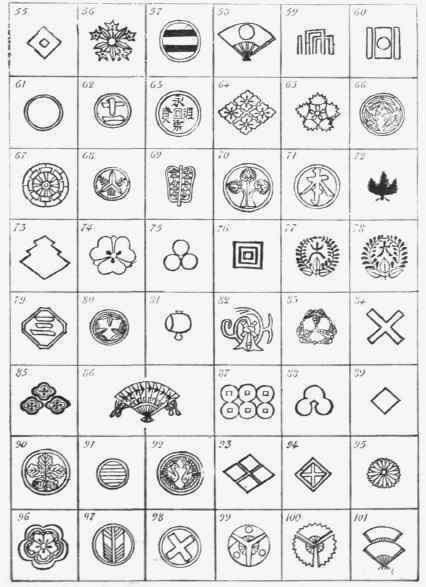
1. Owari in Tookaydoo, Kiy in Nankaydoo, Mito, Jetsju in Hokrikfdoo, Asakfra, Istoumo in Saniendo, Istoe in Tookaydoo.
2. Owari in Tookaydoo, Kiy in Nankaydoo, Mito, Jetsju in Hokrikfdoo, Asakfra, Istoe in Tookaydoo.
3. Kiy in Nankaydoo, Mito.
4. Kiy in Nankaydoo.
5- .
6. Asakfra, Istoumo in Saniendoo, Moetsoe in Toozandoo, Sadsumain Saykaydoo. Nagato in Sanjoodoo, Bizen in Sanjoodoo, Awazi in Nankaydoo, Jonitsawa, Kokaro Tsusima, Koga Smoetsky, in Nankaydoo.
7. Moetsoe in Toozandoo.
8. Asakfra, Jetsirin in Hokrikfdoo, Kawatsi in Saykaydoo, Nacubo Moets.
9. Istoumo in Saniendoo.
10. Figo in Saykaydoo, Mino in Toozandoo. Simiotsoeke in Toozandooo.
11. Tsikfoezing in Saykaydoo, Sagami in Tookaydoo, Kouroda.
12. Tsikfoezing in Saykaydoo, Jamagatta, Dewa.
13. Aki in Sanjoodoo, Asano.
14. Moezasi in Tookaydoo.
15. Nagato in Sanjoodoo, Dewa in Toozandoo, Mauri.
16. Nagato in Sanjoodoo, Mauri.
17. Boengo in Saykaydoo. 18.
19. Istoumo in Saniendoo, Awatzi in Nankaydoo.
20. Moetsoe in Toozandoo, Tsickfoengo in Saykaydoo, Arima.
21. Istoe in Tookaydoo.
22. „ „
23. Koga in Hokrikfdoo, Kachiu.
24. Jeetsigo in Hokrikfdoo.
25. Kaga in Hokrikfdoo, Moetsoe, Jio in Nankaydoo, Jeetsigo in Hokrikfdoo, Simiotsoeke in Toozandoo, Kashiu.
26. Sadsuma in Saykaydoo, Satsuma.
27. Sadsuma in Saykaydoo, Todo.
28. Jsie in Tookaydoo, Dewa in Toozandoo.
29. Awa in Nankaydoo, Moetse in Toozandoo, Sendaij.
30. Awa in Nankaydoo.
31. Moetsoe in Toozandoo, Jushiu.
32. Moetsoe in Toozandoo.
33. Moetsoe in Toozandoo, Figo in Saykaydoo, Mino in Toozandoo, Harima in Sanjoodoo, Sagami in Tookaydoo, Koana in Tookaydoo Phosso Kava.
34. Figo in Saykaydoo.
35. Figo in Saykaydoo, Aki in Sanjoodoo, Sanoeki in Nankaydoo.
36. Figo in Saykaydoo.
37. Figo in Saykaydoo, Tsikfoezing in Saykaydoo, Moezasi in Tookaydoo.
38. Bitzen in Sanjoodoo.
39. Bitzen in Sanjoodoo, Sikogo Jagananta.
40. Bitzen in Sanjoodoo.
41- " .
42. Jnabain Saniendoo. Kadsa, Enshiu.
43. Jnabo in Saniendoo, Sikogo Jagananta.
44. Bitjen in Sanjoodoo.
45- .
46- " "
47. "
48. Bitjen in Sanjoodoo.
49. Oomi in Toozandoo, Hikue. 50 Oomi in Toozandoo, Kadsa.
51. Isie in Tookaydoo, Iga in Tookaydoo. 52- "
53. Tosa in Nankaydoo, Taschiu.
54. Tosa in Nankaydoo
55 Tsikfoengo in Saykaydoo, Getsirin in Hokrikfdoo, Koana.
56 Tsigfoengo in Saykaydoo, Arima.
57. Tsigfoengo in Saykaydoo.
58. Dewa in Toozandoo, Satake.
59.
60. Satake.
61. Jio in Nankaydoo, Jetsigo in Hokrikfdoo, Moesazi in Tookaydoo.
62. Jetsigo in Hokrikfdoo.
63. "
64. Yamato in the domain of the Crown.
65. „
66. Moetso in Toozandoo, Jaonitsawa, Uessugni.
67. Harima in Saykaydoo, Kawagatmoesas in the domain of the Crown.
68. Boedsen in Saykaydoo.
69-
70. Smoesa in Tookaydoo, Kadsoesa in Tookaydoo, Oomi in Toozandoo, Sinano in Toozandoo
71. " " " "
72. Smoesa in Tookaydoo. 73 Kokaro, Ognnra.
74. Kadsa, Dewa in Toozandoo.
75. Kadsa.
76. „
77. Sagami in Tookaydoo. 78.
79. Jodo Jamatia in the domain of the Crown.
80. Jodo Jamatia in the domain of the Crown, Jamagata, Dewa, Onessugni.
81. Yamasiro in the domain of the Crown.
82. Sikogo Jagananta.
83. ,,
84. Mimasoeka in Sanjoodoo.
85.
86. Jetsigo in Hokrikfdoo.
87. Sinano in Toozandoo. 88 ,, ,,
89. Moesazi in Tookaydoo.
90. Sinano, Sutzinano, Omura.
91. Sutzinano.
92. Nacubo Moets.
93. -
94. Jamagata, Dewa
95. Tsusima (Coreaj.
96. Kawagas Moesas or Kawatsi in the domain of the Crown.
97. Boengo in Saykaydoo.
98. Mimasaki in Sanjoodoo.
99. Toozandoo? 100.
101. „
Continue to:


My Books

