


Introduction
Description
This section is from the book "A History Of Furniture", by Albert Jacquemart. Also available from Amazon: A History Of Furniture.
This section is from the "" book, by .
Introduction
UNTIL within these last few years, those who devoted themselves to researches after old furniture, antiquities, Venetian glass, painted or lustrous potteries, were looked upon as eccentric or mad. We know what La Bruyere said of the virtuosi of his day : nor in the beginning of the present century was the public mind mere enlightened as to the value of archaeological research; the number of amateurs had increased, the circle of objects collected had become extended : yet, Sir Walter Scott, himself a collector, sacrificed to prejudice in designating as "innocent maniacs doomed to be deceived," those who sought to discover, in objects anciently in use, a history of man and of civilisation.
We shall not here refute these absurd notions; it has already been done, with as much humour as learning, by M. Edmond Bonnaffe, in his " Collectionneurs de l'Ancienne Rome et de l'Ancienne France".
It is therefore quite lately, and thanks to the perseverance of art collectors, that ideas have modified, and taste, by spreading, has become enlightened.
No longer bowing under a stupid irony, the virtuosi have made themselves the teachers of the public; the learned catalogues of our collections of the Louvre, of Cluny, and of the Library, have become lucid treasures of history; numerous special books have methodically classed the waifs of past centuries, and shown their connection with the progress of the manners to which they belong; collectors no longer confine themselves to the simple ambition of adding to the number of their pieces, but make choice of those which either indicate a progress in the art, or bear the trace and evidence of contemporary events. Therefore, at the present day, no one would seriously dare to censure the amateur for collecting "bibelots." It is laughed at still, from a remnant of false shame and the memory of remote traditions, yet among the scorners themselves there are few who do not seek for some modest or brilliant specimen of those ancient manufactures which indicate the progress of the past, while stimulating so successfully the intellectual labour of our time.
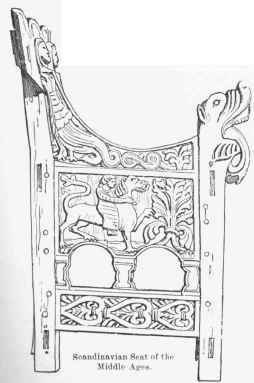
But though this immense step has been taken, there still remains another no less difficult to accomplish. It cannot be expected that men of the world, whose fortune and instincts lead them to the acquisition of works of art, should surround themselves with an infinity of bocks, and pass long hours in ransacking them to find a date, decide the characteristics of a style, or seek out a probable name. In our busy life, active as it is to excess, how many would there be found amongst the number of virtuosi, who would steal from business the time necessary for consulting inventories, and rambling through museums for the purpose of making a requisite comparison, to establish with certainty the origin and derivation of some work of art?
It therefore seemed to us essentially useful to spare connoisseurs the necessity for this labour by uniting, in an easy and methodical form, such information as history, chronology, and technical science, may furnish, in each branch of art; by pointing out, century after century, the examples that may be consulted in our public collections. Thus, without any sacrifice of time, and by reference to a short compendium, the amateur would be able to recognise the true origin and date of an object he had purchased, or desired to purchase, and even if he should consider it necessary to confirm his own estimate by the sight of an analogous work, he could proceed direct to the gallery where it would be found.
It frequently happens that a valuable specimen is put aside because its appearance is unusual, and suggests the fear of being a clumsy imitation. This is often the characteristic of transitional works, or of those collateral fabrications denoting, in neighbouring countries, the influence of an external manufacture, whose branches are destined at a later day to assume a leading importance. It is sufficient to point out these connections to the connoisseur in order to awaken his attention; a word, a figure, or the name of an artist will suddenly throw light on these obscure points, and hesitation ceases, to the great profit of the progress of historical studies.
It was from having felt to what a degree these elements of study were scattered and difficult to lay hold of, that, for a number of years, reading, pen in hand, accumulating notes and collecting names, we have brought together the enormous mass of materials, which it only remains to arrange in order to compose this book.
Is it, then, a mere compilation? No; we trust it will be judged as more than that. Special researches, and a long and intimate acquaintance with the works of the far East, have opened to us perhaps entirely new views concerning the ancient civilisation of those lands, and the influence they may have exercised upon the arts of the West. Hence we gain a certainty in the chronological and ethnological determination of styles which was previously wanting.
Much is expected in the present day in the form of a book; a single dictionary, or a dry chronology, would at once repel the reader, who, while seeking for information, wishes to avoid weariness. We have therefore adopted a division into books and chapters, by which the connoisseur will be able to find the point that interests him with certainty; each branch of art has, so to say, its special history, whether in the East or in the West, and when it has been possible for us to dissimulate the nominative lists by blending them with the text, we have readily done so.
The following table, representing the general and special divisions of the volume, will enable the reader to find his way unhesitatingly, and when certain subjects may have a relation between them, we shall not fail to refer from one to the other.
Book The First. Furniture
CHAPTER I. - Historical furniture - Its characteristics - Its principal epochs. „ II. - Eclectic furniture - How a collection should be formed'.
„ III. - Different kinds of furniture.
s. 1. Furniture in carved wood - of the West - of the East.
„ 2. Furniture incrusted in pique - of the West, called " alla certosa " - of the Fast.
„ 3. Ebony furniture - Incrusted with Ivory - Carved.
„ 4. Furniture incrusted with stones - West: jewelled furniture - Florentine mosaics - Incrusted furniture of the East.
„ 5. Ebony furniture ornamented with bronze.
„ 6. Furniture with plaques of tortoise-shell and metal.
„ 7. Furniture in marquetry of different woods.
„ 8. Furniture overlaid with porcelain plaques.
„ 9. Lacquered and varnished furniture - of Europe - Vernis Martin - of the East.
„ 10. Furniture in gilt or painted wood.
Book The Second. Hangings
Chapter I. - Tapestry - Europe - The East.
„ II. - Embroidery - European - Eastern.
„ III. - Tissues - Europe - The East.
., IV. - Stamped leather - Painted papers.
Book The Third. Objects Of Art Derived From Statuary
Chapter I. - Marble - Stone - Alabaster.
,, II. - Bronzes - Antiqiue, of the Renaissance - Plaquettes - Medallions - Oriental bronzes. „ III. - Ivories - Europe - The East.
IV. - Woods - Europe - The East. „ V. - Terra-cottas - Antique - of the Renaissance.
,, VI. - Stucco and the Ceroplastic art.
Book The Fourth. Objects Of Ornamental Art
Chapter I. - Ornamental bronzes - Antique - of the Renaissance, etc. - Oriental bronzes.
Appendix. Clocks and time-pieces.
„ II. - Forged iron - Arms - European - Oriental Repousse copper - Damascened metals, etc. ,, III. - Goldsmith's work - Antique - of the Renaissance - The East.
„ IV. - Jewellery - Antique - of the Renaissance-The East.
Appendix. Tortoise-shell pique, and inlaid with gold - Boxes and snuff boxes. „ V. - Gems - Antique - of the Middle Ages and of the Renaissance, &,c. The East. „ VI. - Enamels - Europe - The East.
„ VII. - Glass - Ceramics.
„ VIII. - Lacquer and varnish - Europe -The East. „ IX. - Wrought leather.


Ornaments taken from the Bible of Souvigny.
Continue to:


My Books

