


Jewellery. Continued
Description
This section is from the book "A History Of Furniture", by Albert Jacquemart. Also available from Amazon: A History Of Furniture.
This section is from the "" book, by .
Jewellery. Continued
We shall not stop to dwell on the finger-rings of massive gold, which may have served as signets before the sixteenth century, but as they possess no particular interest as regards the history of occidental art, we shall come at once to the jewellery of the sixteenth century itself.
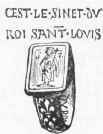
To understand the importance that was attached to these elegant productions of art, it is sufficient to read the "Memoirs of Benvenuto Cellini.".
The gold, ingeniously worked in intricate convolutions forming several surfaces, was enriched with coloured enamels both translucent and opaque; figures or even groups partly enamelled, formed the centre and principal feature of these compositions; here we have a female figure, draped and surrounded by children, personifying Charity; there, the theological virtues united in a group; elsewhere, sacred subjects and mythological or allegorical figures. Among the latter, let us notice in passing an architectural group, which, placed in a portico enriched with precious stones, gives a most admirable example of the art and ideas of the sixteenth century. If we may believe tradition, this jewel, which forms part of the valuable collection of the Baroness James Rothschild, is the work of Benvenuto Cellini. Assuredly, we have nothing to say to the contrary, for it is fully worthy of this artist's reputation. The collection of Baron Gustave Rothschild contains also some admirable specimens of the art at this period. One of the most beautiful and most severely classical, is composed of a gold medallion chased, almost in full relief, which represents David holding the head of Goliath; some accessories in enamel relieve the glitter of the metal, which shews out splendidly from an arabesque frame in scroll-work of red jasper, enlivened by four rubies; two chains suspend this medallion from a flower (fleuron) sparkling with a diamond, while below hangs a pearl. Another "enseigne" of the same collection, with two surfaces of arabesques in perforated (a jour) and enamelled work, enriched with precious stones, represents on its medallion of gold repousse and enamelled, Jephthah's daughter in the presence of her father, who is surrounded with warriors. From this interesting scries, we merely quote at random, as there is really, so to speak, no choice to be made.
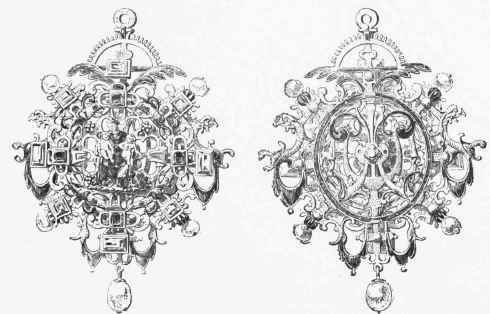
Jewel with two surfaces in gold. chased and enamelled. Italian work of the Sixteenth Century. (Ancient Galliehon Collection.).
We know, besides, to what custom of the period we owe the numerous examples of this kind of jewellery, known by the name of pendants or "enseignes": these were not only used to adorn the bodices of the ladies, but were also worn suspended from the collars which the men wore over their dresses, or from the chain attached to the head; only, in the sixteenth century, fashion introduced, concurrently with the enseignes upon the hats of men, an ornament in the shape of a medal. The cabinet of medals shows us one of these jewels, on which a combat of antique warriors, exquisitely chased in gold, is represented in high relief, upon a ground of green enamel: the setting, fitted with four rings, clearly shows how this ornament was attached to the head-dress. It would be an error to suppose that, in the sixteenth century, the jeweller's art confined itself to small articles of mere personal adornment. Here we have a rectangular mirror with bevelled edges, the frame of which vies with the richest jewellery. Upon a perforated arabesque frame of white enamel, spring animals and insects, resembling those which Palissy was so fond of producing in his enamelled ware; at the corners are tortoises, the shells of which are formed of rubies, and table diamonds; in the centre are lizards gliding, sparkling with the brilliancy of the same gems; and, among these, insects disport on spangled wings coruscating with rubies and diamonds. This sumptuous composition is charming, and the rosette and "beliere" which surmount it enhance its beauty, and make it indeed a fitting ornament for a queen.
If we admire this composition, in the possession of the Baronne Gustave de Rothschild, we pause, no less enchanted, before an oval metallic mirror framed in ebony, whereon the jewel-work presents itself in another aspect, that is to say, in open-work designs applied upon the wood. The oval border is enamelled with a wreath of daisies and heart's-ease : the corners and appliques, ornamenting the rectangular frame, are of arabesques, enamelled in red and blue, and branches of laurel of the most vivid green, accompanied by detached heart's-ease. On the back, within a chaplet formed of a branch of laurel and a spray of jessamine with its white blossoms, stand two winged genii, one bearing a bow, the other an inverted torch and a covered vase. The periphery of this composition is seme with rosettes and detached heart's-ease applied upon the wood.
Having regard to the perfection and the ingenuity of this work, we feel a natural desire to ascribe it to a master, and fancy we can recognise the hand of Benvenuto Cellini One thing alone surprises us, it is that he has made no mention of it in his memoirs.
We shall not attempt, here, to trace all the transformations which the jewel (bijou) underwent, according to the varied epochs of history : to do so would be to repeat much of what we have already said, relative to the goldsmith's work. We insist but upon one point; which is, that the taste for precious stones and pearls by degrees dethroned that for chased ornaments, and that we see, so to speak, the joaillier take the place of the bijoutier. Was this complete change a cause or an effect? Were the great artists unequal to the creation of the tasks they set themselves, or was it that the changes of fashion drove the chaser and the enameller to abandon the simpler craft of bijouterie? One thing is certain, which is that, in the eighteenth century, bouquets of diamonds and ornaments of pearls alone sparkled, where shortly before had been displayed necklaces in true lovers' knots, enamelled cyphers, heraldic devices or love tokens, which accompanied those pendants and enseignes of which we have spoken. Unquestionable proofs of these changes abound in the rich collections of amateurs; but, in order to form a more accurate idea of the various and delicate changes of fashion, we must, above all, carefully study the collection of designs before mentioned, to enable us to classify, in chronological order, the jewellery of modern times.
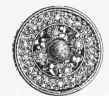
Jewel of gold. (Campana Collection.).
Continue to:


My Books

