


30. Details
Description
This section is from the book "Constructive Carpentry", by Charles A. King. Also available from Amazon: .
30. Details
Details. (A.) The details of this form of construction are shown by the three accompanying illustrations. Fig. 41 shows the floor plan of one end of a small factory building, and the horizontal section of the walls and the posts. It will be seen that the building can be made of any width or length, and that the posts should be arranged in regular rows, or bays, which may be of any size from 7' to 10' to accommodate the building for which they are intended. The bays are generally planned to be between 7' and 9', so that either 14', 16', or 18' lumber may be used for the under flooring, in this way allowing each piece to land upon three floor timbers.

Fig. 42. - Cross Section of Above Mill.
Fig. 42, a, shows the cross section of Fig. 41 at b b, in which it will be seen that the windows extend above the line upon the wall upon which the floor timbers rest; c c shows the corresponding section of Fig. 41. A pitch in the roof toward the center of the building allows the water to be conducted economically to cisterns, and will, in most localities, furnish a valuable supply of soft water. In case of fire the walls are less liable to be pushed over by the falling in of the roof.
Fig. 43 shows the longitudinal section of Fig. 41 at a a. It will be noticed that there are no girders, as the heavy floor plank make them superfluous. The brick work should be corbelled out at a a, to support a piece of 6" X 6" which will furnish a nailing for the ends of the heavy floor timbers. This piece should be anchored to the wall.
From the above illustrations it will be seen that the posts extend continuously from the foundation to the roof, the floor timbers resting on caps upon the tops of the posts, and the posts above upon the pintles (c) and the bases (d), as shown in Fig. 44, the timbers being anchored to the walls and posts as shown at a and b. Thus the entire building is supported at certain points directly upon the foundation, which therefore does not have to be continuous.
(B.) In the old form of construction, the floor joists were placed 12" or 16" on centers,, making it necessary that the walls and foundations should be of equal strength throughout their length, while in the type of building we are discussing, the weight is carried at the places where the large floor beams rest upon the walls, as at d, Fig. 41. This allows the walls to be built with pilasters, strong enough to support the weight, and the spaces between to be filled with brick, or with a metal panel or curtain, which need not be of the same thickness as the pilaster, as it has only its own weight to support. The arrangement of these pilasters offers opportunity for a great variety of designs.
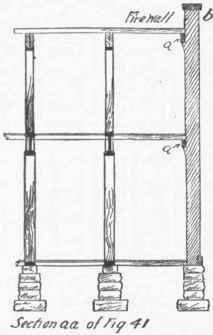
Fig. 43. - Longitudinal Section of Above Mill.
(C.) For floor beams and posts, timbers of large dimensions should be used : nothing less than 6" X 14" for a 12' span, nor less than 10" X 14" for a 16' span. Posts should in no case be less than 64 sq. in. in section. If a heavy floor timber is needed, 5", 6", 7", and 8" timbers are sometimes bolted together with an air space of 1/8" or ¼" between them; but 14" is the least depth of floor timber that should be used in any building of this type, and the student should not forget that a deep timber is much stronger than one nearly square, even if the latter has the considerably larger section.

Fig. 44. - Construction of Above Mill at Wall and Posts.
In estimating the sizes of timbers necessary to support a given load in a building of this sort, be sure that the timbers are large enough to support the load safely after a third of their strength has been burned away.
Posts should not be painted nor in any way kept from the air until they have been thoroughly seasoned, - which may take two or three years from the time the timber was cut, - or dry rot may result.
To obtain the best results, an 1 ½" hole should be bored lengthwise of the column, with a ½" venthole at the top and bottom; this will help to prevent checking, as well as to assist the column in drying out more rapidly.
(D.) The heavy under floor which is laid upon the floor timbers should be at least 4" thick and bear upon three of them; the joints should be broken every few planks.
This under floor generally should be tongued and grooved or keyed together, as at e, Fig. 44, upon the top of which are sometimes laid 2" strips, the space between being filled with mortar for giving additional security from fire above, and also for deadening, as sound travels easily in buildings of this type, unless some preventive is used.
Upon the 4" under floor is laid a wearing floor, as at /, Fig. 44, or, if the 2" strips are laid as above described, the wearing floor is laid upon them.
This floor may be of any kind of wood, generally oak or maple, at least 1 ¼" thick, matched, though \" flooring is sometimes used. The wearing floor usually is laid at right angles with the under floor but, if placed directly upon it, is laid diagonally. Though this is more expensive, it often is preferred, as a better brace is secured, but in no case should the two floors be parallel, as any unevenness, or shrinking will affect them.
(E.) One important feature, and a great advantage of this type of building, is that about one half of the wall space may be of glass, a factor of great value for manufacturing purposes.
The windows usually are extended as high as possible, as at a, Fig. 42, not only for light, but for ventilation, and may in most cases be placed directly under the floor above, between the floor timbers.
This is a great improvement over the old form of construction, in which the tops of the windows had to be kept down to allow the floor joists to rest upon the wall above thorn. Mill construction allows the tops of the windows to be about 2' higher than those of other buildings of the same size.
(F.) Fire should be retarded in its passage from room to room by tin-covered wooden doors, - sheet metal doors will warp badly in case of fire, - and by partitions of solid wood, which should never be less than 3" in thickness. Brick partitions, or fire walls, should extend above the roof as at b, Fig. 43.
(G.) No holes should be cut through the floors; the stairways, elevators, lavatories, and other closets should be in a part of the building separated from the rest by means of brick walls and fireproof doors.
There should be neither inclosed corners nor continuous air spaces to allow fire to be carried from one part of the building to another, and the rooms should be so planned that a stream of water maybe thrown into any part of them.
(H.) Belt holes should be avoided as much as possible; the main belts may be carried from the engine room to the main shafts in a brick belt tower, as in Fig. 41, the hole in the wall through which the shaft passes being the only hole opening into the main building. In this way a fire may be confined in one place and kept away from the engine room. In the most up-to-date manufactories, the power is transmitted by electricity. If the wires are properly installed, this is the ideal way, since there is at least a separate motor for each main shaft or one for each machine.
Note. - A number of different forms of fire-fighting apparatus, adapted to the protection of these buildings and their contents, have been invented, and an up-to-date building of this sort should be thoroughly equipped with them, but as they are not within the province of this book, they will not be described here. Information regarding them, and a more complete description of mill construction may be obtained from the Inspection Department of the Associated Factory Mutual Fire Insurance Companies, 31 Milk Street, Boston, Mass.
Suggestive Exercises
29. Compare the effect of fire upon unprotected iron or steel, and upon heavy timbers. What is claimed for Mill construction in regard to its fire-resisting qualities ? What were the conditions which led to the invention of this form of construction ? For what kinds of buildings is Mill construction used ?
30. Describe the chief characteristics of this type of building. What conditions govern the size of the bays ? In what way is it possible to save expense in laying the foundation of a building of this sort, as compared with that of an ordinary building ? Compare the walls of a building of this type and those of the ordinary type. What is the smallest size of timber which should be used in this sort of building ? Which is the stronger, an 8" X 8" timber, or a 4" X 14" set edgeways ? Should the floor timbers of this type of building be of a size simply to sup-port the weight in safety ? Why ? Should green posts be painted ? Why ? How long should they be allowed to dry out ? Describe the purpose of boring a hole lengthwise of the column. How should the heavy flooring be laid ? How thick should a floor of this sort be ? How is a floor sometimes deadened ? What should be the thickness of the wearing floor ? How is the top floor generally laid in relation to the under floor? How may it be laid to strengthen the building? Why should it not be laid parallel with the under floor? Compare the possible light area of Mill construction with that of the ordinary building. Why is this possible? What sort of door should be used in Mill construction? Why is a sheet metal door less serviceable? Where should the elevators, lavatories, etc., be placed? What was said of inclosed corners and continuous air spaces? Why? How should the main belts be carried from the engine room? What is the object of this? What is the best method of transmitting power?
Continue to:


My Books

