


31. Steel Square
Description
This section is from the book "Constructive Carpentry", by Charles A. King. Also available from Amazon: .
31. Steel Square
Steel Square. (A.) The blade of the standard steel square (Fig. 45) is 24" long, 2" wide; the tongue is 14", 16", or 18" long and 1½" wide. The widths are so made for the sake of quick and convenient measure: the blade width corresponding to the thickness of most material used in framing an ordinary building, such as rafters, studding, etc., the tongue width corresponding to the size of the common mortise.
The edges of the back side of the square are divided into 16ths of an inch upon the outside, and 8ths or 4ths upon the inside. The face side of the square is divided into 12ths of an inch upon the outside edge, and 8ths or 4ths upon the inside.
(B.) For our purposes we will consider the side of the square which is used the most by the framer as the face side. In holding the square, take the tongue in the left hand, and the blade in the right, bringing the face of the square uppermost. In this way it is used in doing ordinary work, as the 12ths of an inch upon the outside edge divide each inch into one foot, making a 1" scale. Thus the blade, if used as a scale, is 24' long, and the tongue 14', 16', or 18' long.
(C.) Upon the face of the square, as at a, Fig. 45, is the board measure, the use of which is very simple and often a great convenience. The figures denoting the width of the board will be found under the figure 12 upon the outside edge, as at b. Having found the width,say 10", follow the line upon which it is located to the figures of the inch division which denotes the length, say 16', as at c; upon the same line as that upon which the 10" is located the figure 13.4 will be found, which represents the surface measure of a board of the above dimensions.
This method is not generally used by carpenters, but accuracy may be obtained in this way without estimating.
If a very wide board is to be surveyed, say 22" wide and 16' long, the area may be found by doubling the result of 11" and 16', or 29.4 square feet.1
A rafter measure is sometimes placed on a square instead of the board measure. As this is read by a very simple principle, it will not be discussed here.
(D.) The brace measure is found upon the face side of the tongue of the square, and is read by looking for the figures which denote the distance from the corner of the angle to be braced, to the point of intersection of the brace and the two sides of the angle, if the angle is a right angle. The use of the brace measure in explained in Chapter II, Topic 22.
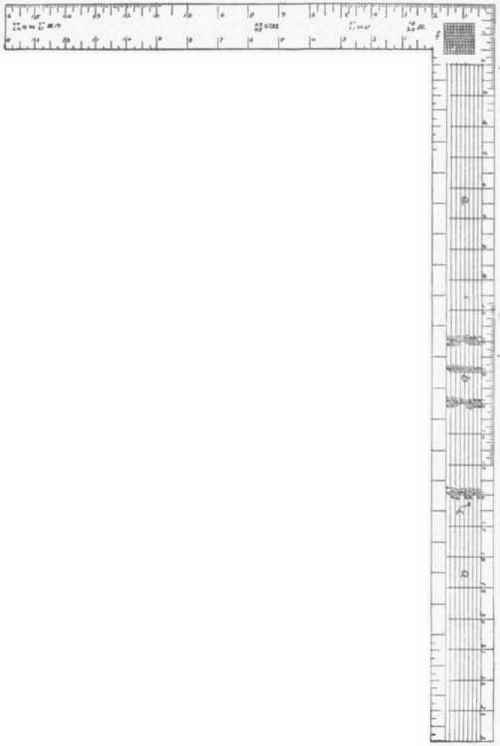
Fig. 45. - The Carpenter's Steel Square.
1 Topic 12, of "Elements of Woodwork" describes and illustrates the use of the lumber scale, which is similar to the board scale, as the same principle applies in the use of each.
(E.) The diagonal scale of 100ths of an inch (Fig. 46) is used when it is necessary to work to 10ths or 100ths of an inch. It is found generally upon the face of the square near the angle, as at f, Fig. 45, though an inch divided into 100ths is often used instead. Many squares do not have either scale, as it is rarely used by the carpenter, because the fractions to which he works are based upon 16ths of an inch. The principle of the diagonal square is not hard to understand, as it is a square inch divided into 100 squares. A line connecting a with b divides each line through which it passes into tenths; thus, if 1.57" were desired, the distance from x to y would give it more easily than if the measurement were taken from an inch divided into 100ths, where the divisions are so small that they are difficult to read.
Continue to:


My Books

