


Bohemia. Part 7
Description
This section is from the book "Bohemia - John L. Stoddard's Lectures", by John L. Stoddard. Also available from Amazon: John L. Stoddard's Lectures 13 Volume Set.
Bohemia. Part 7
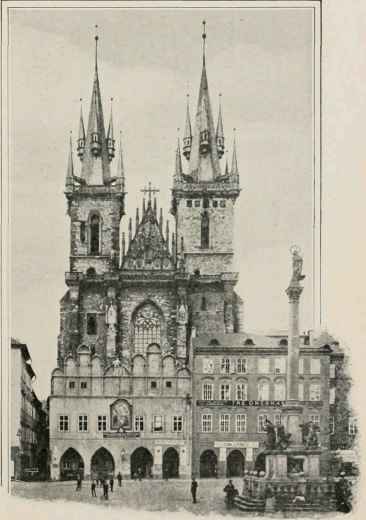
The Old Hussite Church (Teynkirche).
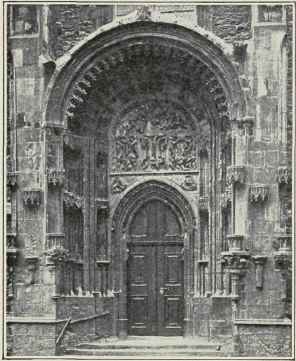
North Doorway Of The Hussite Church.
The emperor, Sigis-mund, had given him a safe-conduct, but this was disregarded by his enemies on the ground that contracts with a heretic are not binding. He was, accordingly, thrown into prison, before a single accusation had been formally brought against him. He asked for counsel to defend him, but in vain. When in the presence of the council he attempted to explain his views, the uproar was so great that he could not be heard. He therefore sat down with the simple words, - "In such an assembly I had expected to find more justice, piety, and order." Two days later, the emperor being present, he had a fairer hearing, and denied having made any repudiation of the Catholic doctrine, though paying a tribute of respect and admiration to the memory of Wycliffe. It must be said, however, that he did not use much tact or wisdom in his answers, and mortally offended the susceptible emperor by criticising his employment of a Latin word. Such factors, trifling though they seem, often decide the weightiest questions. So easily influenced is human nature by flattery or wounded pride! The council finally insisted that Hus should acknowledge himself guilty of everything of which he had been accused; and that, recanting all his heresies, he should swear never again to teach them. This Hus refused to do. Forthwith he was condemned to perish at the stake. He met his dreadful fate with perfect fortitude. As the fierce flames leaped upward to devour him, he chanted steadfastly the words: "O Christ, Son of the living God, have mercy upon me! Thou, who wast born of the Virgin Mary . . ." There his voice ceased. The greedy flames fulfilled their lurid task.
But their heroic victim had escaped. It was a great mistake to burn John Hus. Men thought, when they had thrown his ashes into the Rhine, that they had heard the last of him. But, much to their astonishment, his soul went marching on. The fagots that consumed him kindled a tremendous fire. Far better had it been not to have stifled that reproving voice. Its tones returned to haunt men till they grew ungovernable. The death of Hus was the inciting cause of the terrific war which followed. Practically the whole Czech nation looked upon his death not only as a murder, but as a deadly insult to Bohemia. If Hus had been a heretic, they said, then all Bohemians were also heretics, for they were with him almost to a man. The people were infuriated. They rioted, and sacked the churches. They stormed the archbishop's palace till he fled from Prague to save his life. The pope called on the emperor to reestablish order, and defend the Church. It was too late. A fearful civil war broke out, as cruel and relentless as religious wars invariably are. Each side endeavored to surpass its enemy in barbarity. What made the conflict fiercer was the fact that, though the original motive of the struggle was religious, it soon became political as well.
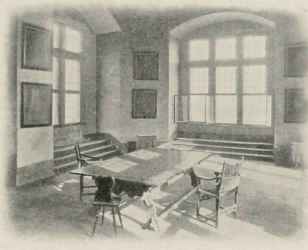
The Old Council Hall.
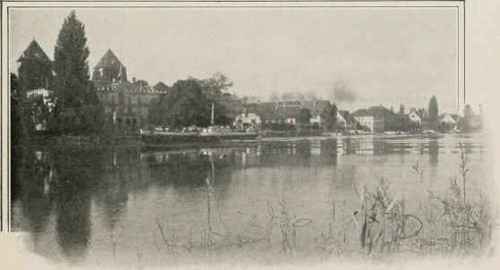
Castle Of Gottlieben, Near Constance, Where Hus Was Imprisoned.
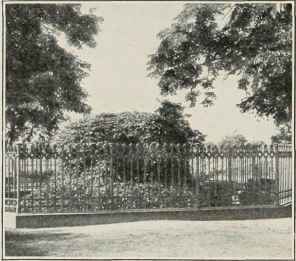
Boulder, Marking The Spot Where Hus Was Burned.
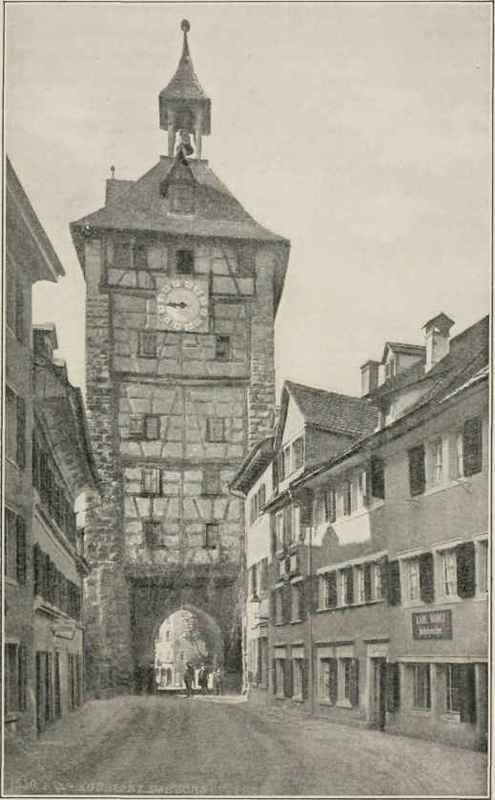
House -Marked By Medallion - Where Hus Was Arrested, In Constance.
To millions, patriotism and religion in these wars appeared identical. For Sigismund, who sided with the Pope, was German, and German soldiers were now marched into Bohemia, as "Crusaders," to suppress the "heretics." The Czechs, however, hated Germans then as much as they do now. They therefore rose against them as invaders of their country. The Czech who was not fighting as a Hussite was regarded as a traitor. A stirring proclamation was spread broadcast with these words: "The Church has raised against us our worst enemies, the Germans. What cause for war have they, save their eternal hatred of our race? They wish to dominate in Bohemia as they do in Prussia and on the Rhine. Remember your ancestors, the ancient Czechs, who passionately loved their fatherland. To arms! and save our country from oppression! " Inflamed by such a spirit and by wonderful religious zeal, they carried all before them. Their leader, Ziska, captured Prague, pillaged and burned the monasteries, and drove back and defeated both the Germans and the emperor's troops with fearful slaughter. When the king, thoroughly alarmed, displayed a leaning toward these enemies, some of his newly chosen councilors were thrown from the windows, to be caught on spikes and killed by the infuriated crowd below. When Ziska died, his successor in command, the no less formidable Procop, actually invaded Austria, Saxony, and Bavaria, till Germans suffered more from Hussites than they had from Huns. Horrible tortures were inflicted on both sides. Permission was given to kill a Hussite without trial.
Continue to:


My Books

