


Florence. Part 14
Description
This section is from the book "Florence - John L. Stoddard's Lectures", by John L. Stoddard. Also available from Amazon: John L. Stoddard's Lectures 13 Volume Set.
Florence. Part 14
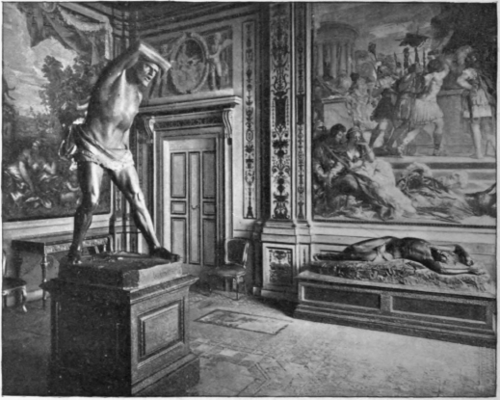
Dupre's "Cain " And "Abel".
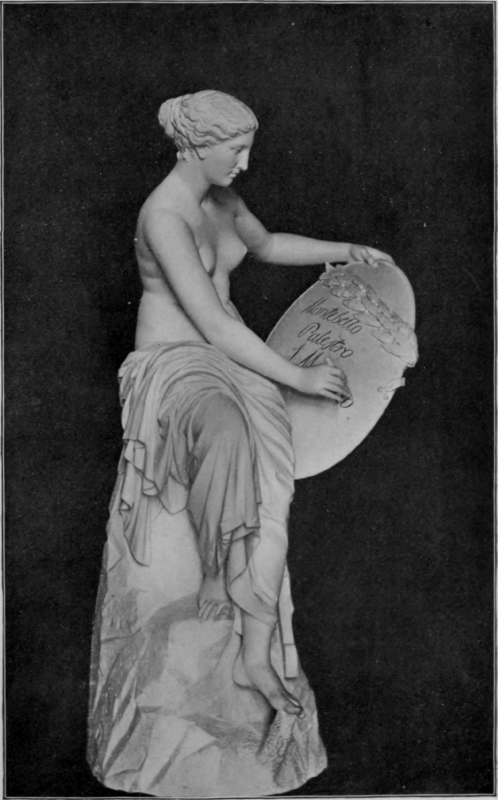
Victory, In The Pitti.
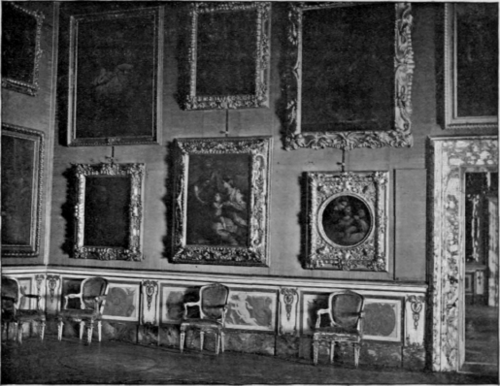
The Room Of The "Madonna Of The Chair".
Among the paintings in this palace is one before which every visitor must pause, though all the others be passed unnoticed. It is the sweetest and most tender of all Raphael's creations,-the "Madonna of the Chair." Aside from its religious significance, the instinct of humanity has been to treat this as the purest portraiture of motherhood that the world knows, and it would seem impossible for any one to look upon this group without a deeper reverence for the self-sacrificing tenderness that motherhood implies. No matter what may be the various nationalities of those who come and go before it, with reverent step and bated breath, a common instinct of fraternity pervades them all.
"One touch of Nature makes the whole world kin." In turn, the gorgeous palace vanishes from each traveler's gaze, and in its place he sees his far-off home, feels once again the clasp of arms that, for his welfare, never knew fatigue; and hears the voice which had a power to soothe all cares and griefs away, as nothing else, alas! can do. But, for a heart responsive to the religious influences of this work of art, it has a still more thrilling interest, representing the Divine Mother already seeing through the vista of the future, the anguish of Gethsemane and the tragedy of Calvary, and holding, therefore, the more closely to her breast the Child whose destiny already fills her with an exultant joy, behind which lurks a nameless dread.
The Boboli Gardens, adjoining the Pitti Palace, form a charming place of rest for those who have become wearied in the picture gallery. The glimpses of the city which their stately avenues disclose are exquisitely beautiful, and I recall few more delightful moments than those which I have spent here, sitting, book in hand, within the shade of cypress, pine, and ilex trees, or strolling through a shadowy maze of trellised pathways framed in lofty hedges, among which numerous statues are ensconced, their graceful figures gleaming white as snow against thick walls of living green.
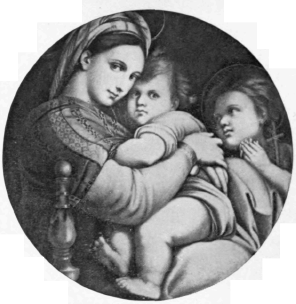
The " Madonna Of The Chair".
It seems appropriate to find among the cypress trees of Florence the forms of the gods and goddesses of Greek mythology. It is as if the deities of the past, homeless, and excluded from all modern creeds, had chosen to return and linger in a place where they can realize that they still exist in half the poems, paintings, and statues of the world, and where so many relics of the genius of antiquity remind them of the art that made earth beautiful, when men and women worshiped them as real.
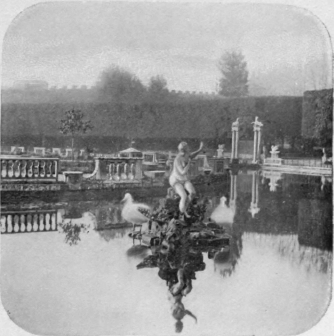
The Boboli Gardens.
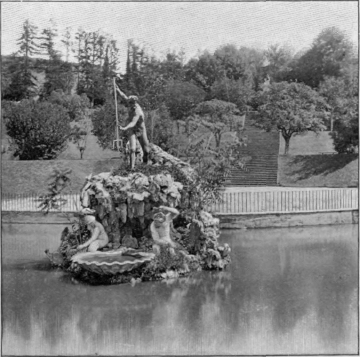
Statuary In The Boboli.
In a handsome square, before the celebrated Church of Santa Croce, stands an imposing statue of the poet Dante. Florence is proud enough of Dante now, and, "with the late remorse of love," desires to show the world that she reveres his memory. The inauguration of this statue, on the 12th of May, 1865, the six hundredth anniversary of the poet's birth, will never be forgotten in the history of Florence. The entire city was hung with flags and garlands, and quotations from the works of Dante were placed on all the bridges, monuments, and buildings which he had described. Beautiful banners, bearing appropriate inscriptions, had been sent hither from all parts of Italy, and these were carried in a grand procession, led by King Victor Emmanuel, in celebration of the Italian unity which had been dreamed of, and ardently cherished by, Dante, six centuries before. Conspicuous in this procession was the actress Ristori, symbolizing Tragedy, and wearing on her head a crown of gold; while beside her walked those great Italian actors, Salvini and Rossi, each holding the ribbon of a banner representing Dramatic Art. Finally, when the vast concourse of spec-tators had assembled in this square, the solemn bell of the Palazzo Vecchio ceased its vibrations, and, while inspiring music filled the air, Victor Emmanuel gave the signal for the unveiling of the statue. At Dante's feet is the figure of an eagle. Appropriate, indeed, the king of birds beside the king of bards!
Continue to:


My Books

