


Equipment For Canning
Description
This section is from the book "A Manual Of Home-Making", by Martha Van Rensselaer. Also available from Amazon: A Manual of Home-Making.
Equipment For Canning
If canning is to be done successfully, even on a small scale, it is necessary to have some equipment that will lighten labor and save time. Such equipment may be bought especially for the purpose, or it may be made from something already on hand. If possible, a canner should be seen in operation before it is bought.
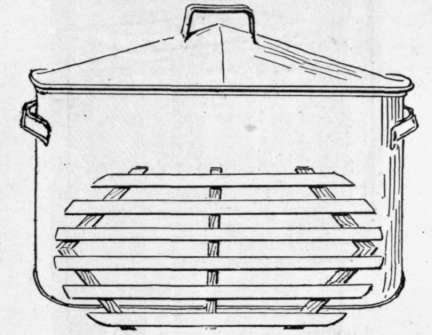
Fig. 123. - Sterilizer, showing false bottom as a rack.
If the so-called cold-pack method (page 606) is used, the first and most essential part of the canning equipment is a receptacle in which the cans of food may be steamed or boiled. This receptacle and its parts are generally spoken of as the canner or the canning outfit. Canners suitable for home use are of four general types: (1) hot-water outfits; (2) steam cookers; (3) water-seal outfits; (4) steam-pressure outfits.
While a small hot-water canner may easily be devised at home, as suggested in the following paragraph, its usefulness is limited by its small capacity and the amount of fuel that it requires. Commercial outfits capable of accommodating comparatively large quantities with convenience are briefly discussed in succeeding paragraphs.
A home-made hot-water canner may be constructed out of any utensil that is large enough to hold a number of cans, that is deep enough to allow the cans to be completely covered with boiling water, and that is capable of being fitted with a rack, or false bottom, to prevent the cans from resting on the bottom of the receptacle, and to insure the free circulation of water in the boiler (Fig. 123). A tight-fitting cover that will retain as much heat as possible will help to save fuel. A tin sap-bucket, a large tin oyster-pail, or a clothes boiler may be converted into a hot-water canner to meet the requirements of the individual housekeeper.
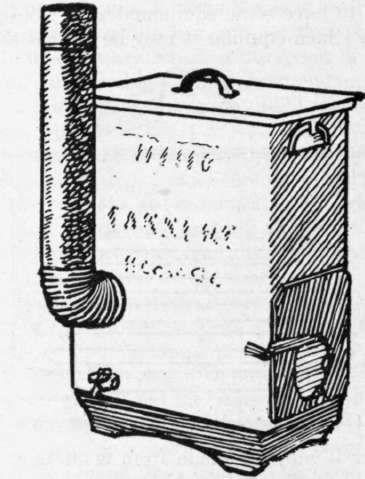
Fig. 124. - Commercial hot-water canning outfit for out-of-door work.
A number of simple hot-water outfits are now on the market. The main advantages that they have over those adapted at home from some other equipment are that they will hold more cans at one time, and that they have perforated trays, with handles, on which a number of cans may be lowered into and lifted from the canner at one time. Such trays may and should be made for the home-made outfit. The commercial hot-water outfits are often equipped with a fire-box, which makes it possible to use them outdoors if desired (Fig. 124).

Fig. 125. - Steam cooker.
The steam cooker (Fig. 125) is light in weight and is easily-handled. It is a better shape than the boiler for use on a stove and is far more economical in the amount of fuel required. It may be used throughout the year, since it is adapted for ordinary cooking as well as for canning. Food that is canned in a steamer retains its shape well. The time of cooking as given in the time-table must be somewhat increased because the temperature is likely to be slightly lower than the boiling point of water. Steamers are made in copper and in tin.
The cover of the water-seal outfit is so devised that a seal of water holds it down tight, and thus the steam in the space above the cans is held under slight pressure. The temperature of steam under pressure is above that of boiling water. Hence with the water-seal outfit the time needed for sterilization may be somewhat reduced. The efficiency of such an outfit depends on the amount of pressure produced.
When steam is held under considerable pressure, temperatures much higher than that of boiling water may be obtained, and the rise in temperature is in direct proportion to the rise in pressure. A number of good portable canners in which a pressure from five to fifteen pounds may be obtained are now on the market.
Steam-pressure canners are the most successful for almost all kinds of vegetables and meats, because the greater heat obtained in them effects complete sterilization in a comparatively short time and during one cooking. Hence time, labor, and heat are saved.
The equipment is the same as for hot-water outfits, with the addition of a steam gauge, a pet cock, and a thermometer. In some cases when canning is done in tin cans, a blast furnace is supplied, together with the soldering tools. Some outfits include a boiler, a crate, a soldering outfit, and arrangements for a fire pot.
There are many kinds of jars on the market. The best jar is one that is simple in construction, that can be sealed perfectly and washed easily, that protects the contained food against contact with metals, that has the fewest parts to be lost or misplaced, and that fits the shelves and receptacles planned to hold it. The glass should be clear with no bubbles, and the jar should be smooth both inside and outside. The color of the glass, whether white or green, has no effect on retaining the color of the food. The type of jar that seems 'to give most general satisfaction is one with a wide mouth and straight sides and with a glass cover clamped on with some metal device.
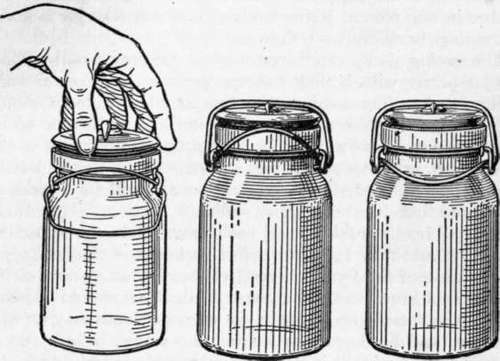
Fig. 126. - Manner of testing a jar.
Fig. 127. - Position of clamp during sterilization.
Fig. 128. - Position of clamp after sterilization.
A glass jar should be tested before it is used (Fig. 126). The finger should be run around the edge of the jar as well as the lid where the rubber rests, to determine whether the glass is smooth. Filing may be necessary.
A jar with a wire clamp should have the lid placed on it, and the lid should be tapped. If it rocks, the jar is imperfect. When the rubber is adjusted and the lid is placed on the jar, the wire clamp should snap on. It may be necessary to remove the bail and either to straighten it or to bend it more in order to tighten or loosen the lid as the case may require. Bulging of the rubber may be caused by too tight a clamp.
A mason jar may be tested by placing the lid on it without a rubber and attempting to insert the thumb nail between the lid and the jar. If this can be done, the jar is defective. Another test is to adjust the rubber and the lid and to pull out the rubber in one place. If the rubber stays out, the jar is good; if it springs back, the jar is defective.
The testing of any type of jar may be accomplished by filling the jar partly with boiling water, adjusting the cover and the rubber, and sealing and inverting the jar. If it leaks, it should be examined to determine whether the leakage is due to an imperfect jar, a poor rubber, or to improper adjustment of the wire clamp, in case a wire clamp is used. If any defect noticed cannot be remedied, the jar should be reserved for pickles or some food that does not require sealing.
New rubbers should be used each year. Old rubber loses its elasticity, and may cause imperfect sealing and thus endanger the keeping of the food. A good rubber is elastic, not brittle, and will not break easily when stretched. Care should be given to the selection of good rubbers, for even new ones may be stiff, inelastic, and hard, or may contain no rubber at all. Some rubbers on the market impart so disagreeable a flavor and odor to the canned food that it must be discarded. Good rubbers are hard to procure, but nothing less than the best should be accepted. They are more expensive than poor rubbers, but in the end they cost less.
Continue to:


My Books

