


Varieties Of The Pear: D
Description
This section is from the "American Horticultural Manual Vol2" book, by J. L. Budd. Also available from Amazon American Horticultural Manual, Part Two.
Varieties Of The Pear: D
Danas Hovey
Small to medium, pyriform, tapering towards the stem; color green, blotched and specked with russet, with pale red cheek on exposed side; stalk three-quarter to one inch long, stout, inclined, and inserted in uneven cavity. Flesh creamy white, melting, buttery, subacid, and rich in flavor. Season midsummer, As it is near to the Seckel in quality it is much grown in Kentucky and Tennessee for home use and market. Massachusetts.
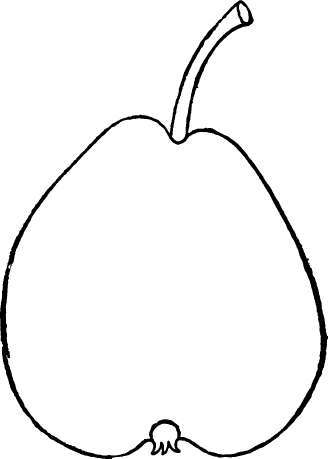
Danas Hovey.
Dearborn (Dearborn Seedling)
Small to medium; roundish pyriform, regular; color light yellow with small dots; stem one to one-quarter inches long, curved, and inserted in slight cavity; basin-very shallow. Flesh white, juicy, melting, sweet, sprightly, very good. Season early. A choice amateur variety. Massachusetts.
Dempsey
Large, oblong, obovate, pyriform; color yellowish green with brownish-red cheek; stem one inch long in a fleshy base without much show of cavity. Flesh white, fine-grained, tender, quite melting, sweet, very good. Season late autumn. A seedling of Bartlett. Canada.
Desportes (Andre Desportes)
Medium, obovate, obtuse pyriform, oblique; color greenish yellow with areas of fawn and bronze on exposed side. Flesh yellowish white, fine, melting, granulous at the core, sugary, acid, very good. Season, very early. Often grown on the quince. France.
Diel (Beurre Diet)
Large to very large, obovate; color yellow at maturity with numerous large brown dots and patches of russet; stalk stout, curved, and from one to one-quarter inches long set in uneven cavity. Flesh creamy color, quite fine except at core, buttery, sweet, aromatic, and when well kept delicious in flavor, very good. Much grown for market in New York and Michigan. Belgium.
Directeur Alphaude
Very large; color yellowish green with russet dots; flesh firm, fine-grained, sugary, rich. Season, winter. Succeeds well in western New York.
Dix
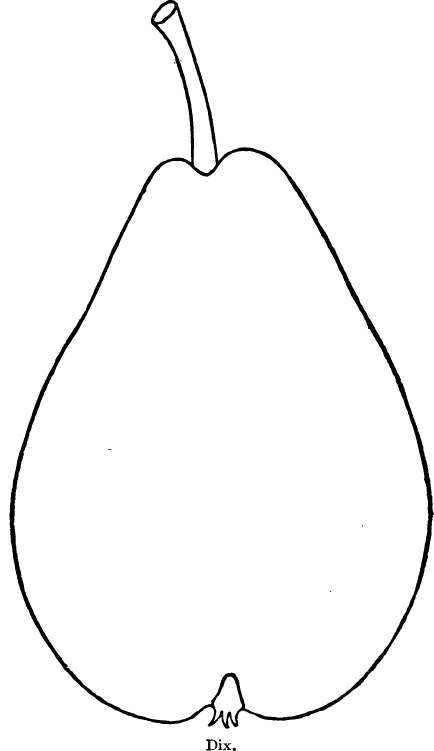
Large, oblong, or long pyriform; color deep yellow at maturity, with russet dots and russet around the stem; skin somewhat rough; stem short, stout, thickened at each end, and set obliquely with slight depression at top of neck; basin narrow and very shallow. Flesh a trifle coarse, but juicy, rich, sugary, melting, delicious, very good to best. Fruit often cracks except in drier inland climates with less moisture of air. Massachusetts.
Dorset
Large, obovate obtuse pyriform; color golden yellow with bright red cheek. Flesh juicy, melting, sweet, very good. Season, winter. A new variety giving much promise east of the lakes.
Drouard (President Drouard)
Large, roundish obovate, obtuse, rather irregular; color yellow with netting and washings of russet; stalk three-quarters of an inch long, quite stout, inserted in deep narrow irregular cavity. Flesh creamy white, tender, buttery, sweet, perfumed, good. An autumn variety much liked in Michigan and east of lakes. Europe.
Duhamel (Dukamel Du Monceau)
Medium, obovate, obtuse pyriform; color yellow, with many russet specks and patches of gray or cinnamon russet; stem one and one-quarter inches long, stout, fleshy at point of insertion in very slight cavity; basin narrow, shallow, often corrugated. Flesh yellow, melting, juicy, very good. Season, early winter. A good tree and good bearer in lake region. France.
Dupont (Pennington)
Medium to large, obovate, obtuse pyri-form; color yellow with numerous small brown dots; stalk one and one-quarter inches long, erect, very stout, with swelling at point of insertion at top of neck; basin very shallow; calyx open. Flesh yellowish white, tender, juicy, melting, very good. An Illinois variety doing well on ridge land in central Iowa.
Continue to:


My Books

