


Acute Leukemia
Description
This section is from the book "Cancer Manual For Public Health Nurses", by National Cancer Institute. Also available from Amazon: Cancer Nursing: A Manual For Public Health Nurses.
Acute Leukemia
Leukemia is a disease characterized by the overproduction of white cells. The bone marrow is invaded by immature, neoplastic cells which displace the normal elements. Acute leukemia is the type most common in children. Although the disease process can be slowed up with chemotherapeutic agents, the disease cannot be cured at the present time. The most outstanding complications of leukemia are hemorrhage and/or infection. Survival is usually measured in weeks or months. Leukemia causes more deaths among children under the age of 6 years than any other single disease.
The onset is usually abrupt with the development of symptoms often considered as due to a cold or upper respiratory infection, acute tonsillitis, or ulcerative stomatitis. Anemia, not responding to treatment, develops rapidly, and the sudden appearance of pallor or unusual degree of prostration with minor outward symptoms, should alert the nurse to suggest medical followup. Purpura, hemorrhage from the nose, gums or gastrointestinal tract may be the first evidence of leukemia. Enlargement of the liver and spleen usually occur later. (Figures 17 and 18).
Diagnosis
The diagnosis of leukemia is established by the microscopic examination of the blood and bone marrow. The bone marrow is usually taken from the sternum or ilium. Repeated bone marrow and blood examinations are necessary at intervals during treatment to assess progress of the disease and to evaluate the therapy.
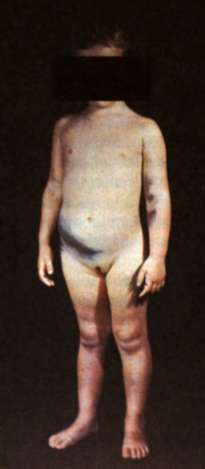
Figure 17
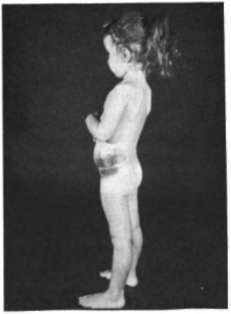
Figure 18
Treatment
Children with acute leukemia respond better to treatment than do adults with acute leukemia. The major methods of treatment are:
1. Blood transfusions help maintain blood constituents; particularly the red blood and platelet count.
2. Antibiotics are used to control infections, as these patients are prone to infections.
3. Folic acid antagonists-aminopterin and methotrexate are used most frequently. Signs of toxicity from these drugs include:
(a) ulceration in the mouth
(b) diarrhea or blood in the stool
(c) cessation of hair growth, eruptions on skin, hyperpig-mentation, increased susceptibility to infection
(d) beefy red tongue
4. Corticosteroid hormones such as meticorten, cortisone, hydrocortisone, and ACTH are used for most acutely ill patients for their rapid effect. Resistance to these agents develops rapidly and remissions are usually of lesser duration than with antimetabolites.
Some of the side effects which may occur are:
(a) sodium and fluid retention
(b) hypertension
(c) hyperglycemia
(d) decreased resistance to infection
(e) mental disturbance
5. Purine antagonists-6-mercaptopurine (6-MP), thioguanine, azaserine are the ones used most frequently.
Mouth lesions and gastrointestinal complaints may indicate toxicity.
The treatment of acute leukemia is largely by chemotherapy. Patients may develop resistance to one or more chemotherapeutic agents and this may necessitate a change in therapy.
X-ray is sometimes useful in the treatment of lesions in the bone, kidney, or central nervous system.
Continue to:


My Books

