


On The Different Modes In Which Medicines Are Applied. Continued
Description
This section is from the book "The Materia Medica Of The Hindus", by Udoy Chand Dutt. Also available from Amazon: The Materia Medica Of The Hindus.
On The Different Modes In Which Medicines Are Applied. Continued

Svedana or application of heat to the skin for inducing perspiration is carried out in four different ways, namely:-
1.

Tάpasveda or the application of dry heat by means of heated plates, bricks, sand, cloth or the palm of the hand only. These are recommended to be heated by catechu-wood fire.
2.

Uskmasveda or the application of hot steam. This is effected in various ways. The part to be heated is covered with wet cloth. Bricks, stones or iron plates are made red hot and sprinkled over with kάnjika or some decoction, and are then applied to the part to be heated; or an earthen pot with a small opening in the side is filled with hot water or decoction of some drugs, a tube is adjusted to the hole in the pot and the steam is applied to the covered body through it. A third method consists in heating the ground by burning catechu-wood over it, and after removing the fire, sprinkling some decoction over the spot and making a bed of castor oil leaves on it. The patient is to lie on this bed and cover himself with a blanket. Or the ground may be covered with a thick layer of boiled pulse such as mashakalaya and a bed made over it for the patient.
3.
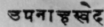
Upanάhasveda. This means the application of heat by hot medicinal substances in the form of decoctions, pastes, or plasters, or of fomentation by cloth wrung out of hot fluids; or heat may be applied by enclosing hot medicinal substances or pastes within a cloth bag and applying the latter to the skin.

Dravasveda. This means the hot hip-bath and hot bath with warm water or decoctions. Milk, broth, oil, kanjika etc. may also be used for baths. The patient should sit in a tub with the fluid up to his navel, and which should also be poured over his body from above the shoulders, so as to bathe him thorough-ly. The tub should be made of wood, silver, copper or iron, of square form and twenty-six fingers in measurement in all directions, that is in height, length and breadth. After the application of heat, the patient should take a hot bath, eat light food and keep himself covered in bed. If too much heat has been applied, and the patient suffers from pain in the joints, thirst, langour or giddiness, then he should be treated by cooling applications. The region of the heart, scrotum and eyes should be heated with great care and to a mild degree only.

Dhumapάna or inhalations. Tapers or pastilles made of medicinal substances are set fire to, and their fumes inhaled through a tube by the mouth or nose. Pastilles for inhalation are thus prepared : a reed, half a cubit in length, is smeared or laid over with a paste of the drugs to be used, to two-thirds of its extent and is dried in the shade. When dry, the reed is withdrawn from the paste, leaving it in the form of a hollow tube. This is smeared with clarified butter and lighted. The lighted extremity is introduced into one end of the inhaling tube and the fumes drawn in by the other end through the mouth or nose, as the case may be, and emitted again through the mouth. In affections of the throat and chest, inhala-tion through the mouth is recommended, while in diseases of the head, eyes or nose, the fumes are drawn in through the nose. The tube for inhalation may be metallic or made of wood or ivory. Its length varies from two cubits to half a cubit, and its calibre should be sufficient to allow a large pea to pass through. The shorter tubes are used in administering expectorant and emetic fumes. Inhalations are useful in cough, asthma, catarrh, pain in the neck or head, etc. They may be used for soothing the air passages, for promoting discharge from them, for the relief of cough, or for inducing vomiting. Another form of inhalation, called Samana, is recommended to be used daily after washing the face, bathing breakfast, etc. The pastille for this was made of cardamoms and other aromatic substances. This sort of smoking is not seen in the present day. Probably it was in vogue before the introduction of tobacco and has been displaced by the latter.

Dhupana or fumigations were employed for ulcers and skin diseases. The pastilles for these are made as for inhalation. They are lighted and placed inside two earthen pots, placed face to face. A hole is made in the upper pot and a tube adjusted to it. The free or open end of the tube is now directed to the affected part and the fumes allowed to spread over it. Incenses and tapers composed of various medicinal substances are also burnt in rooms occupied by the sick, for removing unpleasant smells and supposed evil spirits.

Kshάrakarma or caustic applications. The ancient physicians of India, like their modern representatives, preferred opening abscesses by caustics, to incising them with the lancet. Hence caustics were described as superior to the lancet, inasmuch as, in addition to opening abcesses, they purified them by removing the derangement of the humours. The ashes of the following plants were used for the preparation of caustics, namely: -

Pάtalά. - Stereospermum suaveolens.

Kutaja. - Holarrhena antidysenterica.

Palάsa. - Butea frondosa.

Asvakarna. - Shorea robusta.

Pάribhadra. - Erythrina Indica.

Vibhitaka. - Terminalia Bellerica.

A'ragvadha. - Cassia fistula.

Lodhra. - Symplocos racemosa.

Arka. - Calotropis gigantea.

Snuhi. - Euphorbia neriifolia.

Apάmάrga, - Achyranthes aspera.

Karanja. - Pongamia glabra.

Vάskla. - Justicia Adhatoda.

Kadali. - Musa sapientum.

Chitraka. - Plumbago Zeylanlea.

Putika. - Caesalpinia Bonducella.

Devadάru. - Cedrus Deodara.

A sphotά. - Vallaris dichotoma.

Karavira. - Nerium odorum.

Saptaparni. - AIstonia scholaris.

Gambhάri. - Gmelina arborea.

Gunjά. - Abrus precatorius.

Koshάtaki. - Luffa pentandra.
The roots, stems and leaves of these plants or of such of them as are available, are cut into pieces and burnt in a pit. The ashes are then collected and boiled in six times their weight of water till the solution becomes transparent, red, pungent and soapy to the feel. It should then be strained and again put on fire and the following substances added, namely, ashes of Euphorbia neriifolia (snuhi), and the burnt powders of bivalve and conch shells. The mixture should be constantly stirred and boiled till it is of a thick consistence. The proportion of shell-lime added varies from one fourth to one-eighth or one-sixteenth part of the solution. Caustics of three strengths are thus obtained. Sometimes orpiment and realgar are added to increase their strength.
The part where the caustic is to be applied, should first be cleaned and rubbed. The caustic should then be applied with a probe. It should be allowed to remain in contact with the skin for such time as is occupied in uttering a hundred words and then removed. The skin becomes black from the application, when it is dressed with a paste of acids, clarified butter and honey. For hastening the removal of the slough, a paste or poultice composed of sesamum seeds, liquorice root, lemon juice and kanjika should be applied. Caustics are applied to external piles, sinuses, fistulae in ano, abscesses, warts, tumours, leprous patches, etc.
Continue to:


My Books

