


Dutch Furniture Under French And Oriental Influence. Part 5
Description
This section is from the book "Dutch And Flemish Furniture", by Esther Singleton. Also available from Amazon: Dutch and Flemish Furniture.
Dutch Furniture Under French And Oriental Influence. Part 5
His diary and expense account shows that his purchases of furniture and bric-d-brac faithfully reflected the prevailing taste for Oriental wares and the style refugie. He did not exclusively patronize Dutchmen.
In 1688, he paid "to Frenoye, the silkman, for the fringe of the bed, edgings for the window curtains, etc., £!55 "; "to the joyner who made the chairs, stools and squabs for my wife, £19"; and "for gold and crimson fringe for the India bed quilt, £17."
In 1689, he bought "for dear wife" a white teapot and basin, £4 16s. gd.; two china basins, £1 1s. 6d.; an India trunk, £7; India quilt for a bed, £38; a "brocka-dal hanging in my wife's anti-chamber, £11 10s."; and "to a French varnisher for ten chairs, a couch and two tabourettes, £12."
In 1690,his purchases included "silver andirons, for my dear wife her closett chimney, £13 5s."; "a glass screen, £1 is. 6d.; "two pair of basins for dear wife, £1 12s."; "a large China punch-bowl, with a large jarr and two white cupps, £3 5s."; "sett of cupps and saucers, £2 "; six other saucers, 10s.; two china beakers, £2 11s.; two great jarrs of china and two smaller ones, "with one very little one," £7 3s.; a parcel of old china, £21; another parcel of old china, £6 10s.; "another sett of old china for dear wife, £22 "; "a pair of old china roul wagons" (large blue and white vases), £7 10s. 6d.; a pair of china cupps and a little jarr, £1 6s.; for a china teapot basin, £1 1s. 6d.; an old china bottle and two china dishes, £1 15s.; "at a curiosity shop, 1os."; "a rich piece of India atlas, £13 1os."; "a parcel of Indian things, £5 7s. 6d. "; and "a pair of china jarrs, £1 4s."
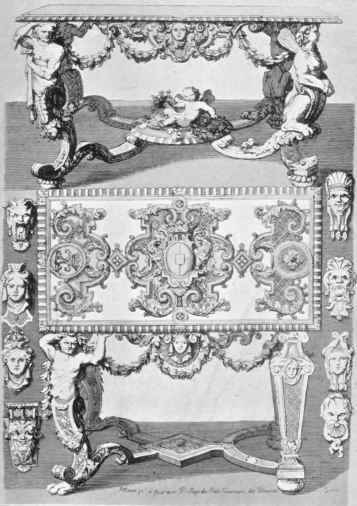
PLATE LII. - Tables and Mascarons, by Marot.
In 1691, he bought a "Jappan travelling strong water cellar, £5 7s. 6d."; a "Persian carpet (all of silk) to lay under a bed, and an old china roulwaggon, 22 guineys"; "a piece of blue Indian stuff, £2 15s."; and "a candle-skreen, £1 6s." (The "roulwaggon" is a kind of vase.)
In 1692, he enters "two china rice potts for dear wife, £5 "; "a china jarr, £2 10s."; and "a parcel of china, £2 14s."
It is evident from the above that at the close of the seventeenth century, Huguenot, Chinese, Japanese, Indian, English and Dutch artists and artisans had combined to produce a style, the leading spirit of which in England and Holland was Marot.
A noticeable fact in connexion with the European craze for Asiatic art products is that, though the English and Dutch highly admired the native wares, the European merchants sent out their own patterns and designs for furniture and ceramics. It is even maintained that the famous "Willow Plate" was the design of a Dutchman. The evidence of the practice of exploiting foreign labour in the field of home taste is overwhelming; and, as the century advanced, the guilds, city companies and other trades unions in England, France and Holland grew more and more restive under the burden of "Chinese cheap labour."Mazarin was one of the early enthusiasts in France to encourage Eastern importations.
In the Memoirs of La Grande Mademoiselle (1658), we read: "The Cardinal (Mazarin) behaved in a very delightful and galant manner. He took the two Queens (Anne of Austria and Henrietta Maria) and the Princess of England and myself into a gallery that was filled with all that could be imagined in the way of precious stones, jewels, furniture, stuffs and everything beautiful from China; crystal chandeliers, mirrors, tables and cabinets of all kinds, silver vessels, perfumes, gloves, ribbons and fans."
Towards the close of the century the craze for Oriental wares had assumed such proportions that in France Louis XIV enacted sumptuary laws to protect native industries; and in Holland and England the artisans grumbled bitterly over the hard times occasioned by the vogue. The Eastern workmen accepted patterns and supplied orders that natives of Western Europe could not venture to undertake. The guilds and city companies admitted the superiority of Oriental work, and cried aloud for protection. Thus, in 1700, the Joiners' Company addressed a petition against the importation of manufactured cabinet work from the East Indies. In this they state that they have "of late years arrived at so great a perfection as exceeds all Europe."
"But several merchants and others," they continue, "have procured to be made in London of late years and sent over to the East Indies patterns and models of all forms of cabinet goods, and have yearly returned from thence such quantities of cabinet wares, manufactured there after the English fashion, that the said trade in England is in great danger of being utterly ruined, etc., etc.
The following goods, manufactured in India, have been imported within these four years, viz.:
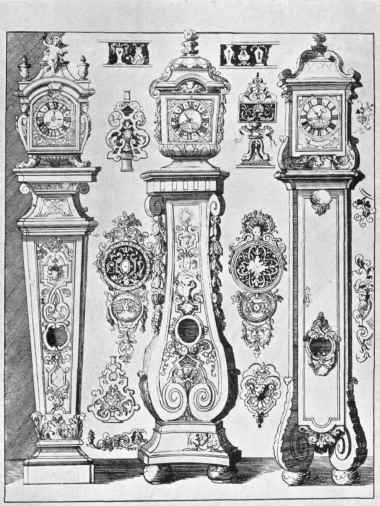
PLATE LIII. - Clocks and Details, by Marot,.
244 cabinets. 655 tops for stands. 6,580 tea-tables. 818 lacquered boards. 428 chests. 597 sconces.
70 trunks. 589 looking-glasses.
52 screens. 4,120 dressing, comb and powder-boxes.
The Japanners also brought their grievances before the authorities in 1710. The taste for japanned goods had forced them to endeavour to make worthy imitations for home consumption, and they thought they were entitled to patronage and tariff protection. The evils are fully indicated in the preamble to their petition:
"Many of the artificers (cabinet-makers, turners, goldbeaters and coppersmiths) have brought (the curious and ingenious art and mystery of japanning, so much improved in England of late years) to so great perfection as to exceed all manner of Indian lacquer, and to equal the right japan itself, by enduring the fire in the boiling of liquors.
"Also it will, if encouraged, vastly improve both the wood and iron trades for cisterns, monteiths, punchbowls, tea-tables and several sorts of ironware, which would be useless if not improved by our English lacquer.
Continue to:


My Books

