


Furniture Of The Eighteenth And Nineteenth Centuries. Part 3
Description
This section is from the book "Dutch And Flemish Furniture", by Esther Singleton. Also available from Amazon: Dutch and Flemish Furniture.
Furniture Of The Eighteenth And Nineteenth Centuries. Part 3
"Trade with Holland: the balance paid us is thrice as much as we receive from either Portugal or Spain. But when we consider the great number of smuggling ships that are employed between this country and Holland, and the supply we have from them of pepper and all other sorts of India spice, with callicoes, muslins, India silks and romals, and other manufactures of India, coffee, tea, China-ware, and very great quantities of Hollands and fine lace, etc., it is apt to furnish the thinking part of mankind with other notions."
The Dutch merchants were able to indulge all their artistic and luxurious tastes in furnishing their houses. Some of them were wildly lavish and ostentatious in interior decoration and furniture years before the frenzied finance of the Mississippi Scheme and South Sea Bubble, when valets became millionaires while they slept and senselessly squandered their gains in a month. As early as 1709, in Shaw's Travels Through Holland, we read: " Glorious monuments of the excessive wealth acquired in trade are to be seen at Mr. Tripp's and Pinto, the rich Jew's houses; in this last is a room pav'd with duccatoons, or crown-pieces, and these laid edgewise. But, indeed, the whole new Heer Graff is fronted with houses like the palaces of princes, where glittering guildings, exquisite paintings, rich china, screens, gold, pearls, diamonds enchant you, and rival the apartments of monarchs in haughty magnificence."
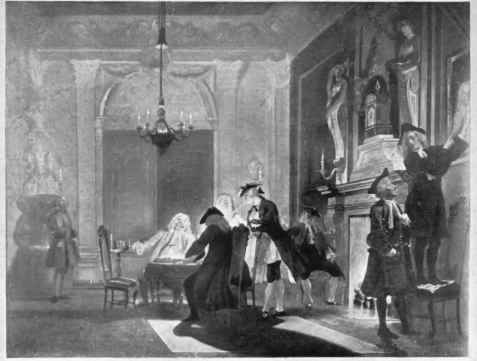
PLATE LV. - Interior, by Cornells Troost RIJKS MUSEUM, AMSTERDAM.
It is no exaggeration to say that the establishments of opulent merchants of the Low Countries at this period could match and sometimes even outshine those of princely courts. Life was very dull in Belgium at the court of the Austrian princess who ruled the Netherlands when George II came to the throne. Marie Elizabeth was forty-five when her brother gave her the rule of the Low Countries in 1725. She was very pious, and eschewed all gaiety. The only description of a festival given during her reign is that of the Fete de I'oiseau given in Brussels, October 10,1729, on the occasion of the birth of Monseigneur le Dauphin (born September 4, 1729), and was written by the minister from France, Chaillon de Joinville, who arranged it, to the Marquis de Chauvelin. After the ball they went to supper at half-past ten, and we learn that "In the 'grande gallerie' there was a long table of ninety covers with two large buffets at the two ends, and in the balcony of the 'gallerie' there were four trumpeters and a drummer, who played all through supper; and there were eighteen instrumental players for the ball."
The Flemish tapestries of the eighteenth century are of slight importance, for the great workshops of the Low Countries have now fallen into evil days. At the beginning of this century, Brussels has only eight manufacturers, fifty-three looms and about a hundred and fifty workmen, and by 1768 only one manufacturer is left - Jacques van der Borcht. The last loom perishes at his death in 1794. The Oudenarde looms are stilled for ever in 1772, and those of Ghent about the same time.
Flemish workmen are, however, still employed at Beauvais, of which Oudry becomes director in 1726; and their services are valued throughout Europe. Adrian Neusse of Oudenarde, a former workman at Beauvais, establishes a workshop at Gisors in 1703, and Jean Baert and his son one at Cambrai in 1724. Until 1738, when Boucher takes charge of them, Lille's workshops are directed by Wernier of Brussels. When the first high-warp loom was established at Madrid in 1720, the first director was Jacques van der Goten, a tapestry-weaver of Antwerp, who aided in founding that of Seville in the same year; and the tapestry manufactory, founded by Peter the Great in St. Petersburg, employed workmen from Brussels in 1777-8.
During the eighteenth century, tapestry is put to a new use, which makes it especially important in connexion with the study of furniture. In the Middle Ages, we found it was a custom for the rich to throw over their carved chairs and benches, sumptuous pieces of tapestry and other handsome textiles; in this age we now find the weavers making covers for the backs and seats of chairs, sofas and screens, the patterns or pictures for which are specially designed. Throughout Europe, the drawing-rooms are furnished with these beautiful sets of tapestry furniture, always consisting of two sofas, arm-chairs and chairs. This new fashion practically made the fortune of the Beauvais manufactory. The most delicate pictures, artistically framed, were woven: landscapes, scenes from AEsop's Fables, pastorals, emblems, mythological stories, baskets of fruit, baskets of flowers, garlands of flowers, bird cages, shepherds and shepherdesses, monkeys, swings, children playing, animals, birds, etc., etc.
The majestic style of Le Brun gives place to the airy charm of Watteau, Boucher and Van Loo. The Hunts of Louis XV, The Adventures of Don Quixote, The Gardens of Armida, Aurora and Cephalus, Venus on the Waters, Venus at the Forge of Vulcan, Cupid and Psyche, Children Playing, The Swing, Genii of the Arts, Endymion, Rustic Festivals, Fortune Tellers, Fishing, Rural Amusements, scenes from Moliere's comedies, Indian hangings, Chinese hangings and scenes in which monkeys appear in grotesque attitudes and costumes, supplant heroic triumphs and religious pictures as subjects for wall decorations.
Some of the last historical pieces that were made in Brussels were The Campaigns of the Duke of Marlborough, The History of the Duchy of Brabant and Victories of Prince Eugene. }
The Flemings of the early eighteenth century still maintained their ancient eminence in Decorative Art. Their weavers were still sought after, and their craftsmen produced many pieces of carved furniture of the Regence and Louis Quinze periods that are still preserved and admired. The schools of Liege, Brussels and Lille (the latter just across the border in France, being practically still in Belgium, as originally it was) were famous for the high excellence of workmanship produced. Jacques Verberckt, who was born in Antwerp and died in Paris in 1771, was accepted at the Academy of Painting and Sculpture, and executed or planned the greatest number of decorative sculpture made during the reign of Louis XV at Versailles. He was also employed by the Marquise de Pompadour to decorate her chateau of Bellevue. Verberckt worked with a delicate touch in rnarble, wood, or metal.
Continue to:


My Books

