


Furniture Of The Eighteenth And Nineteenth Centuries. Part 4
Description
This section is from the book "Dutch And Flemish Furniture", by Esther Singleton. Also available from Amazon: Dutch and Flemish Furniture.
Furniture Of The Eighteenth And Nineteenth Centuries. Part 4
Brussels was an important centre of industry and art throughout the century. Its citizens included many men of wealth who took interest in art, science and literature.
In his Journey in the Year 1793 through Flanders, Brabant and Germany, the Rev. C. Este says: "The town is tolerably well built as to the walls of the houses; but their windows and doors are after the manner of the French. The lower windows are also deformed with iron bars, offensive even beyond the eye, as implying something wrong in the place, either from real danger, or from false fear.
"The buildings at Bruxelles compare in one point advantageously with Paris. For the houses having fewer floors, but three or four, generally have but one family under one roof. . . . The places for a traveller to see, if he has time, are the Archduke's Chateau de Schoemburg (in the village of Lack), and the villa of M. Walkiers the banker. They are not half an hour's drive from Bruxelles and close to one another; besides the way is through the Allee Verte, those beautiful vistas of elms and limes, where the canal goes to join the Scheldt. . . .
"The Archduke's chateau is a modern building, Ionic without, Corinthian within, with two fronts of 260 feet, the depth 150, with a central portico at the entrance and a bow in the centre behind. The effect of the building at a distance is gay and imposing enough; when close to it the effect is maimed by bad figures at the top of the building, and the pediment of the portico being filled by a clock, which seems fit only where the character of the building is appropriate, as at Inigo's church at Covent Garden, to simplicity and use. The gate of approach, loaded with bad ornaments, cupids and what not, is at once lofty and trifling, elaborate and dull.
"In the internal distribution the best rooms are forty feet square - a dining-room 52 by 40 - a chapel 27 by 22 - and the state room a circle 54 feet in diameter; the dome is the ceiling of the room, and midway between the bottom and the top there is a small gallery on twelve Corinthian pillars. The floors in the other rooms are inlaid mixture, angular shapes of oak, mahogany and petrified cedar. In the circular room the floor is shewy, formed of various marbles. There are five windows, which should have five looking-glasses opposite - there are but two, with three glass doors, but not looking-glass. The looking-glasses are the manufacture of Venice. And these, eight feet by six, are among the largest ever blown there. For that is the Venetian process; not by the mould as in France and England.
"There are few objects of art. The only pictures are four large ones by De Lance of Antwerp. They are mythological subjects; of course, the worst in the world. Le Roi of Namur supplied the five feet full length of the Virgin in the chapel. It is not bad statuary, for it has, which is very rare, thought and emotion.
"The architect was Montoyer. He built also the Vauxhall in the park at Bruxelles. The house was begun in 1782 - it was finished in 1788. A small temple and the pagoda, the only buildings in the garden, are also by him. The pagoda has eleven floors. And there, as in Kew, it may be considered as a well-placed trifle. . . .
"The grounds the Archbishop keeps in his hands are between two and three hundred acres. There is an artificial water, fifty toises across and a quarter of a league long - the lawn sloping down to it from the house, with the uplands on the other side, and the fine woody hill form the prettiest scene.
"The adjoining villa of M. Walkiers, the banker, is another more pretty building by Montoyer, amidst the same little fertile scenery. The architecture is Ionic. With a loggio throughout the middle floor of one front, like an Italian villa, the ground plan of the house is about 150 feet by 50. There is a small grass plot before and behind with side walks, through very small trees, in half a dozen strait alleys: not one of the trees are worth five shillings. There is no gravel for the feet, no water for the eye, and the inclosure is a flimsy two-feet hedge which a child may either pass through or step over."
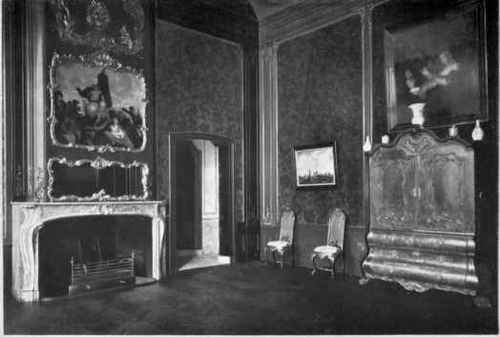
PLATE LVI - Room in the Stedelijk Museum.
The new style of ornamentation of the Regence and Louis Quinze periods, with its broken curves, auricles, rococo and rocaille work, was carried to greater extremes in Germany and Holland than in France. The school of Borromini, Oppenord and Meissonier carried everything before it, in spite of great opposition on the part of those who clung stubbornly to the traditions of Renaissance art. Carved panelling adorned the walls of rooms, and ceilings, picture and mirror frames, chairs, beds, tables, etc., all submitted to the new designs for chisel-work. A room with furniture of the early eighteenth century is illustrated in Plate LVI. This is in the Stedelijk Museum in Amsterdam, and the woodwork and painted ceiling come from an old Dutch chateau. The chairs, with their carved frames and stretchers, were in vogue in the last years of Louis XIV and under the Regency. The cabinet with its graded top for the accommodation of porcelain vases is characteristic of the period. The frames of the mirror and picture and the mantelpiece are also fine examples of Decorative Art of the days immediately after British soldiers used such bad language in the Low Countries. In passing it may be noticed that Marlborough's campaigns in the Netherlands had considerable influence on English taste of the day and forming the "Queen Anne" style, by familiarizing British officers with the Decorative Arts of the United Provinces. The Peace of Utrecht (1713) left the Netherlands free to pursue the arts of peace, which they did, so far as internal decoration is concerned, in the wake of the foe they had so bitterly combated.
We may note here that the richly carved table on which the Peace of Utrecht is said to have been signed is preserved in the Antiquarian Museum of Utrecht.
Continue to:


My Books

