


Seventeenth Century (Flemish)
Description
This section is from the book "Dutch And Flemish Furniture", by Esther Singleton. Also available from Amazon: Dutch and Flemish Furniture.
Seventeenth Century (Flemish)
Renewed Italian Influence - Rubens: his Studio, his House, his Pupils, his Influence, his Successors - Seventeenth Century Wood-carvers - Developments and Tendencies of Furniture - Crispin Van Den Passe - Rembrandt's Goods and Chattels - Old Belgian Houses - The Pitsembourg - Kitchens - Leather-hangings - Tapestry - Marquetry - Chairs - Masters of Ornamental Design - The "Auricular Style."
JUST as the seventeenth century was about to dawn, the Decadence that had affected Italy for nearly half a century began to make itself felt in the Low Countries. Those responsible for it were, Michael Angelo and Borromeo, who abandoned the graceful forms of the Renaissance for disproportionate and exuberant decoration. The Flemish architects, artists, and decorative designers willingly subjected themselves to the Italian influence again as they had done a century before. Rubens undoubtedly had the greatest influence on the art taste of Europe during the first three-quarters of the seventeenth century. Going to Italy in 1600, he spent, with short breaks, seven years there. He found that the Italians had already broken away from the sober lines of the antique, and with an unrestrained curve were already giving promise of the exaggerations indulged in later by Borromini, who, in line and form, broke with all the old traditions. Rubens was affected by the new vogue; and, on his return, the great Fleming introduced into his own country the style of architecture and ornamentation still known as the style Rubens. Rubens was too well inspired with the genius of the sublime Michael Angelo not to know where to use restraint, but in the hands of his followers and imitators this style soon degenerated.
From breadth and amplitude, it fell into weakness of form and contour, and great heaviness in the ornamentation.
Albert and Isabella kept a splendid Archducal court at Brussels, and there every form of art was sure of encouragement and support. The palace was an imposing mass, picturesquely situated in the highest part of the city. A French visitor in 1612 dwells on the magnificence of the various apartments filled with splendid works of art, and thronged with courtiers and attendants, the richness of the equipages and stables, and the beauty of the park and gardens. When Rubens visited Brussels at the Imperial request, he immediately found favour. When Rubens took up his abode in Antwerp, he bought a house, and altered and enlarged it from time to time to suit his tastes or needs. He embellished it in every possible way with his collections of pictures, busts and archaeological objects. In 1617, he had the banisters of the chief staircase carved by Jan van Mildert. He had very decided ideas on architecture, and supplied the workmen with his own plans. He was originally attracted to the house because it was built somewhat on the model of the Italian houses he had so greatly admired.
In 1622, he published a book on the Palaces of Genoa, and from the preface we learn that he was greatly delighted to see the old style known as "barbarous" or "Gothic" go out of style and disappear from Flanders, "giving place, to the great honour of the country, to symmetrical buildings designed by men of better taste, and conforming to the rules of the Greek or Roman antique."
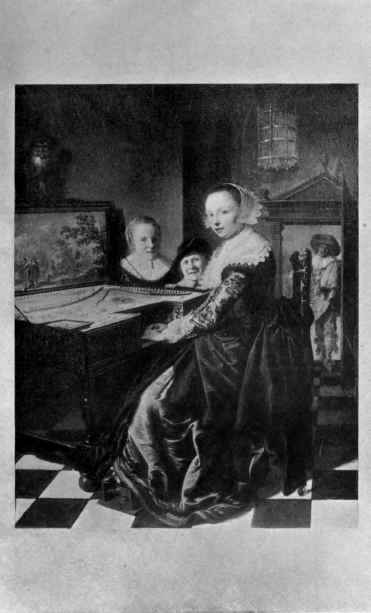
PLATE XXIII. - Lady at Spinel, by J. M. Molenaer. RIJKS MUSEUM, AMSTERDAM.
Between the courtyard and his beautiful Italian garden, he built a small imitation Pantheon, lighted, like its model, by a window in the centre of the dome. This he filled with busts, antique studies, valuable pictures brought from Italy, and other rare and curious objects. These he arranged to his own taste; and the arrangement of his cabinets, etc., served as a model for rich and noble collectors.
A picture representing Rubens's Drawing-room is in the National Gallery, Stockholm. It has been attributed to Van Dyck, but it is now supposed to have been painted by Cornelis de Vos about 1622, for the elder of the two women in the foreground seems to be a portrait of De Vos's wife, while the other is Isabella Brandt, Rubens's first wife.
The room is simple but quite elegant in style, with windows looking out upon a garden. The walls are entirely hung with greenish leather on which the designs - chimaeras and children grouped around vases and pillars - are in gold. The chimney-piece is of black marble supported by red marble pillars, and the fire-dogs are brass. On the right is a sideboard of light polished oak, and opposite a table with a rich Oriental carpet for a cover. Upon the leather chairs are cushions embroidered with flowers. Two pictures hang on the walls, and a third is above the chimney-piece. In the foreground, there are two ladies engaged in friendly conversation, while three children are playing with a puppy. The mother of the latter, a white spaniel marked with red, anxiously watches this second group.
In the sale inventory of Rubens's house in 1707 there is mention of the gilded leather that decorated one of the sitting-rooms.
This interior in general style and arrangement resembles a painting by Barthol. van Bassen, in the Rijks Museum, Amsterdam, reproduced on Plate XXIV. This represents a large hall or dining-room of the beginning of the seventeenth century. The floor is tessellated or tiled; and facing the spectator is a monumental chimney-piece supported by columns. Two superb andirons are placed in the fireplace, but the absence of logs and the fireback show that the time is spring or summer. The mantelpiece is surmounted by a niche containing a figure, and above the broken pediment is a cartouche flanked by reclining figures in the Renaissance style. On either side of the chimney-piece stands a chair of the new style with square back and square seat. The square seat and back of velvet or stamped leather - it is not clear what the covering is - is put on by means of large brass-headed nails. The heavy legs are connected by stretchers. These chairs are similar to the one on Plate XXVIII; but in the latter the stretchers are double. On either side of the chimney-piece is a door. One of these is open and shows an inner room containing an upholstered bed. The doors are very decorative with heavy entablatures supported on columns and decorated with swags of drapery on the panels.
Continue to:


My Books

