


The Dutch Home. Part 3
Description
This section is from the book "Dutch And Flemish Furniture", by Esther Singleton. Also available from Amazon: Dutch and Flemish Furniture.
The Dutch Home. Part 3
Among these were six satin cushions with gold flowers, a suit of serge bed-curtains and valance with silk fringe, six scarlet serge bed-curtains with valance and silk fringe, a green serge chimney cloth with fringe, two chimney cloths of flowered crimson gauge and six window curtains of the same, a painted chimney cloth, a calico curtain, a fine chintz carpet, many handsome Turkey-work carpets and white flowered muslin curtains. She had fourteen East India pictures, some with gilt and some with black frames, and twelve prints also in black and gilt frames, two maps with black frames, and about twenty well chosen paintings. Some of the subjects of these clearly show that they were in the style of Jan Steen, Dou, etc. In addition to landscapes, battles and fruit-pieces, the inventory notes "two pictures of ships with black ebony frames," "one picture of the Apostle," "one large flower pot," "one with a rummer," "one bird-cage and purse, etc.," "a large horse battle," and "a large picture of roots."
The china exhibited in the cabinets and on the mantelpieces and cupboards made a fine display; for in addition to the Oriental curios and other pieces willed to her daughters the house contained: three large china dishes, ten china dishes, four ditto (cracked), three teapots, two china basins, one ditto (cracked), one smaller ditto, two ditto (cracked), three fine china cups, one china jug, four china saucers, six ditto smaller tea dishes, one ditto (cracked), six painted tea ditto, four tea ditto, eight teacups, four ditto painted brown, six smaller ditto, three ditto painted red and blue, two white East India flower pots, one ditto (cracked), three ditto smaller, two ditto (round), one lion, one china image, and a china ink-box and two sand-boxes. Among her articles for the table she also owned three wooden painted dishes and a wooden tray with feet; also "a thing to put spoons in." A parcel of toys and a collar for a dog are among the miscellaneous articles.
Turning now to another Dutch house in New Amsterdam - that of the barber-surgeon, Mr. Jacob de Lange, whose inventory was taken in 1685 - we find the rooms consisting of a foreroom, side chamber, chamber, kitchen, shop and cellar. Mr. de Lange has a remarkable collection of porcelain and pictures, a great deal of fine furniture, rich clothing, jewels and East India cabinets, beautiful hangings, etc., etc.
Mr. de Lange's furniture consists of twelve chairs upholstered with red plush, six with green plush, eleven matted chairs, seven chairs with wooden backs and a church chair. He has two "cann boards," two small "cloak boards," a hat press, a clothes press, a square table, a round table, a small round table, and an oak drawing-table, a small square cabinet with brass hoops, one waxed East India small trunk, one square black small sealing waxed trunk, one silver thread wrought small trunk, and an ivory small trunk tipped with silver. He also owned an East India rush case containing nineteen wine and beer glasses, and an East India waxed cabinet with brass bands and hinges, containing gloves, ribbons, laces, fourteen fans and seven purses in the first partition; laces, buckles and ribbons in the second; cloth in the third; caps in the fourth; fans, bands, scarfs, garters and girdles in the fifth; silk, fringe and calico in the sixth; silk and materials for purses in the seventh, and spectacles in the eighth.
The side chamber was furnished with eleven pictures, consisting of five East India pictures with red frames, four landscapes, one evening and a "small zea." A looking-glass with a gilt frame also hung upon the wall. There was an enormous amount of porcelain here. The chimney was adorned with seven half-basins, two belly flagons, three white men, one sugar pot, two small pots, six small porringers and a small goblet. On and in the kas were two great basins, one goblet, two pots, two flasks, four drinking glasses, five drillings, six double butter dishes, thirty-three butter dishes, two white teapots, seven small red teapots, a hundred and twenty-seven teapots, one can with a silver joint, one ditto with a joint, two flaskets, one barber's basin, five small basins, sixty-seven saucers, four salt-cellars, three small mustard pots, five oil pots, one small pot, three small men, two small men, one basin, two small cups, one small oil can, one ditto spice pot, five saucers, four small men, one small dog, two small swans, one small duck, two tobacco boxes, one sand-box, four small cans, one small spoon, six small flasks, two small oil cans, one small chalice, and two fruit dishes.
This room contained an East India cupboard, ninety books, and a pair of blue curtains and valance.
The "foreroom" contained a black nutwood chest with two black feet under it, worth £2 10s., and some pieces of linen, £24 12s.; a looking-glass with a black frame, £1 5s.; two curtains before the glass windows; the family coat of arms in a black frame, £5 4s.; and the following paintings: "A great picture being a banquet with a black list," "one ditto something smaller," "one ditto a bunch of grapes with a pomegranate," "one with apricocks," "a small countrey," "a Break of Day," "a small Winter," "a Cobler" and "a portrait of my lord Speelman."
The pictures in the chamber include "a great picture banquet, worth £3 5s.; one ditto, £2 10s.; one small ditto, £1 15s.; one Abraham and Hagar, £1 5s.; four small countreys, £4; two small ditto, £1 12s.; one flower pot, one small ditto, one country people frolick, one sea-strand, one portraiture, and a plucked cock torn, two small countreys, one flower pot small, without a list, one small print broken, and thirteen East India prints pasted upon paper."
This room was well furnished. There were sixteen linen curtains before the glass windows, a large and valuable kas covered or veneered with French nutwood, standing on two ball feet, worth £13; a great looking-glass with a black frame, a white valance before the chimney, "six cloths which they put on the shelves of the kas, one ditto with lace, two small calico valances before the glass windows, one red chimney cloth (probably placed over the white valance), two red striped silk curtains and two valances of the same, two green silk curtains and two embroidered valances, three grey striped silk chair cushions, four pieces of tapestry to be thrown over chests, one bedstead with white calico hangings and luxuriously supplied with cushions, and eight East India spreads, besides other spreads of flowered calico, red calico, and white calico in squares. There were five small East India boxes and a great deal of linen, also one white box marked E. W.
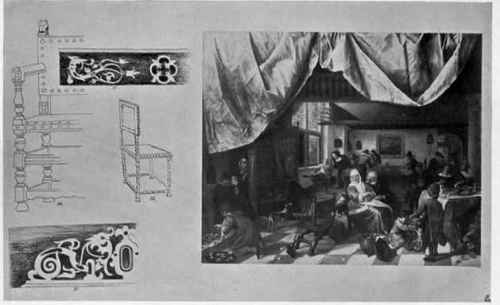
PLATE XXXVI. - The Oyster Feast, by Jan Stenn. The Hague,.
Figs. 35-36: Chairs (Seventeenth Century)! Fig. 37: Marquetry Designs (Seventeenth Century).
Continue to:


My Books

