


Tables. Part 7
Description
This section is from the book "Furniture", by Esther Singleton. Also available from Amazon: Furniture.
Tables. Part 7
Of the Kidney library table Sheraton says: "This piece is termed a kidney-table on account of its resemblance to that intestine part of animal so called. The drawers are strong and cross-banded with mahogany laid up and down. The pilasters are panelled, or cross-banded, and the feet are turned." In France this shape is called haricot.
Sheraton gives a great many designs of tables that are appropriate for the breakfast-room and library. These include card-tables and what he calls the sofa-table.
The dining-table of Sheraton's time was oblong, round, or oval, and usually supported on the pillar-and-claw. It was of mahogany and was accompanied by mahogany chairs covered with leather.
The extension dining-table, with extra leaves, had not come into existence.
In 1797, among the furniture sold at Christie's, we note: "a large mahogany two-flap dining-table; a two-flap spider-leg table; and a mahogany oval dining-table."
In the middle of the Prince of Wales's dining-parlor in Carlton House stood a large range of dining-tables, standing on pillars with four claws each, which Sheraton adds, "is now the fashionable way of making these tables."
"The common useful dining-tables," Sheraton says, "are upon pillars and claws, generally four claws to each pillar, with brass casters. A dining-table of this kind may be made to any size by having a sufficient quantity of pillar and claw parts, for between each of these there is a loose flap, fixed by means of iron straps and buttons, so that they are easily taken off and put aside; and the beds may be joined to each other with brass fork or strap fastenings. The sizes of dining-tables," he continues, "for certain numbers may easily be calculated by allowing two feet to each person sitting at table; less than this cannot, with comfort, be dispensed with. A table, six feet by three, on a pillar and claws, will admit of eight persons, one only at each end, and three on each side."
Sheraton also designed a number of dumb-waiters, supplied with shelves, drawers, trays, and holes for decanters, and also a supper tray called a " Canterbury ' that was "made to stand by a table at supper with a circular end and three partitions crosswise, to hold knives, forks and plates, at that end, which is made circular on purpose." This piece of furniture is said to have been invented by an Archbishop of Canterbury.
Another convenient form of table that Sheraton notes in his books is the group of small tables with very light frames. When not in use, these stood one within the other. They were known as quartette or trio tables; and another name was rout-tables, for they were used, like the rout-chairs "at routs and other entertainments."
It was not until the year 1800 that Richard Gillow of London invented and patented the telescope arrangement, which, with slight improvements, is still in use in the present day. Gillow's patent is described as "an improvement in the method of constructing dining and other tables calculated to reduce the number of legs, pillars and claws, and to facilitate and render easy, their enlargement and reduction."
During the Empire tables were made in the French modes. The drawing-room table was either round or oval and stood on four feet, decorated with lions' heads, chimaerae, or sphinxes, or the pillar-and-claw. It was supplied with a marble top, and on this stood a lamp with a shade. A table cloth was frequently used in England.
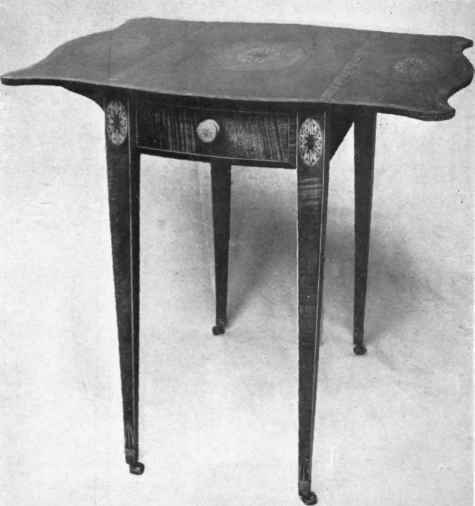

Plate . CXIV - Heppelwhite Pembroke Table and Empire Console-Table - Metropolitan Museum
The console was a large square table much like that of the last days of Louis XVI. It was decorated more or less ornately with gilded bronze. Sometimes a mirror was placed at the back, which was framed by the legs; and sometimes the tops of the legs are carved into the form of sphinxes, or the heads of sphinxes, or other masks. (See Plate CXIV.)
The tea-table was very ornate; and the jardiniere, or table a fleurs, was often vase-shaped and supported by sphinxes. It was by no means an exceptional adornment in a drawing-room or sitting-room.
Mr. John Stafford, an eminent upholsterer of Bath, who designed and made so much fashionable furniture of his day, was responsible for a flower stand that was described in Ackermann's Repository in 1819 as follows:
"The jardiniere forms a proper ornament for such a situation, and is rendered particularly interesting by a font of gold and silver fish, and by a small aviary for choice singing birds: the style is French and the article similar in design to those executed in Paris under the direction of Mons. Percier, the architect."
In 1822, we read in the same publication accompanying a design: "The flower-stand forms an elegant piece of furniture in oak, with bronze ornaments, the top being calculated to receive large drooping plants and a lamp, or glass with gold fish; either way, as a whole, it is perfect in its form and will be found to add much to the beauty of a small entrance hall."
Receptacles for displaying flowers in the chief apartments of well-furnished dwellings are always in request, and they admit an infinite variety of form and decoration from the simplest monopede to the most magnificent assemblage of stages. The present design is suited to a drawing-room or boudoir, being executed in choice woods and or moulu; in which case the reservoir should be lined with thin milled lead, to contain water, over which a silver network should be placed in a rounding form, to support the flowers and display them to advantage: from the reservoir a pipe should be affixed, so that it may be readily emptied, otherwise the stagnant water and vegetable matter speedily become offensive for want of change.
"Flowers admirably harmonize with glass; and if in the present design all the receptacles were made in that material, beautifully cut in. the splendid fashion now in use, the design would be very ornamental, and one in each corner of the drawing-room might be well displayed, particularly if constructed as a tripod. Many such articles of furniture have been executed lately by the Blades of Ludgate Hill."
In the inventories of prosperous and wealthy Americans and also in the advertisements of cabinet-makers and shopkeepers, we find innumerable notices of tables that show how closely fashions were followed on this side of the ocean with regard to this piece of furniture as well as every other form. For example, from the announcements of the years 1823-5, we gather the following:
Claw table stands; pillar-and-claw-foot break fast-tables; card-tables; card and pier and Pembroke-tables to match with marble slabs; a pair polished card-tables; six cases elegant tops of centre tables, with landscape views in Rome, etc., painted in a superior style and lately imported from Italy; elegant pier-tables with marble pillars; pillar-and-claw-foot tables; two superb pier-tables, imitation rosewood, very handsomely gilded, one centre table with marble slab; pier-tables with marble slabs and columns and Pembroke-tables.
Continue to:


My Books

