


George Hepplewhite. 1786. Part 7
Description
This section is from the book "The Practical Book Of Period Furniture", by Harold Donaldson Eberlein And Abbot McClure. Also available from Amazon: The Practical Book Of Period Furniture.
George Hepplewhite. 1786. Part 7
Types Of Decorative Design
The types of decorative design to be found in Hepplewhite furniture include all the classic motifs introduced by the Brothers Adam. Among these we find floral swags, acanthus leaves, pendent husks, round and oval paterae, water leaf, sundry architectural details and rams' heads. Besides these we find reeding, fluting, beading, pearling, spandrel fans, rosettes, and ribbons. Designs that were particularly distinctive of Hepplewhite furniture were the three Prince of Wales feathers, ears of wheat, and the lyre motif, the last-named of which Sheraton appropriated.
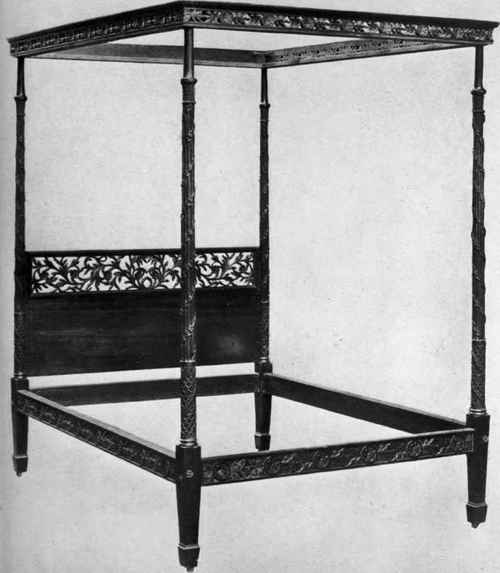
PLATE XXVIII. HEPPLEWHITE CARVED MAHOGANY BEDSTEAD, FLUTED POSTS AND UNDERCUT FLORAL WREATHING By Courtesy of Mrs. Samuel D. Riddle, Glen Riddle, Pa.
Structure
In structure Hepplewhite furniture was superior to the designs originated by the Brothers Adam. This was noticeable in the chairs more than in any other instance. As previously noted, Hepplewhite's chairs in most cases had no supporting junction of splat and seat rail, but some Adam backs arose merely from the seat rail without support of uprights. Carcase work was mainly rectilinear, with the exception of the shaped fronts of console cabinets, chests of drawers, and sideboards.
Mounts
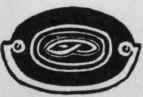
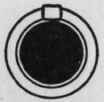
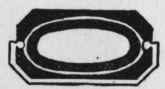
The brass mounts used during the Hepplewhite period were of delicate and beautiful design. Back plates of handles were oval, oblong, octagonal and round. Keyplates were small and usually consisted of a diamond-shaped piece of ivory set flush with the woodwork. Otherwise, a flush band of brass was used around the keyhole. Brass knobs, chased or engraved, were also used, as well as bail handles. The central portion of back plates for handles frequently consisted of a medallion on which classic scenes were embossed.
A
B
C
Fig. 4. Hepplewhite Mounts.
Finish
Hepplewhite mahogany furniture was given the same finish as other contemporary pieces. Full particulars will be found in preceding chapters and in the Sheraton chapter.
The painted furniture and satinwood pieces were sometimes treated with other preparations.
Continue to:


My Books

