


Veneering
Description
This section is from the book "Handcraft In Wood And Metal", by John Hooper, Alfred J. Shirley. Also available from Amazon: Handcraft In Wood And Metal.
Veneering
As a form of decoration veneering is a valuable process. It can be employed with advantage in nearly all kinds of furniture and advanced models, and affords good opportunities for the exercise of good design and colour ideas. The diagrams in Fig. 13 show right designs for veneering suitable for door panels, and these with slight alterations of size and arrangement would be suitable for bureau flaps, table tops, and flush doors.
To execute the second example shown on p. 152, the following procedure would be adopted: first damp and stretch a sheet of cartridge paper upon a drawing board and then carefully set out the pattern with pencil lines. Next select suitably coloured veneers-or veneers with contrasting figures-such as fiddle back and mottled mahogany, or American and well-figured Italian walnut, or rosewood and brown oak, then cut the pieces rather larger than the drawing, afterwards planing them to shape with an iron shoulder plane upon a shooting board. It will be found the best plan to lay on a piece of cross banding first; this may be laid in one or two pieces neatly joined with the mitres correctly fitted, and secured by glueing down to the paper, then the three top pieces would be planed and glued down to the paper, these being followed by the diamond and half-diamond shapes. The three large centre pieces would be dealt with next, and so on until the whole of the centre part was completed, after which the cross bandings would be fitted to complete the panel. In the first and third examples diamond shapes are fitted into a large diamond. This type of veneering may be expeditiously executed by glueing up strips of veneers-ebony and satinwood, for instance-with the grain and width coinciding with the required pattern. One end can then be cut and fitted to the diamond shape and consecutive rows gauged off and moved along one diamond in order to effect the change. The fifth example shows inlaying; in this case the groundwork would be fitted and glued to paper as described, the inlaying being completed when the groundwork had been veneered; the process of inlaying would then be similar to that described for solid work earlier in the chapter.
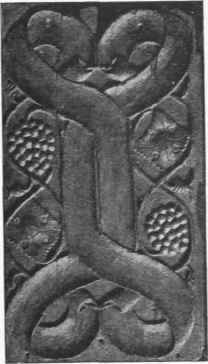
Fig. 12.-A fine caned panel in oak, a simple and effective design, English, early sixteenth century.

Fig. 13.
Caul veneering is best for work of this kind, distinct from hammer veneering, suitable only for light knife-cut veneers. A caul should be made from 3/4 in. pine, rather larger than the surface to be veneered.
The groundwork is well toothed and sized, and when quite dry it is covered with glue, this being allowed to chill before placing the veneer in position with the paper uppermost. The veneer should be secured with one or two veneer pins driven in close to the edge, and then a piece of paper is laid over the paper on the back of the veneer in order to prevent the spare glue sticking to the caul. The latter should be thoroughly heated arid then placed over the veneer and firmly handscrewed all together, this causes the glue to run and the pressure applied forces all the spare glue out. The work should remain in the handscrews at least twenty-four hours. When quite dry the pressure is removed and the top paper removed by toothing, or damping down and scraping with a chisel.
Veneering, consisting of hammer and caul veneering, cannot be fully dealt with in a work of this size, and readers are referred to Wells and Hooper's
Modern Cabinet Work "for further details of this process.
Continue to:


My Books

