


South Tyrol. Part 20
Description
This section is from the book "South Tyrol - John L. Stoddard's Lectures", by John L. Stoddard. Also available from Amazon: John L. Stoddard's Lectures 13 Volume Set.
South Tyrol. Part 20
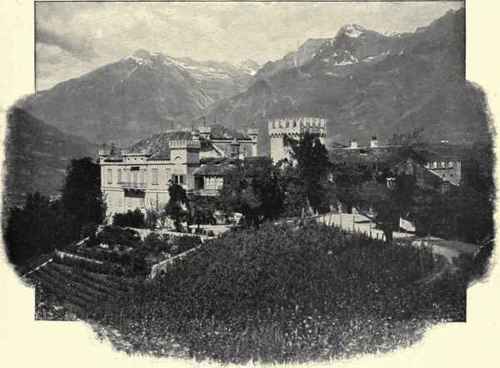
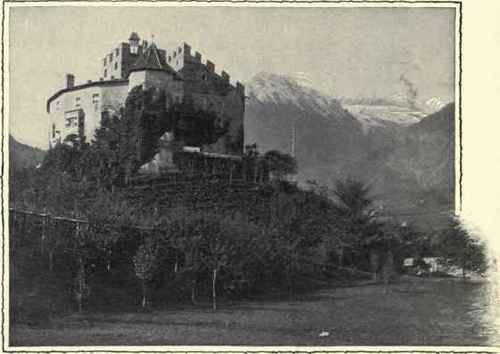
Schloss Forst.
The clangor that reverberated through the courtyard when I pulled the iron bell-handle was answered by the deep-voiced challenge of two dogs which, as the heavy oaken door swung open, stood ready to be fierce or friendly, as their master should direct. A moment later, I was greeted by that master, - a courteous, middle-aged English gentleman, Mr. Horace Cross by name, who, having recently retired from the British navy after twenty-five years of service, now lives here with his charming wife, happy in the possession of this grand old mansion for a permanent home. I looked about me with surprise and admiration at the beautiful, two-storied court around which the château is built. Roofed only by the sky, it pleasantly recalled to me some patios of Spain and Mexico, and even suggested the atrium of a Pompeian dwelling, changed and adapted to a more northern climate and to Anglo-Saxon tastes. Around its richly frescoed walls stood scores of potted trees and plants; some partially concealing the thick columns, while others wreathed the fountain with green leaves and ferns. In the second story, also, the pendent vines and tendrils of as many other plants swung lightly from the balcony, like silken threads of an unraveled Oriental tapestry, in many cases intertwining with the upward-reaching foliage of the plants below. Upon the walls I noticed also several coats of arms, - emblems of former owners of Schloss Forst, one of them dating back to the twelfth century; while here and there, among the arches, I read with pleasure some of the quaint, rhymed mottoes, which add a charm to many German dwellings either by wise and witty epigrams, or by their hospitable words of welcome and of love of home.
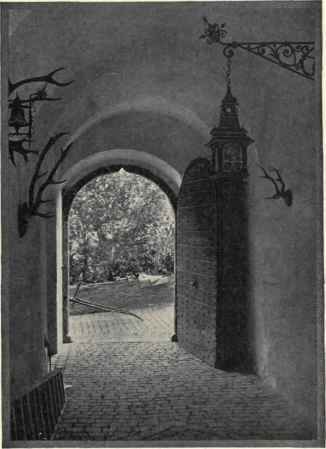
Entrance To Schloss Forst.
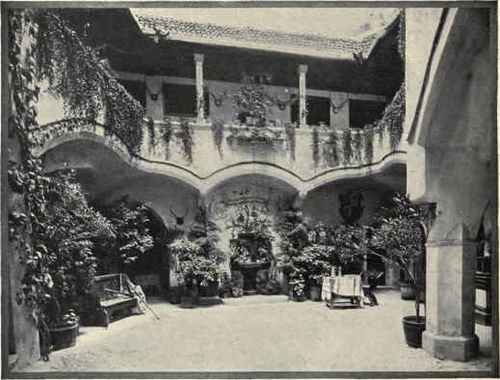
The Courtyard Of Schloss Forst.
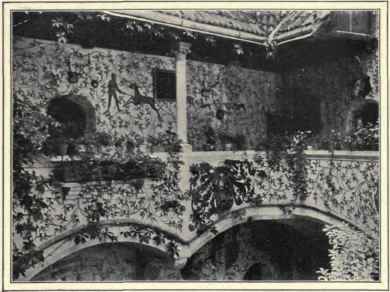
Courtyard Frescoes.
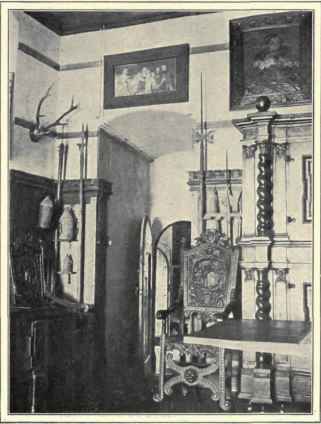
Nor are these features characteristic of the courtyard only. A mediaeval air pervades the entire schloss. Here are old-fashioned chairs and benches, such as the knights and ladies of the days of chivalry might have used; and here - as if to make this picture of the past a living one - I saw two travel-stained and humble wayfarers seated at an antique table, while waiting for the bowl of soup and bread which is invariably given to every one who asks for it. For thus the present owner of Schloss Forst perpetuates the hospitable traditions of the place, and all day long nourishing soup-stock stands in readiness to assuage the hunger of the poor.
A Room In Schloss Forst.
In going farther through this princely residence, I was especially impressed by the fact that neither in the bedrooms, dining room, library, nor parlor, has one discordant element been allowed to enter in furniture or decorations. The electric light is present, but all its burners are concealed in antique lanterns or appropriate fixtures suitable to the Cinque-Cento. An upright piano of the latest make has been encased in a severely simple frame, suggestive of an ancient spinet. The beds and chairs are eminently comfortable, but their soft cushions have been deftly hidden under tapestry or robes of fur; and Gothic bedsteads, sideboards, wardrobes, seats, and tables are richly carved in old Tyrolean style, when they are not, as in some instances, genuine antique works of art, such as the stately bed in the principal guest room, once the property of Maria Theresa.

In The Knight's Hall.
The walls of many of these apartments are covered with a handsome wainscot; the ceilings are of carved or inlaid woods; and even the paintings on the walls are works of the old masters, and thus combine with all the other appointments to represent the noble structure at its best, in perfect harmony with its eventful history.
It is a privilege to lean upon the sill of one of the deep-set windows of the ancient tower, on a summer's day, and look down on the garden at its base. Here vines are still producing the seductive juice which, in the olden times, was quaffed amid the songs of Minnesingers by the inmates of the castle; and here the fruit trees bloom and ripen their delicious gifts in the warm sun as they did centuries ago. The spot seems now the very embodiment of peace; yet well we know that the fair fields and vineries toward which, each afternoon, the lofty turret points its lengthening shadow, have been the scene of many a siege and sanguinary conflict; and peasants, digging in the soil, have here unearthed a multitude of Roman and mediaeval missiles, - proofs of the immemorial hatred of his brother that man has cherished since the days of Cain.
Continue to:


My Books

