


Families. Continued
Description
This section is from the book "The Mushroom Book", by Nina L. Marshall. Also available from Amazon: Mushroom Book.
Families. Continued

Lamelae adnate (a) or sinuate (b).
Stem fleshy.
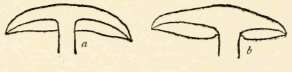
Lamellae de-current on the stem.
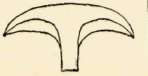
Stem fleshy.
Stem with cartilaginous rind.
Pluteus. Page 87.
Entoloma. Page 88.
Clitopilus. Page 88.
Eccilia. Page 88.

Family. Agaricaceae (Fungi With Gills) (Rusty-Spored Series).
Annulus not arachnoid; continuous and persistent.
Annulus arachnoid, filamentous, or evanescent; often not apparent in older specimens.
Family. Agaricaceae (Fungi With Gills) (Brown-Spored Series)
Volva at the base of the stem.

Lamellae ad-nate; plant terrestrial.
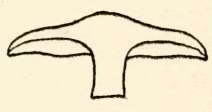
(Single species reported from Nebraska.)
Genera
Pholiota. Page 83.
Cortinarius. Page 85.
Chitonia. Page 83.
Volva none.

Veil remaining on the stem as as annulus.
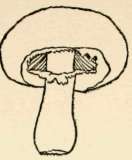
Lamellae free from the stem.

LAmellae united with the stem.
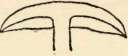
Veil remaining attached to the margin of the pileus; often not apparent in very old specimens.

Veil inconspicuous or, wanting Lamellae free.
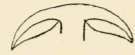
Lamellae de current.
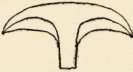
Lamellae nate.
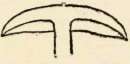
ad-Agaricus. Page 73.
Stropharia. Page 82.
Hypholoma. Page 78.
Pilosace. Page 82.
Deconica. Page 82.
Psilocybe Page 82.
Psathyra. Page 82.

Family. Agaricaceae (Fungi With Gills) (Black-Spored Series).
Lamellae deliquescent, melting to an inky fluid.
Lamellae not deliquescent; annulus wanting.

Lamellae waxy, decurrent.
Spores fusiform.
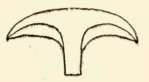

Lamellae not waxy, not decurrent.
Spores globose-ovoid.

Pileus striate, with tough rind.
Pileus not striate; stem-fleshy.

Genera
Coprinus. Page 89.
Gomphidius. Page 92.
Psathyrella. Page 92.
Panaeolus. Page 92.
Family. Hydnaceae (Fungi With Spines)
Plant consisting of teeth attached to a resupinate membrane or to a pileus.
Spore surface covering needlelike spines, awl-shaped, usually regular.
Species with central stem.
Species growing in branched masses, with no distinct pileus.
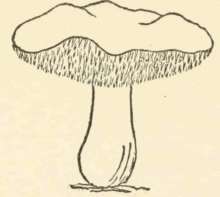

Hydnum. Page 95.

Family. Polyporaceae (Fungi With Pores).
Spore - bearing surface not waxy; not separable from the context.
Pores minute and round, or larger and angular.
Substance of the cap (trama) (This genus is with difficulty descending be- separated from the next), tween the pores.
Substance of the cap not descending, namely, substance between the pores different from that of the cap.
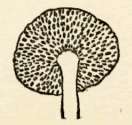
Genera
Trametes. Page 113.
Polyporus, Page no.
Pores large, long-hexagonal, sinuous, or lamelliform.
Stem lateral; pores long-hexagonal.

Lamellae sinuous and labyrinthine; stem normally wanting.
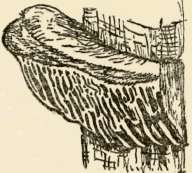
Lamellae radial ; stem wanting, or spore-bearing surface growing flat on its host.
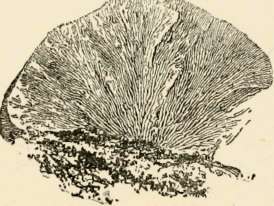
Favolus. Page 115.
Daedalea. Page 114.
Lenzites. Page 113.

Family. Boletaceae (Fungi With Pores) |.
X
Pores quite easily sep arable from the pileus and each other.
Stem lateral; pores in the form of tubes, whose mouths are separated from each other.
Stem central, or, rarely, somewhat eccentric.

Pores readily separating from the pileus; spores brown or whitish.

Genera
Fistulina. Page 102
Boletus. Page 104.
Pores separating with difficulty from the pileus.
Fleshy pores, in more or less radiating rows ; spores brown or yellowish.
Tough ; pores uniform; pileus floccose; spores blackish.
Boletinus. Page 103.
Strobiloniyces.

Continue to:


My Books

