


Materials Suitable For Infants' Clothing
Description
This section is from the book "A Manual Of Home-Making", by Martha Van Rensselaer. Also available from Amazon: A Manual of Home-Making.
Materials Suitable For Infants' Clothing
Materials that are suitable for infants' clothing are as follows:
For a nightgown: nainsook, cotton flannel, wool flannel, and wool and cotton flannel.
For a petticoat: nainsook, batiste, handkerchief linen, cotton flannel, wool flannel, and cotton and wool flannel.
For a slip: nainsook, batiste, handkerchief linen.
For a dress: nainsook, batiste, handkerchief linen, and fine dimity.
For a sack: flannel, challis, cashmere, henrietta cloth. A sack may also be knitted or crocheted.
For a coat: challis, cashmere, henrietta cloth, or corded silk; china silk for linings.
For a bonnet: batiste, handkerchief linen, and silk materials of various kinds.
For a kimono: flannel and challis.
Suggestions for making and decorating infants' clothing.
Infants' garments are most suitable and appropriate when made of fine materials by hand and with very little trimming. The very narrow laces-1/4 to 1/2 inch wide-fine tatting, tiny embroidery headings, featherstitching, fagoting, hemstitching, and simple French embroidery may be used for decoration.
A nightgown may be made kimono style or with set-in sleeves. The seams should be hemmed fells; and the hem should be made by hand. The neck and sleeves should be finished with bias facing for tape, and they may be featherstitched. A hemmed placket may be used.
Petticoats are generally made on an underwaist, the neck and armhole of which may be finished inconspicuously with a tiny hem or narrow lace edge. The seams on the white petticoat may be hemmed fells or French seams; on the flannel petticoat, flannel fells. The bottom of the white petticoat may be finished with lace insertion and edge, lace edge alone, a ruffle of fine embroidery of dainty design, or a featherstitched or hemstitched hem. The bottom of the flannel petticoat may be finished with a featherstitched hem, hand scalloping, or crocheting.
A simple slip (Fig. 102) is most serviceable for constant wear. It may be made kimono style or with set-in sleeves. The seams may be hemmed fells or French seams. The hem may be plain, hemstitched, or featherstitched, and the placket hemmed. Tiny embroidery beading and tatting or fine linen lace may be used for neck and sleeves. A few tiny tucks, shirring, or smocking may be used if fullness is desired.
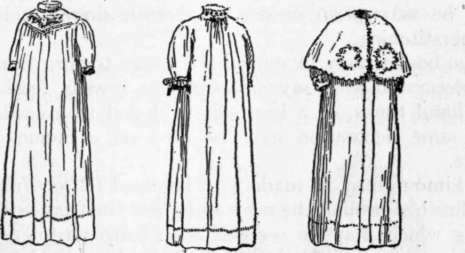
Fig. 102. - Suitable designs for an infant's dress, slip, and coat.
A few dresses a little more elaborate (Fig. 102) than the slip may be made for occasional wear. The seams may be hemmed fells, or French seams, or they may be joined with seam beading. The hem may be hemstitched, featherstitched, or fagoted in a straight line; or it may be featherstitched, chainstitched, or fagoted in scalloped or Greek key design; a lace edge or lace insertion and edge may be used. The entire skirt may be made of fine embroidery of dainty design. The placket may be hemmed. The neck and sleeves may be finished with lace or embroidery beading, and lace edge or tatting. The sleeves may be set in with seam beading. A round, square, or shaped yoke may be set in with seam beading and decorated with feather-stitching, fagoting, or French embroidery in simple design. A yoke effect may be secured by means of groups of hand tucks alternating with a simple embroidery stitch such as feather-stitching, or by smocking or shirring.
The sack may be made kimono style, and the edges finished with hand scalloping, crochet, or ribbon binding.
The coat (Fig. 102) may be cut with a large cape collar and may be very plain or decorated with simple embroidery or featherstitching.
The bonnet may be cut with a flange to turn from the face, and decorated with tiny ruffles of lace, rows of featherstitching and hand tucks, or a lace edge whipped to a scalloped edge. The same decoration may be used on a bonnet without a flange.
A kimono may be made with hemmed fell or French seams, and finished around the neck and down the front with a shaped facing which may be secured with featherstitching or chain-stitching in one of the dainty shades of blue or pink; or it may be bound with ribbon which may be secured with featherstitching or chainstitching.
Designs and materials for garments suitable for girls from three to five years of age.
The one-piece dress hanging free from a yoke or very short waist, or belted in with a loose belt in a long-waisted effect is a good style for the child from three to five years of age (Fig. 103). The following materials are suitable:
For rompers: kindergarten cloth, chambray, gingham, galatea, percale. For dresses with bloomers to match: kindergarten cloth, chambray, gingham, galatea, poplin, madras, percale, dimity, Swiss, batiste, voile, India linon, and the like.
Designs and materials for garments suitable for girls from six to ten years of age.
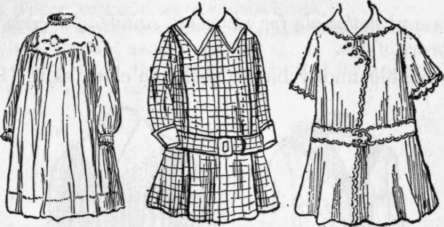
Fig. 103. - Suitable designs for dresses for children from three to five years.
The simple one-piece dress with a belt is a satisfactory style for children from six to ten years of age (Fig. 104). The wool dress may be worn with a washable guimpe in order to keep it fresh and clean (Fig. 104). The following materials are suitable:
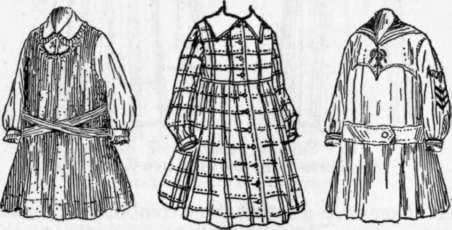
Fig. 104. - Suitable designs for dresses for children from six to ten years.
For dresses: kindergarten cloth, galatea, pique, percale, chambray, gingham, poplin, madras, Indian head, dimity, voile, India linon, batiste, and the like. Wool challis, henrietta cloth, albatross, and cashmere are serviceable light-weight woolen materials suitable for winter wear when the laundry problem makes the wearing of wash dresses throughout the year impracticable.
For bloomers: If possible, the bloomers should be of the same material as the dress. Sateen may be used for bloomers with wool dresses.
Continue to:


My Books

