


Lesson 24. Fresh Vegetables
Description
This section is from the book "Food And Health: An Elementary Textbook Of Home Making", by Helen Kinne, Anna M. Cooley. Also available from Amazon: Food And Health: An Elementary Textbook Of Home Making.
Lesson 24. Fresh Vegetables
How may we have fresh vegetables and use them to best advantage?
It is always a happy moment with Marjorie Allen and her brothers and sisters when the first crisp heads of lettuce, tender green peas, and succulent sweet corn are ready for the table.
The home garden. Mrs. Allen, Marjorie, and the children plant their own garden, and with a hand machine keep it well cultivated. It is fenced in by wire netting and laid out in convenient beds with narrow paths between, and with bright annual flowers making a gay border. Mr. Allen has the garden plot plowed and harrowed in the spring, and runs the cultivator through a few times in the course of the season. For fertilizer they use sweepings from the henhouse and wood ashes, except with the potatoes. Besides, Mr. Allen gives them a share of his acid phosphate. They also work into the soil decayed leaves and vegetables, which give the material that most soil needs so much.
Watering the garden. This is the problem in dry seasons and soils. Remember to keep a blanket of dry earth around the plants by cultivation. If you have running water and a hose, you are indeed fortunate. But sometimes it pays to carry water. Use a pail on a wheelbarrow, and, if the water supply is low, take slops from the house, diluted with clean water if the slops are strong with soap and washing powder. One bright girl, a member of a canning club, put an empty tin can with holes in the lower part in the ground near the roots of each tomato plant, and kept each can full of water.
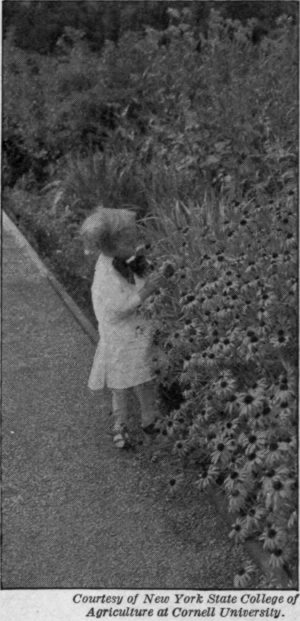
Fig. 97. - Mrs. Allen's garden has a border of rudbeckia.
She was amply paid for her trouble by the large crop of the fruit in a dry season. Planting in succession. One can have each kind of vegetable lasting over a period of several weeks, by planting early and late varieties of the kind, and by planting several times. This more than pays for all the trouble.
Plant insects and diseases. Watch for them above ground and below. Send for advice to your State College. Letting things go is ruinous in the end. Somebody has suggested farming as a moral substitute for war. Do you understand what this means? Ask your father's opinion of this.
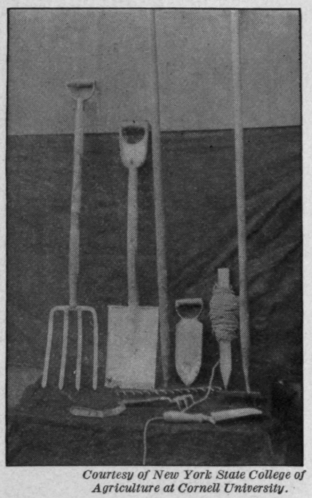
Fig. 98. - The tools Mrs. Allen and Marjorie found necessary for making and cultivating their home garden.
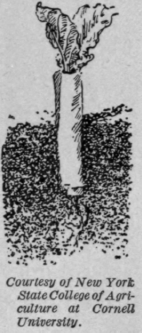
Fig. 99. - Mar-jorie Allen learned to wrap paper around a seedling to keep off cutworms.
What shall we have? Study your seed catalogue and try new kinds. Lettuce, spinach, radishes, asparagus, peas, beans (string and shell), summer squash, summer turnips, early beets, early carrots, tomatoes, cucumbers, sweet corn, lima beans, cauliflower, cabbage, - these are the staples, but there are still others. The winter vegetables need to be grown in larger quantity than you can manage alone.

Fig. 100. - The boys and girls with the teacher are making a school garden at the Oak Ridge School in another wide-awake town.
Picking vegetables. Gather green vegetables as near the time of cooking as possible. In hot weather it is pleasant in the cool of the day after supper to gather them for use next day, however. Peas and beans can be picked in the evening, shelled and prepared. Potatoes and root vegetables do not lose freshness at once. Lettuce, spinach, and cucumbers should be put in cold water immediately. If cucumbers are pared and sliced, or cut lengthwise and put in salted water, they seem to become more digestible for some people.
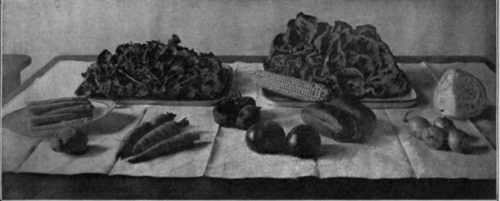
A. Fowler, Photographer.
Fig. ioi. - 100-Calorie portions of vegetables.1
Kind | Weight of Portion, Ounces | |
Asparagus | .......................................... | . . . 16 |
Beets | ........................................... | .......................10 |
Cabbage | .......................................... | ........................13 |
Carrots | ........................................ | .......................10 |
Corn | ........................................ | ........................9 |
Cucumbers | ....................................... | . . . 20 |
Lettuce | ...................................... | .......................22 |
Onions | ........... 8 | |
Potatoes | ............................................. | .......... 5 |
Spinach | ........................................... | .......................15 |
Tomatoes | .......................................... | .......................15 |
Storing winter vegetables. Hard squash, pumpkins, potatoes, carrots, beets, turnips, cabbages (also apples) -what shall we do with these? You see, storing is a way of preserving for a time the vegetables that do not easily spoil. You need a dry storage place, above the freezing point, yet not too warm. It is much better to have a storehouse dug into the ground for this purpose than to keep many vegetables under the house. If this cannot be, partition off a part of the cellar for vegetables. In some way arrange to have air enter it when the weather is not too cold; and in early spring give it a "big" cleaning out, finishing off with whitewash.
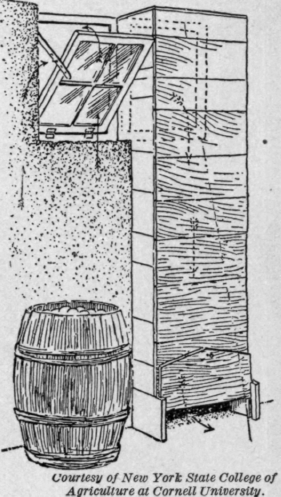
Fig. 102. - Fruit and vegetables keep firm and fresh for a longer time if stored in a cellar ventilated in some simple way like this.
1 United States Department of Agriculture. Office of Experiment Station, A. C. True, Director. Prepared by C. F. Langworthy, Expert in charge of Nutrition Investigations.
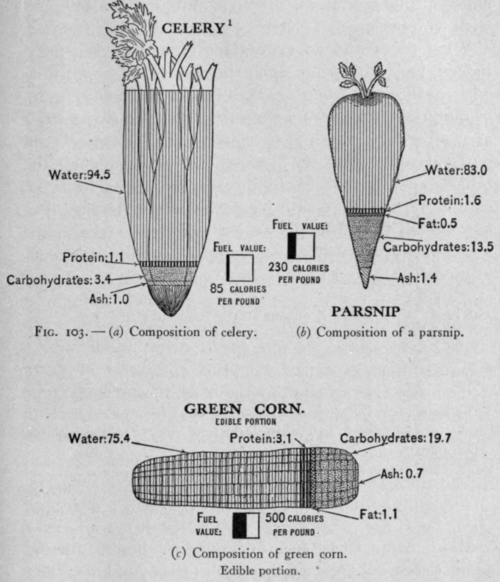
What foodstuffs do vegetables give us? We may, indeed, look with pride upon the results of our working with nature, for each vegetable is a little storehouse of materials, taken from the earth, air, and water, that are sources of health and strength for us. Remember in particular the iron, the lime, the sulphur, and all the other minerals that Mother Nature has laid away so cunningly and that we so greatly need. Taking into account all the varieties, we eat every part of a plant, if not always the whole of any one - cauliflower is a deformed flower, you know.
The seeds
Roots and tubers (the potato) and the bulb (onion)
Rinds (squash and pumpkin)
Leaves and stems
Contain all the foodstuffs.
Well-developed peas and beans are rich in protein.
Contain all the foodstuffs.
Small amount of protein and fat.
Much starch or some form of sugar.
Contain all the foodstuffs in small amounts.
Mineral substances the chief value.
Very valuable on account of the mineral matter. Other substances in such small quantities that they are not important.
Make your own list in your notebook, putting against seeds all the seed vegetables that you know, and so on. Where will you put string beans? This list is useful in connection with that just given, because it will show you the chief food value of each kind.
If you have a good supply of many varieties, you will use less meat in summer. Eating vegetables is much better for you, and for your purse.
Eating vegetables raw. We can eat lettuce and some other green leaves raw. We enjoy crisp radishes, cucumber, and celery, and tomatoes and melons, which are "fruit" rather than "vegetables." Our work with these is to serve them clean and cool and to remove only the tougher outside skin.
How shall we best cook our vegetables? This story will amuse you. One day a mistress asked her cook to bring the meat soup from the refrigerator that she herself might prepare it for the dinner. The cook brought a bowl with a bone, bare except for gristle and a few dry strings of meat. "But where is the soup?" "Oh, ma'am, this is all the soup there was when I threw away the water !" But what has happened if you cook spinach in a kettle of boiling salted water and strain off all the water? You have left behind little more than the bones of the spinach, for in that water was lost the precious iron that you so much need. After such struggles to store up food material it seems a bit foolish to throw it away, does it not? " Shall we never boil vegetables, then?" Yes, sometimes, but not often. We will look into this a little further.
What does cooking do to vegetables? You know already what happens to the vegetable fiber and starch. Where there is protein the change in cooking is not very important. The heat does not change the mineral matter, but the water dissolves out the mineral substances to a large extent.
What can you do then to save the mineral matter? One way is to use as little water as possible, and then use the water; that is, have only so much water that by the time the vegetables are tender there is so little liquid left in the bottom of the pot that it can be served with the vegetables. Perhaps this table will help you:
Bake when you can Steam when you can
Stew when you can (This means so little water that none is thrown away.)
Boil in large quantity of water and throw away the water
Potatoes, squash, corn, even young beets, old beans, and peas.
Any vegetable. In a steamer the cooking takes more time.
Spinach, celery, string beans, tender peas, and so on.
Old, strong-flavored vegetables, because you want to be rid of the flavor - strong onions and cabbage.
Time-table for stewing, boiling, and baking.
Fifteen minutes. Tender cabbage and sweet corn. These are usually cooked too long.
Thirty minutes. Asparagus, peas, potatoes of medium size, summer squash, tomatoes.
Forty-five minutes. Young beets and carrots, onions, young parsnips, medium potatoes baked, sweet potatoes boiled.
One hour. String and shelled beans, cauliflower, oyster plant; winter squash, steamed or baked; young turnips.
Two hours. Old carrots, beets, and turnips.
Six to eight hours (or more). Dried beans, lentils, and peas, baked in the oven, with water added.
Continue to:


My Books

