


IV. Cupboards And Sideboards. Part 5
Description
This section is from the book "Colonial Furniture In America", by Luke Vincent Lockwood. Also available from Amazon: Colonial Furniture In America.
IV. Cupboards And Sideboards. Part 5
Figure 173 shows a piece very rarely found in this country which belonged to the late Walter Hosmer, of Wethersfield, Connecticut, which may, perhaps, be such a piece as was referred to in several Yorktown (Virginia) inventories before 1700 - "a cupboard of drawers." It is 53 inches high, 43 inches wide, and 30 inches deep, and is made in two sections, as were the high chests of drawers and the cupboard last shown. The upper section consists of two drawers, one about 4'j inches wide, extending entirely across the front just beneath the moulding, and a larger drawer 101/2 inches wide. The lower section is in appearance a cupboard, the doors enclosing three long drawers. The wood is English oak, and the face of the centre panda and the entire front of the narrow drawer, as well as the face of the applied ornaments of the upper section, are veneered with snake-wood, an extremely hard wood growing in Brazil. The mouldings are cedar, and there is no paint on the piece, except on the turned ornaments, which are painted black. The knob handles are of bone and the drop handles on the enclosed drawers are of iron. This piece was found in Connecticut, but is undoubtedly of English origin.
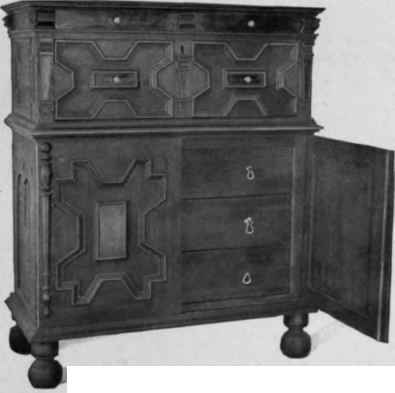
Figure 173. Cupboard of Drawers, 1680-1700.
Cupboard cloths and cushions are mentioned frequently in all the records, and often inventoried separately as articles of considerable value, sometimes higher than the cupboard itself. We know that the cupboard tops were used for the display of china, pewter, and glass, for this is often included in the appraised value of the cupboard; therefore the cupboard cloths or carpets are easily accounted for, as covers made of various materials (linen, tapestry, and needlework are some of the kinds mentioned) would very naturally have been in use. But what a cupboard cushion could be does not at first appear, as there seems to have been no cupboard that could possibly have been used as a seat, and cushions meant cushions in those days as now, and are almost invariably mentioned with joined chairs and settles. The only solution for the riddle of the cushion on the cupboard seems to be that the cushion was probably a very thin one, placed over or under the cloth as a protection to the china and glass against striking a hard surface with force enough to break or injure it.
The cupboards discussed so far in this chapter represent the kind of furniture with which the homes of the seventeenth century in this country were furnished, and to the average American of the present day are absolutely unknown.
The consensus of opinion among students of the subject is that the design for the wainscot cupboards came from Germany, and Herr von Falke, in his lectures on "Art in the House," shows a few designs for German Renaissance sideboards, mostly from the designs of Hans Vriedeman de Vries (painter, designer, and architect, born at Leeuwarden, in Friesland, 1527; died at Antwerp some time after 1604), which may easily have been the models for the heavily panelled cupboards so common here. The taste for the brilliant colours with which the cupboards were sometimes stained and painted probably also came from the Germans, for Dr. von Falke remarks that the magnificent inlay in coloured woods, metals, and precious stones achieved by the great artists of Italy and Spain created a desire for these same colour effects without the same expense and skill, thus giving rise to the use of paint or stain among the German cabinet-makers of the seventeenth century. Practically all the American cupboards show traces of having their mouldings and turned ornaments painted, and the carved pieces, many of them, show the presence of a black stain or paint used as a background to set off the carving more effectively. A cupboard is occasionally found where judicious scraping will show the original ornament to have been principally a design in paint, simulating carving or panelling.
It has been previously remarked that the words court and livery do not appear in the inventory records at New York, and, likewise, the words oak and wainscot are almost entirely lacking. The word kas, sometimes spelled kasse, appears very often, and this was the Dutch name for cupboard. The records speak of plain cupboards, great cupboards, walnut cupboards, great presses, Holland cupboards, cedar cupboards, and Dutch painted cupboards, and a search among the treasures of Dutch families in the vicinity of New York has not revealed a single oak piece or a cupboard in any way resembling the court and livery cupboards of New England.

Figure 174. Painted Kas, about 1700.
A Dutch painted cupboard, now preserved at the Van Cortlandt Mansion, Van Cortlandt Park, New York, is shown in Figure 174. The quaint designs in fruit and flowers are in shades of grey and seem never to have been tampered with. There is a long drawer across the bottom on side runners, and the cupboard doors conceal wide shelves. Kasses of this kind are made in three parts; the heavy cornice lifts off and the frame and drawer are separated from the cupboard proper. The cornice consists of a short cyma recta, a fillet, and a large cyma reversa. These kasses always stand on ball feet in the front, while the rear legs are simply an extension of the stiles. Many kasses are found in the neighbourhood of New York and in the Dutch settlements along the Hudson and in New Jersey. They are made of pine, cherry, maple, and walnut, and the doors are often panelled. A shallow drawer is sometimes found under the middle shelf.
A Dutch painted cupboard valued at £1 is mentioned in the New York inventories in 1702.
Continue to:


My Books

